

The International Organization for Standardization (ISO) standard, "ISO 2528 Sheet materials - Determination of water vapor transmission rate (WVTR) - Gravimetric (plate) method," describes a method for determining the water vapor transmission rate of sheet materials. This method is generally not recommended if the transmission rate is expected to be less than 1 g/m2 per day or for materials thicker than 3 mm. In such cases, the method specified in ISO 9932 is preferred. The method is not applicable to film materials damaged by hot wax or that shrink significantly under the test conditions used. For some purposes, it may be necessary to determine the transmission rate of wrinkled material; a procedure for this is included in the appendix of the standard (Annex A).
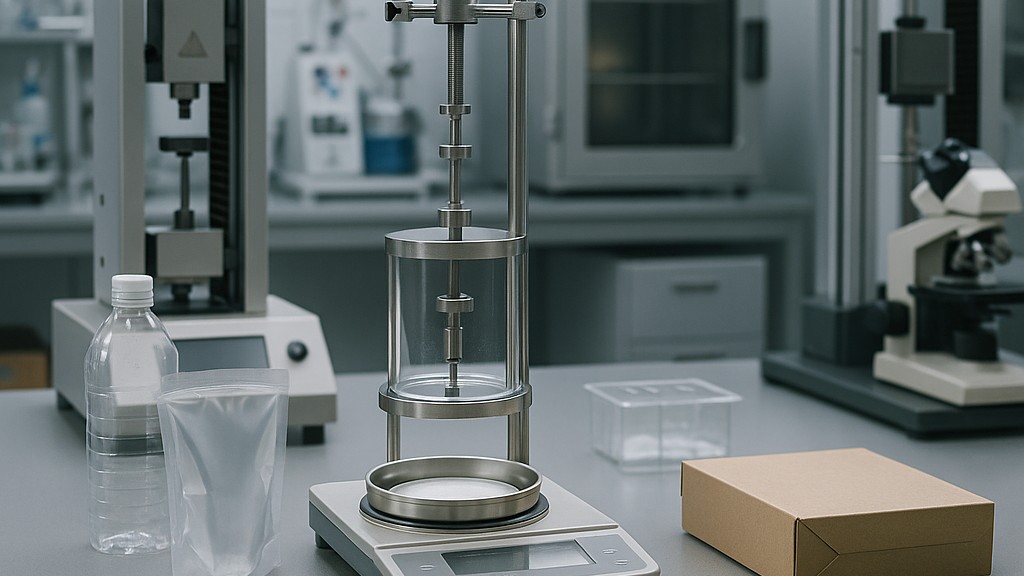
For the purposes of this standard , water vapor transmission rate (WVTR) refers to the mass of water vapor transmitted per unit area per unit time under specified temperature and humidity conditions. It is expressed in grams per square meter per day. The water vapor transmission rate depends on the thickness, composition, homogeneity, and permeability of the component material, as well as the temperature and relative humidity conditions under which the test is performed.
In principle, during testing, containers containing a desiccant and sealed with the material to be tested are placed in a controlled atmosphere. These containers are weighed at appropriate intervals, and the water vapor transmission rate is determined from the increase in mass as this increase becomes proportional to the time interval.
If a large number of papers are to be evaluated, samples should be selected in accordance with ISO 186. It is recommended that the samples be conditioned in accordance with the relevant ISO standards, depending on the material, before preparing the test pieces, especially if the water vapor transmission rate is known to be high.
When preparing test pieces, at least three circular test pieces, typically 90 mm in diameter, are cut from the sample (one for each side to be tested), avoiding all damaged areas, using a cutting template or test piece cutter. The test pieces are marked so that the side exposed to the test atmosphere can be easily identified. If the material is hygroscopic or greater accuracy is required, at least two blank test pieces are prepared. If the sheet material was prepared using a process involving solvents, the results may be affected by residual solvent in the test pieces. If the test pieces are processed to remove residual solvent, details of this processing should be included in the test report.
The method for preparing dishes differs slightly depending on whether a lid or ring template is used. The dishes and templates always begin by carefully cleaning and drying them. The desiccant is placed on the plate, followed by the test piece, the required side up, and then the wax template, creating a vapor-tight wax seal between the test piece and the plate. Details of the different template types are provided in the standard. To minimize water vapor absorption by the desiccant,
When using wax and a cap template, each container is filled with desiccant to 3 mm to 4 mm below the final position of the test piece and tapped. The wax is melted in a water bath and the dispensing device is filled.
The test piece is centered in position, then the wax template is inserted. The molten wax is advanced into the groove until it reaches the top surface of the wax template. Once cooled, the bond is completed by removing air bubbles and hair cracks with a small gas flame. A warm spatula can be passed over the wax to assist in this process, sealing any shrinkage cracks that may have formed during cooling.
The wax template is removed and the assembly is inspected to ensure satisfactory assembly. To ensure easy removal of the wax template, a thin layer of petroleum jelly should first be applied around the edge, and any excess that might contaminate the test piece should be wiped away.
The assembly is covered by a numbered cover corresponding to the number of the container.
Water vapor transmission rate (WVTR) helps packaging, especially food or pharmaceuticals, remain dry and shelf-stable. In construction, it helps assess how well materials prevent moisture ingress, which can affect insulation and mold growth. In electronics, it's critical for protecting moisture-sensitive components. In textiles, it's related to breathability in clothing and protective equipment.
The two most common methods for determining water vapor transmission rate are gravimetric (plate) and instrumental (infrared or electrolytic sensors).
In the gravimetric (plate) method, a plate is partially filled with a desiccant (such as anhydrous calcium chloride) and the test material (such as film or sheet) is sealed over it. The entire assembly is placed in a moist environment. Water vapor is absorbed by the desiccant as it passes through the material. The increase in weight over time indicates how much moisture has passed through.
The sealed container is placed in a controlled environment chamber (typically 23 degrees Celsius and 50 percent relative humidity). The outside environment is humid, and the inside of the container is dry due to desiccation.
Water vapor from moist air passes through the test material and is absorbed by the desiccant. As the vapor enters the beaker, its weight increases. The beaker is weighed at regular intervals (e.g., every 24 hours). The weight gain rate represents the rate of water vapor transmission.
Our organization, which has been supporting businesses across all sectors for years through a wide range of testing, measurement, analysis, and evaluation activities, boasts a strong team of employees who closely follow global developments in science and technology and are constantly improving themselves. In this context, we also provide testing services in accordance with the ISO 2528 Plate Materials - Determination of Water Vapor Transmission Rate (WVTR) - Gravimetric (Plate) Method standard.
To get an appointment, to get more detailed information or to request an evaluation, you can ask us to fill in our form and reach you.