EN 840-6 Mobile Waste and Recycling Containers - Part 6: Safety and Health Requirements
The European standard “EN 840-6 Mobile waste and recycling containers - Part 6: Safety and health requirements” describes the basic safety, health and ergonomic requirements for portable waste and recycling containers according to standards EN 840-1 to EN 840-4, excluding hazardous waste containers.
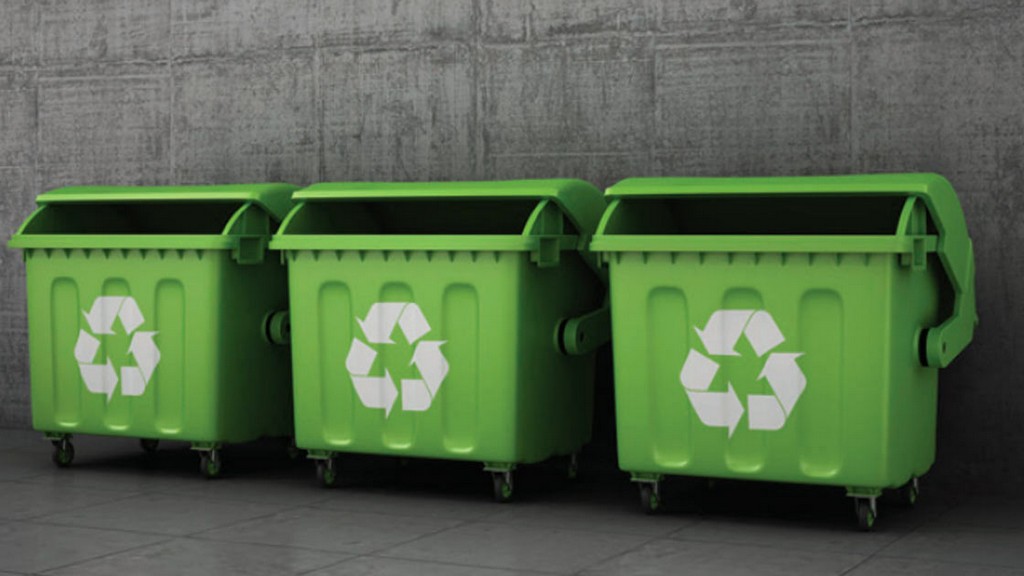
The general construction requirements are specified in this standard as follows:
- The container must be constructed so that it will fit securely onto an approved compatible lifting device when unloaded or loaded with a nominal mass and will automatically lock securely onto the lifting device during tilting and unloading. The container must be statically stable in accordance with standard EN 840-5.
- The container must be securely attached to the vehicle's lifting device before it can be carried or lifted by hand.
- Wheeled containers must be constructed in such a way that, under test conditions in accordance with EN 840-5, the pushing and pulling forces required to move the container do not exceed the values given in EN 840-5. The pushing and pulling forces must be declared in the instructions for use.
- During the construction of containers, the following factors affecting the measurable handling force should be optimized:
- Design of the container in terms of shape, size and location of the center of gravity, according to the positioning of the wheels and handles
- Even distribution of loads on wheels
- Low rolling resistance
- Two-wheel containers must have handles that allow the operator to grip the container securely with both hands to pull, push and maneuver the container. Four-wheel containers must have handles to push, pull and maneuver the container. Injuries from sharp edges must be avoided.
- For pulling, pushing and manoeuvring the container, the handles must have one of the external forms shown in the figure given in the standard. A minimum length of 120 mm and a minimum clearance of 36 mm around the handle are required.
- For pulling, pushing and manoeuvring the container, the handles must be positioned at a height of 900 mm plus 400 mm minus 25 mm (measured from the centre of the handle) above the ground. For two-wheel containers, for containers with a volume of at least 64 kg, these handles must have a height of at least 800 mm in the inclined position (centre of gravity above the wheel axle). For containers less than 64 kg, the handles must have a height of at least 700 mm. Vertical handles are optional for four-wheel containers. If two handles are fitted, they must be at least 450 mm apart and cover a height range between 780 mm and 1050 mm. The two-wheel container must be loaded with the test load for testing and the lids must be closed.
- Containers with 4 wheels and a capacity not exceeding 771 kg must have only swivel wheels.
- Four-wheel towing containers can have two fixed wheels or wheels that can be fixed.
- The wheels and their position should provide minimum push/pull force and good balance.
- The wheels on all containers must have a nominal diameter of 200 mm. Wheels with a nominal diameter of 160 mm on four-wheel containers and larger wheels on two-wheel containers are optional as long as the thrust forces are not exceeded.
- All wheels or casters must be constructed to withstand static and dynamic stress, for example by rolling against paving stones (tested according to EN 840-5 standard).
- If wheel mounting brackets are used, they should not protrude beyond the widest part of the container body.
- When directional blocks are installed on 4-wheel containers, they must be installed on at least two wheels.
- When brakes are installed on 4-wheel containers, they must be installed on at least 2 wheels.
- The brakes must be adjustable or self-compensating and capable of holding the container at a tilt of at least ten degrees from the horizontal.
- Brakes must be easily operated by the operator.
- If containers are equipped with a central brake locking system, it must be possible to secure them against unauthorised unlocking.
- Brakes must be tested according to EN 840-5 standard.
Among the numerous testing, measurement, analysis and evaluation studies that our organization has carried out for businesses in various sectors, it also provides testing services defined in the standard “EN 840-6 Mobile waste and recycling containers - Part 6: Safety and health requirements” with its trained and expert staff and advanced technological equipment.