
The standard "ASTM C561 Standard Test Method for Ash in a Graphite Sample," developed by the American Society for Testing and Materials (ASTM), describes a practical test method for ash content in a graphite sample. This test method provides a practical estimate of the unburned residue in commercially available graphite materials. Ash values determined by this test method are useful for comparing the relative purity of various graphite grades. To facilitate ease of use, this test method implements simplifications that hinder the ability to accurately determine ash values for test graphite materials due to uncontrolled trace contamination sources.
This test method is not intended for use in determining the ash content of purified graphite, such as nuclear materials. The relationship between the mineral content of a graphite sample and its ash content is unknown and will not be determined by application of this test method.
This standard is not intended to address all safety issues, if any, associated with its use. It is the responsibility of the user of this standard to determine appropriate safety and health practices and to determine the applicability of regulatory limitations before use.
This standard specifies a method for determining ash content in graphite materials by burning a sample and weighing the unburned residue (ash). This is important because ash content reflects the purity of the graphite, with lower ash indicating higher purity.
Ash in graphite refers to the inorganic residue remaining after combustion. It may contain metal oxides or other mineral impurities. This test method is particularly useful in evaluating the quality of graphite in applications such as nuclear, metallurgical, electrical, and high-purity chemical processing.
When using this test method, a representative sample of graphite is taken and weighed. The sample is heated in a furnace at high temperatures (usually above 600 degrees Celsius) in an oxidizing environment (air or oxygen). After the carbon is completely burned, the remaining inorganic residue (ash) is collected and weighed. Calculations are made according to the formula provided in the standard.
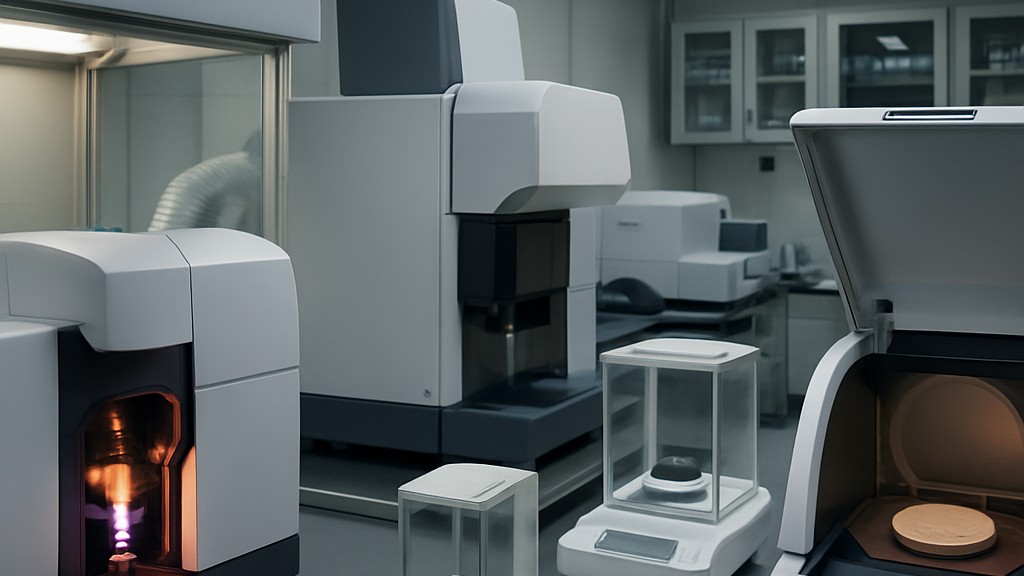
In the tests, a high-temperature muffle furnace, a crucible (usually made of materials resistant to high heat and chemical interaction), and a dryer are used to cool the crucible to prevent moisture absorption before final weighing.
Ash content is an important quality metric in graphite products, particularly in applications where impurities can affect conductivity, chemical reactivity or thermal performance.
In short, ash is a contaminant in graphite, and high ash content can affect thermal, electrical, and mechanical properties. This test method is critical for quality control, particularly for graphite used in nuclear, electrical, metallurgical, and lubrication applications.
Graphite is a naturally occurring form of crystalline carbon and one of the most stable forms of carbon under standard conditions. It is known for its unique combination of properties that make it useful in a wide variety of industrial and scientific applications.
Natural graphite is found in metamorphic rocks and can be flaked, veined, or amorphous. Synthetic graphite is obtained by processing carbon materials (such as petroleum coke) at high temperatures. It is used when high purity or specific structural properties are required.
The test method described in the ASTM C561 standard is required for several important reasons, particularly those related to the quality control, performance, and safety of graphite materials used in critical applications.
The ASTM C561 standard is deemed necessary for the following reasons:
The ASTM C561 standard is used primarily by materials scientists and engineers, quality control laboratories, manufacturers of graphite components, and the nuclear, aerospace, and metallurgical industries.
In short, this standard is important because it provides a reliable, standardized way of determining ash content in graphite (a key indicator of material purity and performance).
Our organization, which has been supporting businesses across all sectors for years through a wide range of testing, measurement, analysis, and evaluation activities, has a strong team of employees who closely follow global developments in science and technology and are constantly improving themselves. In this context, we also provide testing services in accordance with the "ASTM C561 Standard Test Method for Ash in Graphite Sample."
To get an appointment, to get more detailed information or to request an evaluation, you can ask us to fill in our form and reach you.