

The standard "ASTM D6875 Standard Test Method for Solidification Point of Industrial Organic Chemicals with Thermistor" developed by the American Society for Testing and Materials (ASTM) describes a general test method for determining the solidification point of most organic chemicals having significant heats of fusion and solidification points between 4°C and 41°C.
Other test methods for determining the freezing point and solidification point of aromatic hydrocarbons include ASTM D852, ASTM D1015, ASTM D1016, ASTM D3799, ASTM D4493, and ASTM D6269 standards.
This test method is applicable only to relatively pure compounds. The solidification point depression depends on the impurity concentrations. For purposes of determining compliance with applicable specifications using this test method, an observed value or a calculated value should be rounded to the nearest unit in the last digit to the right used to express the specification limit, in accordance with the rounding method defined in ASTM E29.
The ASTM D6875-12 standard test method is used to measure the solidification point of most organic chemicals using a thermistor. The maximum temperature at which the liquid phase of a substance is in proper equilibrium with a relatively small portion of the solid phase is noted. These methods require a cooling medium to achieve a solidification point between 4 and 30°C. The sample container is sealed with a two-hole stopper. The thermistor is placed in one hole and the stirrer shaft in the other. The bath temperature is set to 5°C plus/minus 1°C below the expected solidification point of the sample. The tests use a sample container with a thick-walled outer tube of 18 mm diameter, 14 mm inner diameter, and 150 mm length. The temperature bath is required to control the temperature to 5°C plus/minus 1°C below the expected solidification point. The thermistor is housed in a stainless steel housing with a resistance greater than 2kΩ at 25°C, and the calibration accuracy is plus/minus 0,01°C.
For the purposes of this standard, the solidification point is the temperature at which the liquid phase of a substance is in approximate equilibrium with a relatively small portion of the solid phase. The solidification point, unlike the freezing point, is described in ASTM D1015. The interpretation of mole percent in terms of freezing point is provided in ASTM D1016.
This test method can be used for process control during the production of organic chemicals, determination of specifications, development and research studies, and determination of contamination during shipment.
Samples should be collected in accordance with ASTM D3437, ASTM D3438, ASTM D3852, and ASTM D4297. At room temperature, the entire solid sample is melted by heating it to approximately 10°C above the solidification point and then spun to ensure homogeneity. If required by the standard or by agreement with the customer, the sample should be dried. p-xylene should be dried before testing by placing approximately 100 g of material in a 400 mL Erlenmeyer flask and adding approximately 50 g of 3A molecular sieves.
A two-hole stopper is inserted into the sample container. A thermistor is inserted into one hole. The stirrer shaft is inserted into the other hole. The temperature bath is set to 5°C plus/minus 1°C below the expected solidification point of the sample.
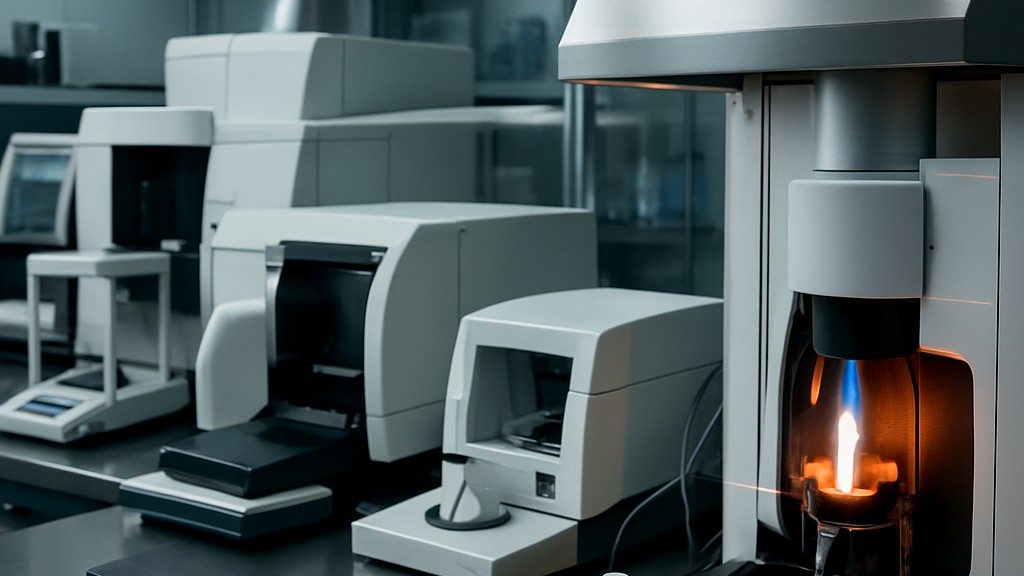
Equipment used in the tests includes:
The ASTM D6875 standard is considered important, especially in the field of geosynthetics and civil engineering, for the following reasons:
Briefly, these tests include:
Our organization, which has been supporting businesses across all sectors for years through a wide range of testing, measurement, analysis, and evaluation activities, has a strong team of employees who closely follow global developments in science and technology and are constantly improving themselves. In this context, we also provide testing services in accordance with the ASTM D6875 Standard Test Method for the Solidification Point of Industrial Organic Chemicals with Thermistors.
To get an appointment, to get more detailed information or to request an evaluation, you can ask us to fill in our form and reach you.