

The ISO 15597 standard, “Petroleum and related products - Determination of chlorine and bromine content - Wavelength dispersive X-ray fluorescence spectrometry ”, published by the International Organization for Standardization (ISO) , describes a method for determining the chlorine and bromine content of liquid petroleum products, synthetic oils and liquids, and petroleum product additives (including used oils) that are soluble in organic solvents and whose chlorine/bromine content is negligible or accurately known. This method is applicable to products or additives with a chlorine content in the range of 0,000-5 percent to 0,100 percent mass fraction and a bromine content in the range of 0,001-0 percent to 0,100 percent mass fraction. Other elements are generally immiscible, but lead may be immiscible at contents above 0,1500 (m/m).
Used lubricants can present special problems due to the variety of potentially interfering elements in relatively high concentrations. For used lubricants, the lower limit of sensitivity can generally be 0,0050 percent (m/m).
In principle, the test sample and a bismuth solution serving as an internal standard are mixed in a specified mass ratio and exposed to the primary radiation of an X-ray tube in a sample cell. The chlorine or bromine content of the sample is determined from calibration curves prepared using chlorine or bromine calibration standards.
Unless otherwise specified, samples should be collected in accordance with the procedures specified in ISO 3170 or ISO 3171. Samples should be collected after thorough mixing and subdivision of the sample. Viscous samples are heated to a temperature that fluidizes the sample and, if necessary, homogenized using a homogenizer or mixer. For the purposes of this procedure, the term sample includes solutions prepared from semi-solid or solid petroleum products, as appropriate, pretreated or diluted with additives.
In the complex world of petroleum refining and quality control, ensuring the purity and safety of fuels and lubricants is paramount. Contaminants such as chlorine and bromine can lead to engine corrosion, environmental hazards, and regulatory non-compliance. This is where ISO 15597, an international standard that enables the precise determination of chlorine and bromine content in petroleum and related products using wavelength-dispersive X-ray fluorescence spectrometry (WD-XRF), comes into play.
This standard has become a cornerstone for laboratories worldwide by providing a non-destructive, rapid analysis technique that minimizes sample preparation and maximizes accuracy.
The ISO 15597 standard specifies a standard procedure for determining the amount of chlorine and bromine in petroleum products such as crude oil, refined fuels, lubricants, and additives. These halogens typically enter the supply chain through impurities in crude oil or processing aids, and their levels must be monitored to comply with stringent environmental regulations, such as those of the U.S. Environmental Protection Agency (EPA) or the European Union's REACH framework.
This standard outlines the calibration, measurement, and verification steps to ensure that results are reliable within specified limits and will typically detect concentrations down to levels higher than parts per million (ppm).
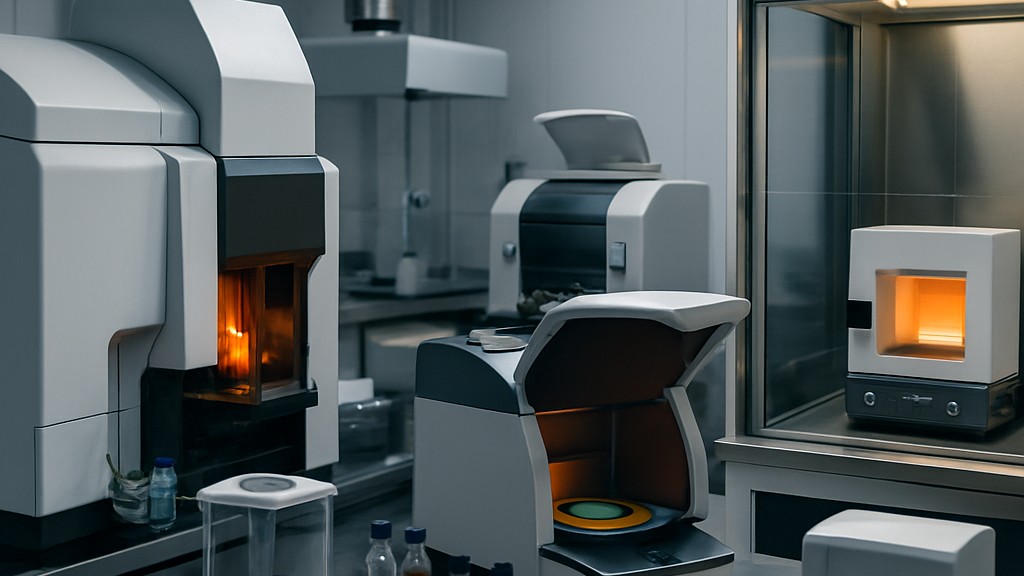
At the heart of the ISO 15597 standard is wavelength-dispersive X-ray fluorescence spectrometry, a powerful and evolving analytical technique. This instrument uses a diffraction grating to separate X-ray fluorescence wavelengths and provides superior resolution for elements such as chlorine and bromine.
The operating steps of the system are as follows:
This method excels at multi-element analysis, making it ideal for routine quality control in refineries.
The ISO 15597 standard applies to petroleum products with chlorine and bromine contents ranging from 1 mg/kg to several percent by mass. It is particularly useful for:
This standard has been adopted worldwide, with national versions such as DIN ISO 15597 in Germany and BS ISO 15597 in the United Kingdom, ensuring harmonised testing protocols.
Adopting the ISO 15597 standard has numerous advantages over traditional wet chemistry methods such as titration or combustion ion chromatography. For example,
Because of these advantages, major manufacturers have made their wavelength-dispersive X-ray fluorescence spectrometry (WD-XRF) devices compatible with this standard and have become indispensable for petrochemical laboratories.
Ultimately, the ISO 15597 standard is a testament to ISO's role in promoting global standardization in developing safer and cleaner petroleum products that power the world. By providing a robust and efficient method for halogen analysis, it not only safeguards industrial processes but also contributes to environmental management. As this standard continues to evolve, it will continue to support the petroleum sector's transition to more environmentally friendly practices.
Our organization, which has been operating for many years and meticulously follows global developments in science and technology, employs a team of experienced professionals and a broad infrastructure to conduct testing, measurement, and analysis in a wide range of areas for businesses across all sectors. In this context, we also provide testing services in accordance with the ISO 15597 Petroleum and related products - Determination of chlorine and bromine content - Wavelength-dispersive X-ray fluorescence spectrometry standard.
To get an appointment, to get more detailed information or to request an evaluation, you can ask us to fill in our form and reach you.