

The standard “ISO 3679 Determination of flash point - Flash, non-flash and flash point method by small-scale closed cup tester” developed by the International Organization for Standardization (ISO) describes three procedures covering flash, non-flash and flash point determinations.
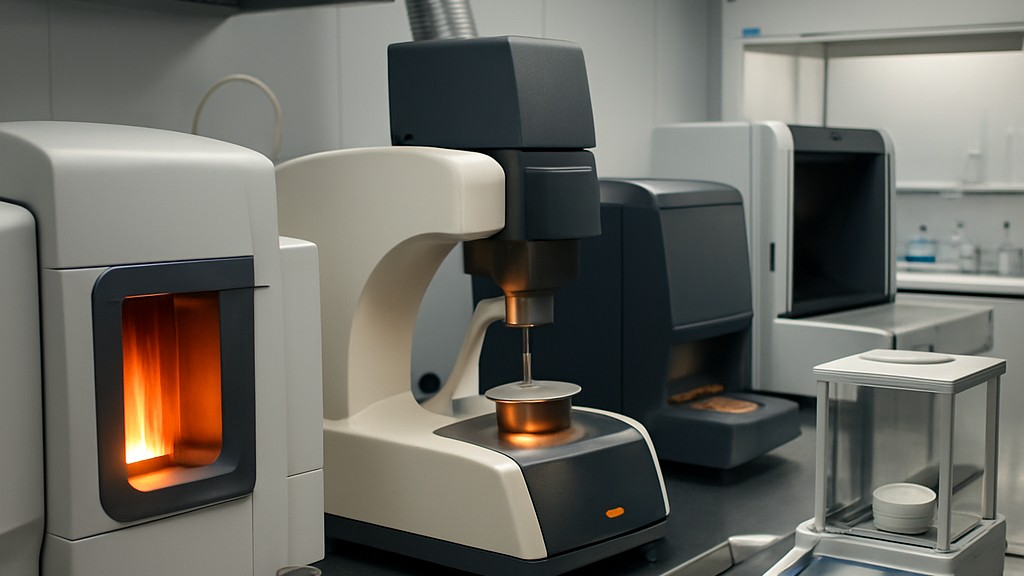
Rapid equilibrium procedures A and B are applicable to the flash, non-flash, and flash point tests of water-based paints, varnishes, binders for paints and varnishes, adhesives, solvents, petroleum products including aviation turbine fuels, diesel and kerosene fuels, fatty acid methyl esters, and related products over a temperature range of -30°C to +300°C. Rapid equilibrium procedures are used to determine whether a product will flash at a specified temperature (flash, non-flash procedure A) or at the flash point of a sample (procedure B). When used in conjunction with a flash detector, this standard is also suitable for determining the flash point of fatty acid methyl esters (FAME). The validity of the sensitivity is given in the table within the standard.
Non-equilibrium procedure C is applicable to petroleum products, including aviation turbine, diesel, and kerosene fuels, and related petroleum products, over a temperature range of -20°C to +300°C. The non-equilibrium procedure is automated for determining the flash point. Sensitivity is determined over the range of 40°C to 135°C.
For specifications and regulations, procedure A or B is routinely used.
For the purposes of this standard, the following terms and definitions apply:
In rapid equilibrium procedures A and B, a 2 ml or 4 ml test portion is introduced into a test vessel that has been adjusted and maintained at the required test temperature. After a specified time, when the vapors and the test portion are deemed to be in temperature equilibrium, an ignition source is applied and a determination is made as to whether a flashpoint has occurred (procedure A). To determine the true flashpoint of the sample, further tests are performed with fresh test portions at different test vessel temperatures until the flashpoint is determined (procedure B). The temperature is adjusted to account for the change in atmospheric pressure from 101,3 kPa using a formula.
In the non-equilibrium procedure C, a 2 ml test portion is introduced into a test vessel which is set and held at the required initial temperature. The test vessel is then heated at a ramp rate of 1,5 degrees/minute to 2,5 degrees/minute, and the ignition source is applied at 1 degree temperature intervals until a flash point is detected. The detected flash point temperature is adjusted to account for the change in atmospheric pressure from 101,3 kPa using a formula.
When preparing for tests, the most important step is to select the appropriate instrument for the specific procedure and expected flash point temperature. The manufacturer's instructions must be followed for proper instrument setup, verification, and operation, particularly the operation and adjustment of the ignition source.
Procedure C is automatic and requires automatic temperature ramp control, while subambient testing requires integrated cooling. The use of a container insert (for potentially sticky materials) is described in Appendix C. When testing FAME (procedures A and B), a 2 ml plus/minus 0,05 ml test portion and a test time of 60 s plus/minus 2 s are used in conjunction with an electronic thermal flash detector. For subambient test temperatures, Appendix D is used if the instrument does not have integrated test container cooling.
The instrument is supported on a flat, stable surface in a draft-free location. A draft shield should be used when draft protection is not possible. When testing materials that may produce toxic vapors, the instrument should be placed inside an individually controlled airflow hood, configured to extract vapors during testing without creating drafts around the test container.
Unless otherwise specified, samples should be obtained in accordance with the procedures outlined in ISO 1513, ISO 15528, ISO 3170, or ISO 3171, or an equivalent national standard. A sufficient quantity of sample for the test should be placed in a tightly closed container made of material compatible with the liquid to be sampled, and for safety purposes, the container should be filled only to 85% to 95% of its capacity. Samples should be stored under conditions that minimize vapor loss and pressure buildup. Samples should not be stored at temperatures above 30°C.
For specifications and regulations, procedures A or B should be used unless procedure C is specified.
Our organization, which has been supporting businesses across all sectors for years through a wide range of testing, measurement, analysis, and evaluation activities, boasts a strong team of employees who closely follow global developments in science and technology and are constantly improving themselves. In this context, we also provide testing services in accordance with the ISO 3679 Flash Point Determination - Flash-non-flash and flash point method using a small-scale closed-cup test device.
To get an appointment, to get more detailed information or to request an evaluation, you can ask us to fill in our form and reach you.