
The standard "NIOSH 7105 Determination of Lead by Graphite Furnace Atomic Absorption Spectrometry (GFAAS)", designed by the National Institute for Occupational Safety and Health (NIOSH), describes a procedure for determining lead in materials using graphite furnace atomic absorption spectrometry. This procedure covers elemental lead and lead compounds except alkyl lead.
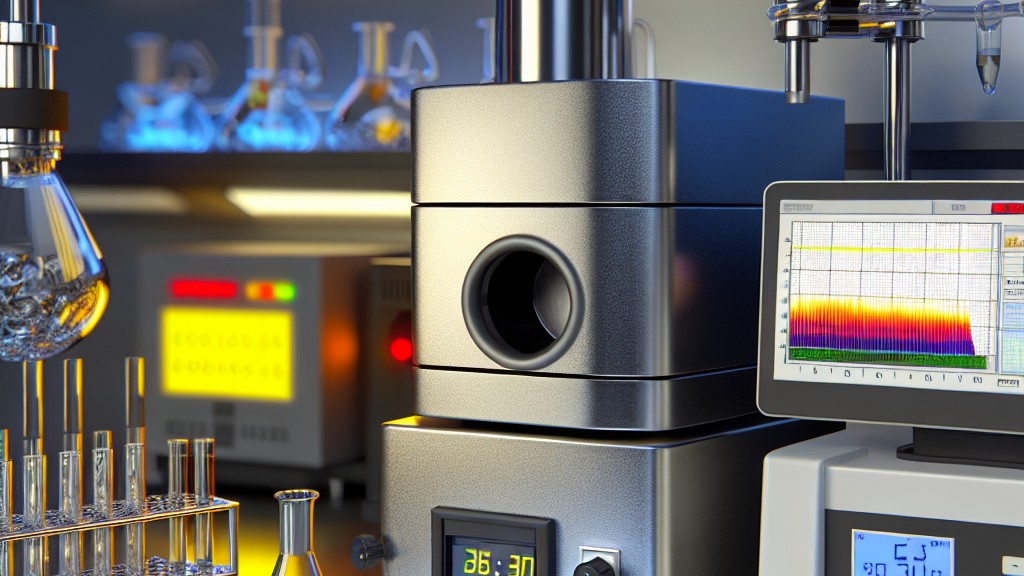
Graphite furnace atomic absorption spectrometry (GFAAS), also known as electrothermal atomic absorption spectrometry (ETAAS), is an established technology used to quantify elements at trace and ultratrace levels (down to low μg/L) using only sample volumes (typically less than 100 μL).
In this instrument, a known amount of sample solution is injected into a graphite or pyrolytic carbon coated graphite tube which can then be heated to vaporize and atomize the analyte. The atoms absorb ultraviolet or visible light of an element of a particular wavelength and transition to higher electronic energy levels. The amount of absorption is a measure of the concentration of the element of interest in the sample solution. Concentrations can be derived after the instrument is calibrated with standards of known concentration.
Ideal uses for graphite furnace atomic absorption spectrometry include:
The strengths of this instrument are: good sensitivity, low detection limits (μg/L), applicability to a wide range of matrices, small sample volumes and limited spectral interferences.
However, this instrument has the following limitations: time consuming, sequential analysis of 1-6 elements, limited dynamic range (the range in which the ion signal is linear with analyte concentration), lack of scanning capability, and the need for individual method optimization for each sample type.
Studies are also being conducted for the determination of lead in blood and urine using graphite furnace atomic absorption spectrometry. This instrument is a leading technique in analytical chemistry for routine low-level analysis of lead and other heavy metals for a wide variety of sample types.
Lead poisoning is an environmental health problem that has extremely serious consequences on the human body. Acute lead poisoning presents clinically with intense acute abdominal pain, which is a difficult diagnosis in emergency situations. Developing a rapid and reliable method for determining lead in blood and urine is important for both diagnosis and treatment. In this respect, lead detection with GFAAS is an important procedure in the medical field.
For the applicability of this standard, the working range for a 200 L air sample is 0,002 to 1 mg/m3. If high concentrations are expected, samples should be analyzed by flame AAS. This method is valid for elemental lead, including lead fume and all other aerosols containing lead. This is an elemental analysis that is not compound specific. Aliquots of the sample may be analyzed separately for additional elements.
D2 or H2 continuity or Zeeman background correction is used to control molecular absorption. High concentrations of calcium, sulfate, carbonate, sulfate, carbonate, phosphate, iodide, fluoride or acetate can be compensated for by an additional sample processing step.
These tests also include the following alternative methods:
Our organization has a strong workforce that closely follows global developments in science and technology and continuously strives for self-improvement. Among the numerous tests, measurements, analyses, and evaluations provided for businesses in various sectors, are testing services compliant with the "NIOSH 7105 Lead Detection by Graphite Furnace Atomic Absorption Spectrometry (GFAAS)" standard.
To get an appointment, to get more detailed information or to request an evaluation, you can ask us to fill in our form and reach you.