

Transmission electron microscopy (TEM) is an analytical technique used to visualize the smallest structures in matter. Unlike optical microscopes, which rely on light in the visible spectrum, TEM can magnify nanometer structures by up to 50 million times, revealing stunning detail at the atomic scale. This is because electrons can have a wavelength significantly shorter than visible light (about 100 thousand times smaller) when accelerated by a strong electromagnetic field, thus increasing the resolution of the microscope by several orders of magnitude.
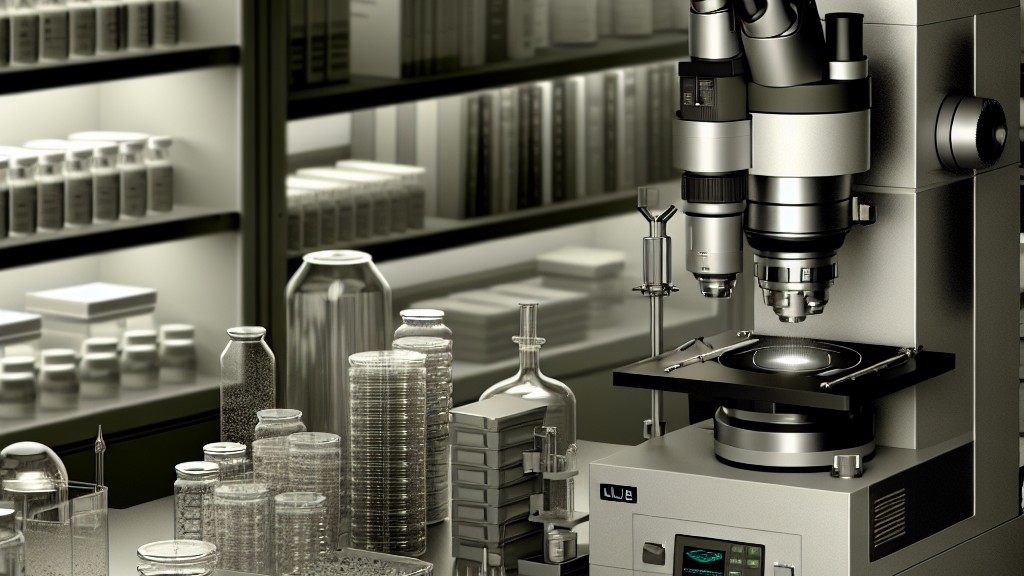
To create a TEM image, a high-energy electron beam is passed through an extremely thin "electron-transparent" sample, usually less than 100 nm thick. A series of electromagnetic lenses and apertures are placed along the column of the microscope to focus the beam onto the sample, minimize distortions, and magnify the resulting image onto a phosphor screen or special camera.
TEM comes in many different forms, but they all share the same basic principles and components. The two main types of TEM instruments are: conventional TEM and STEM (scanning transmission electron microscope).
This rapidly evolving technology has made TEM an indispensable technique for both materials and life science applications. Today's most powerful TEMs are equipped with modifications and additional detectors that not only increase the performance and stability of the microscope but also provide the additional capacity to collect chemical and electronic information at subnanometer length scales from a wide variety of materials.
Zooming in to the atomic scale allows scientists to see the basic building blocks of functional materials, such as catalyst nanoparticles, batteries, and semiconductor devices. Focused electron beams can also be used to manipulate materials in situ. The level of detail at this scale is astonishing and offers a way to understand the connections between structure, properties, and performance, allowing engineers to design nanomaterials from the bottom up.
Transmission electron microscopes (TEMs) consist of five basic components:
Briefly, transmission electron microscopy is a high-resolution imaging technique in which a beam of electrons passes through a thin sample to form an image. The electron beam is affected by the sample's thickness or density, its composition, and in some cases its crystallinity.
Analysis of TEM data uses a variety of analytical techniques to extract meaningful information. Some of the most common are diffraction pattern analysis and electron tomography, which can even depict the structural and chemical nature of the sample.
The main analytical techniques are:
The power of TEM data analysis lies in examining the diffraction pattern. This provides information about the crystal structure of the sample. Such patterns are critical for gaining insight into the atomic arrangement of the material and understanding its properties.
High-resolution imaging allows for detailed visualization of sample details. Features can be seen down to the nanometer scale. The features can then be quantitatively analyzed through particle size, shape, and distribution measurements.
The main areas where TEM analysis is used are:
With TEM analysis the following can be obtained:
TEM analysis is essential when sensitivity, resolution and deep material understanding are required. It is the only tool that provides accurate answers for many advanced materials or biological studies.
Our organization, which has been trying to support businesses from every sector with its wide range of testing, measurement, analysis and evaluation studies for years, has a strong staff that closely follows the developments in the world in the field of science and technology and constantly improves itself. In this context, “TEM - Transmission electron microscopy analysis” services are also provided to businesses.
To get an appointment, to get more detailed information or to request an evaluation, you can ask us to fill in our form and reach you.