

X-ray fluorescence (XRF ) is an analytical technique that uses the interaction of X-rays with a material to determine its elemental composition. This technique is suitable for solids, liquids, and powders and is non-destructive in most cases. XRF spectroscopy is an effective method for qualitative and quantitative analysis of material composition.
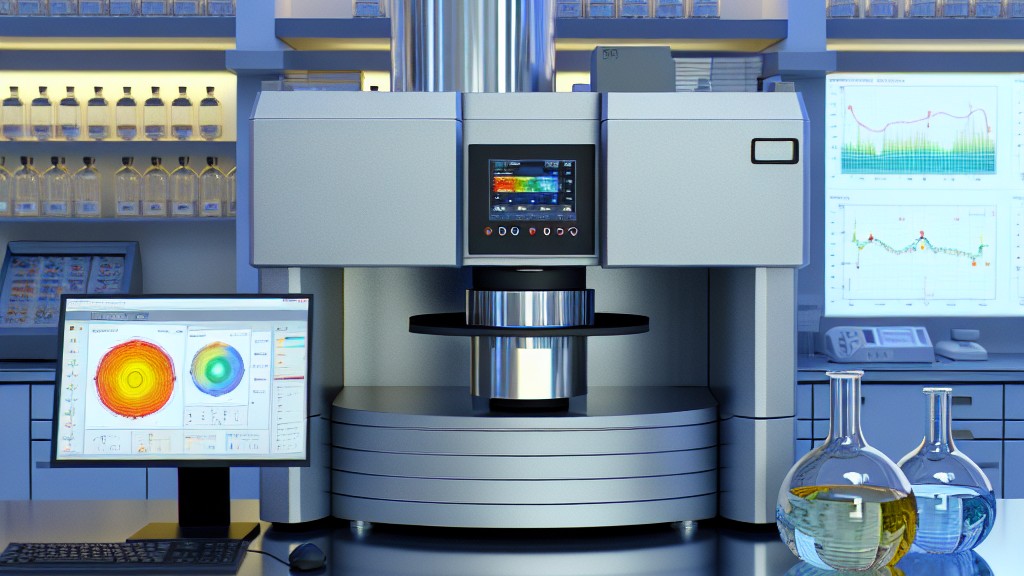
There are essentially two main XRF methodologies: energy dispersive XRF and wavelength dispersive XRF. Each method has its own advantages and disadvantages.
The range of detectable elements varies with instrument configuration and setup, but typically energy-dispersive XRF covers all elements from sodium to uranium, while wavelength-dispersive can extend to beryllium. Concentrations can range from 100 percent to ppm and in some cases subppm levels. Detection limits depend on the specific element and the sample matrix, but as a general rule, heavier elements have better detection limits.
X-ray fluorescence is widely used as a rapid characterization tool in many analytical laboratories around the world in applications as diverse as metallurgy, forensics, polymers, electronics, archaeology, environmental analysis, geology and mining.
X-rays are part of the electromagnetic spectrum and are characterized by energies between gamma and ultraviolet radiation. Wavelengths are generally in the range of 0,01 to 10 nm.
When X-rays are irradiated into a substance, some of them pass through the substance and some of them are absorbed by the substance. The absorbed X-rays interact at the atomic level within the substance and cause various phenomena such as scattering and the emission of photons, electrons and fluorescent X-rays.
X-ray fluorescence (XRF) can be thought of as a simple three-step process that occurs at the atomic level:
The energy difference between the ejected and displaced electrons is characteristic of the element atom in which the fluorescence process takes place. Therefore, the energy of the emitted fluorescent X-ray depends directly on the particular element being analyzed. It is this fundamental feature that makes the X-ray fluorescence technique such a rapid analytical tool for elemental composition.
The X-ray fluorescence (XRF) spectrometer used in analysis is an X-ray instrument used for routine chemical analysis of sediments, rocks, minerals, and fluids. XRF instruments are typically used for bulk analysis of larger areas of minerals and materials.
The technique used by XRF spectrometers is possible because of the behavior of atoms when they interact with radiation. If a material is excited by high-energy, short-wavelength radiation, it can ionize. If the energy is high enough, it has the capacity to dislodge a tightly held inner electron. After this, the atom becomes unstable, causing an outer electron to take the place of the missing inner electron, releasing energy.
An XRF spectrometer consists of two main components:
The array then emits X-rays or gamma rays into a sample, exciting the electrons within it. The inner atoms are displaced and the atoms that take their place are lowered from the orbital shells above. This then reduces the binding energy and the release of energy is known as fluorescence.
The benefit of using XRF analyzers, like spectrometers, is that they record this burst of energy in real time. There are many sample preparation techniques for analysis with an XRF spectrometer, including:
Briefly, X-ray fluorescence (XR) is a non-destructive analytical technique used to determine the elemental composition of materials. XRF analyzers determine the chemistry of a sample by measuring the fluorescence, or secondary X-rays, emitted from the sample when excited by a primary X-ray source.
This technique is widely used as a rapid characterization tool in many analytical laboratories around the world in applications as diverse as metallurgy, forensics, polymers, electronics, archaeology, environmental analysis, geology and mining.
Our organization has a strong staff that closely follows the developments in the world in the field of science and technology and constantly improves itself. Among the numerous test, measurement, analysis and evaluation studies provided for businesses in various sectors, there are also "X-ray fluorescence (XRF) analysis" services.
To get an appointment, to get more detailed information or to request an evaluation, you can ask us to fill in our form and reach you.