The standard “ABNT NBR 16040 Phthalates - Determination of phthalic plasticizers by gas chromatography” developed by the Brazilian Association for Technical Standards (ABNT) describes two methods for the determination of phthalic anhydride esters plasticizers that can be present in the composition of flexible PVC and other materials by gas chromatography: method A and method B. Method A uses Soxhlet extraction, while method B uses the tetrahydrofuran (THF) solution method.
Phthalates are used as plasticizers in a variety of polymers, and their applications are centered around coatings such as lacquers, varnishes, and paints. The addition of phthalates gives these materials some flexibility and reduces their tendency to break. Phthalates, derived from alcohols containing 1–4 carbon atoms, are used as plasticizers for cellulose-type plastics such as cellulose acetate, nitrocellulose, and cellulose acetate butyrate, and have common applications including nail polish.
Many types of phthalates are also compatible with alkyds and acrylic resins used in both oil- and emulsion-based paints. Other plasticized polymer systems include polyvinyl butyral (especially the forms used to make laminated glass), PVA, and copolymers such as PVCA. They are also compatible with nylon, polystyrene, polyurethanes, and certain rubbers, but their use is very limited.
Phthalates can plasticize compounds, all of which are used to make enteric coatings for tablet and capsule medications. These coatings protect medications from the acidity of the stomach but allow them to be released and absorbed in the intestines.
In European Union countries, the use of many types of phthalates is prohibited in toys and child care products above 0,1 percent by weight. Certain phthalates are severely restricted and are often banned as cosmetic ingredients.
There is no official ban on their use in cosmetics in the United States, but phthalates are mostly restricted to food contact products. In China, the limit for certain phthalates in plastic toys is 0,1 percent of the material composition, while some are banned in cosmetics.
In short, phthalates, known endocrine disruptors found in everyday products, are a concern. Coordinated international legislation is needed to prevent exposure, especially in vulnerable populations.
A plasticizer is a substance added to a material to make it softer and more flexible, to increase its flexibility, to reduce its viscosity, or to reduce friction during handling during manufacturing. Plasticizers are often added to polymers and plastics, such as PVC, to facilitate processing of the raw material during manufacturing or to meet the application demands of the final product. Plasticizers are particularly important to the usability of polyvinyl chloride (PVC), the most widely used plastic. In the absence of plasticizers, PVC is hard and brittle; with plasticizers, it is suitable for products such as vinyl siding, roofing, vinyl flooring, rain gutters, plumbing, and electrical wire insulation/coating.
The analysis methods used in the determination of plasticizer mainly include spectrophotometry, fluorescence spectrophotometry, gas chromatography, liquid chromatography, gas chromatography-mass spectrometry and liquid mass spectrometry.
Phthalic acid esters or phthalates are synthetic chemical compounds known for many years. The widespread application of phthalates has led to their ubiquitous presence in the environment and has also posed a serious threat to living organisms, including humans. Therefore, determination of phthalates in different environmental matrices is imperative to know their potential effects on various ecosystems and human health.
Determination of phthalates in complex natural matrices requires extensive sampling, accurate sample preparation, identification, verification and quantification using well-established analytical methods. Commonly used extraction methods are liquid-liquid extraction, solid phase extraction, solid-liquid extraction, solid phase microextraction, Soxhlet-mediated extraction, supercritical carbon dioxide extraction and similar methods. Apart from extraction methods, chromatographic systems, especially gas chromatography, liquid chromatography, high-performance liquid chromatography or ultra-high-performance liquid chromatography, are also applied. In analytical instruments, the most commonly preferred detectors are mass spectrometry, tandem mass spectrometry, flame ionization detector, time-of-flight mass spectrometry.
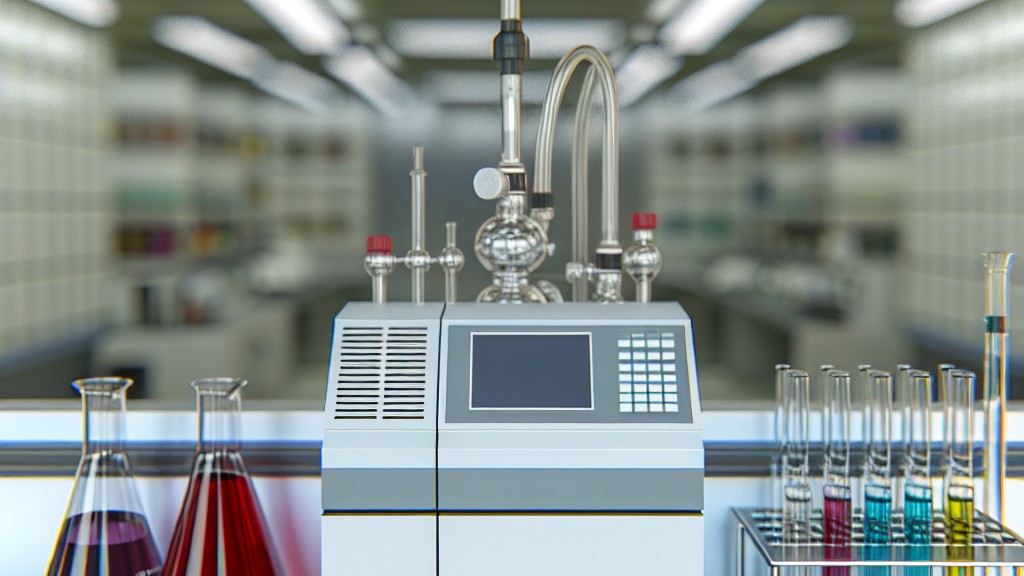
Gas chromatography is a common type of chromatography used in analytical chemistry to separate and analyze compounds that can be vaporized without decomposition. Typical uses for this method include testing the purity of a particular substance or separating different components of a mixture. Gas chromatography is the process of separating compounds in a mixture by injecting a gas or liquid sample into a mobile phase, usually called a carrier gas, and passing the gas through a stationary phase.
Our organization, which has been trying to support businesses from every sector with its testing, measurement, analysis and evaluation studies carried out in a wide range for years, has a strong staff that closely follows the developments in the world in the field of science and technology and constantly improves itself. In this context, testing services in accordance with the standard “ABNT NBR 16040 Phthalates - Determination of phthalic plasticizers by gas chromatography” are also provided to businesses.
To get an appointment, to get more detailed information or to request an evaluation, you can ask us to fill in our form and reach you.