
This standard applies to chambers that completely enclose a material sample to be tested and does not address other emission chamber designs, such as emission cells. This standard describes options but does not recommend specific courses of action. This guide is not a standard test method.
The use of small environmental test chambers to characterize VOC emissions from indoor materials and products is still evolving. As research in the field progresses, changes and variations in equipment, test procedures, and data analysis are being made. For many indoor materials, more detailed ASTM standards for emissions testing have been developed. When more detailed ASTM standard practices or methods become available, they supersede this guide and should be used in its place.
Small chambers have significant limitations. Typically, only larger materials, such as carpet samples, are tested. Small chambers are not suitable for testing complete assemblies (e.g., furniture). Small chambers are also unsuitable for testing combustion appliances (e.g., kerosene heaters) or activities (e.g., the use of aerosol spray products). For some products, small chamber testing can provide only a portion of the relevant emission profile. For example, emission rates from the application of highly solvent-containing materials (e.g., paints and varnishes) by brushing, spraying, or rolling are generally higher than those during the drying process. Small chamber testing cannot be used to evaluate the application phase of the coating process.
Using small rooms to assess VOC emissions from interior materials has several objectives:
In small-chamber assessments of emissions from indoor materials, the relevant mass transfer processes must be considered. Three primary processes control the rate of organic vapor emissions from indoor materials: evaporative mass transfer from the material surface to the overlying air, desorption of adsorbed compounds, and diffusion within the material.
Most organic compounds emitted from indoor materials and products are nonreactive, and chambers are designed to reduce or eliminate reactions and adsorption on chamber surfaces. However, surface adsorption can occur in some cases. Some relatively high-molecular-weight, high-boiling-point compounds may react after deposition on the surface (i.e., with ozone). In such cases, simultaneous degradation and deposition on chamber walls and eventual re-emission can affect the final chamber concentration and the time history of the emission profile. If these factors are not properly accounted for, inaccurate values for emission rates will be calculated. The magnitude of chamber adsorption and reaction effects can be assessed through mass balance calculations.
It is emphasized that small-room assessments are used to determine source emission rates. These rates are then used in indoor air quality models to estimate indoor concentrations of compounds emitted from the tested material. Indoor air quality modelers may need to be consulted to ensure that the small-room testing regimen is consistent with indoor air quality model assumptions. Concentrations observed in the rooms themselves should not be used as a proxy for concentrations expected in full-scale indoor environments.
In short, ASTM D5116 distinguishes itself from other emission test methods, such as emission cells (covered in ASTM D7143), by focusing on small-scale chambers that completely surround a material sample. This guide is not a definitive test method, but rather a guide that offers flexible options for equipment, test procedures, and data analysis, allowing for adaptation as the field evolves.
The main objectives of this standard are:
This guide is widely used by industries such as flooring, paint, furniture, and building material manufacturing, as well as by green building certification bodies, to ensure compliance with indoor air quality standards and promote healthier indoor environments.
The ASTM D5116 standard applies to a wide range of interior materials, including:
Data from ASTM D5116 testing supports product development, regulatory compliance, environmental labeling, and marketing efforts targeting health-conscious consumers. It also helps secure certifications for green building projects that prioritize low-emission materials to improve public health in homes, businesses, schools, and healthcare facilities.
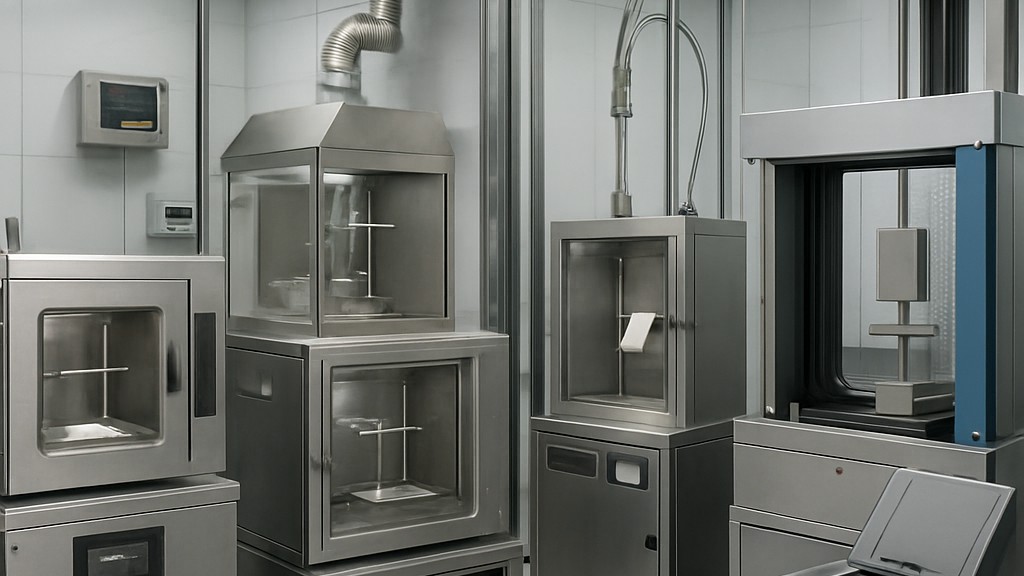
Highlighted in the ASTM D5116 guide, small-scale environmental test chambers for measuring VOC emissions completely enclose the material sample, creating a controlled environment for monitoring emissions under specific conditions. Key considerations in the testing process include:
While this standard provides flexibility, it is noted that more specific ASTM standards for certain materials may supersede this guide. If detailed standards exist for specific products, such as carpet or paint, they should be used. The guide also acknowledges that small rooms have limitations, such as being unsuitable for testing complete assemblies such as furniture due to size constraints.
The ASTM D5116 standard plays a vital role in protecting public health by enabling manufacturers to identify and reduce VOC emissions from their products. By adhering to this guideline, companies can:
The guide also supports green building initiatives, which are becoming increasingly important as consumers and regulators prioritize sustainability and health-conscious materials.
As a result, ASTM D5116 is a cornerstone of assessing VOC emissions from indoor materials, providing a flexible yet robust framework for testing and improving indoor air quality. Its applications span a wide range of industries, from construction to furniture manufacturing, and its data supports critical work in public health and environmental sustainability. As the field of emissions testing continues to evolve, ASTM D5116 remains a vital resource. For manufacturers, researchers, and testing laboratories, this guide is an essential tool for ensuring safer and healthier indoor environments.
Our organization, which has been operating for many years and meticulously follows global developments in science and technology, employs a team of experienced professionals and a broad infrastructure to conduct testing, measurement, and analysis in a wide range of areas for businesses across all sectors. In this context, we also provide testing services in accordance with the "ASTM D5116 Standard Guide for Determining Organic Emissions from Small-Scale Environmental Chamber Interior Materials/Products" standard.
To get an appointment, to get more detailed information or to request an evaluation, you can ask us to fill in our form and reach you.