
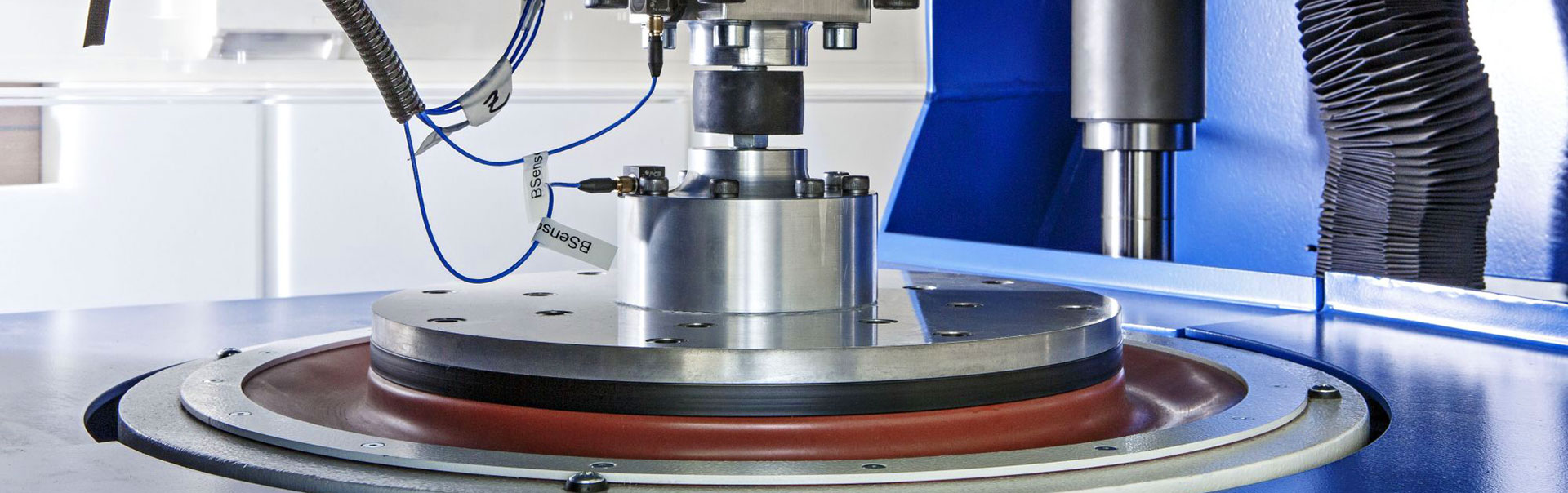
The International Organization for Standardization (ISO) standard “ISO 2592 Petroleum and related products - Determination of flash and fire points - Cleveland open cup method” describes a procedure for determining the flash and fire points of petroleum products using the Cleveland open cup apparatus. The method is applicable to petroleum products having open cup flash points between 2719°C and 79°C, except for fuel oils, which are most frequently tested by the closed cup procedure described in the standard “ISO 400 Determination of flash points - Pensky-Martens closed cup method”.
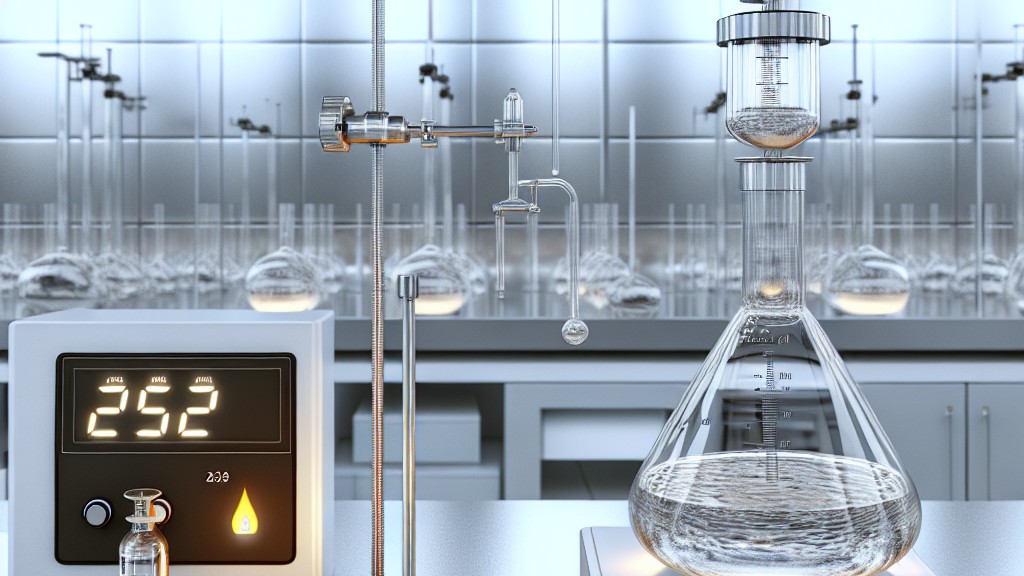
For the purposes of this standard, the following terms and definitions apply:
In principle, the test vessel is filled with the test portion to a specified level. The temperature of the test portion may be increased initially at a rate of 5°/min to 17°/min and then at a slow constant rate (5°/min to 6°/min) as the flash point is approached. A small test flame is passed over the test vessel at the specified temperature intervals.
The lowest temperature at which the application of the test flame causes the vapor above the surface of the liquid to ignite is taken as the flash point at ambient barometric pressure. To determine the flash point, the test is continued until the application of the test flame causes the vapor above the test portion to ignite and burn for at least 5 seconds. The flash point and flame burning point obtained at ambient barometric pressure are corrected to standard atmospheric pressure using a formula.
Major chemicals and materials used in testing include:
The equipment used in these tests includes:
Unless otherwise stated, samples for analysis are taken in accordance with the procedures given in ISO 3170, ISO 3171 or an equivalent standard. Samples are placed in tightly closed containers suitable for the material being sampled and, for safety purposes, the sample container is filled only to 85% to 95% of its capacity. Samples are stored under conditions that will minimise vapour loss and pressure build-up. Samples should be stored at temperatures above 30°C.
Subsample at a temperature at least 56 degrees below the expected flash point. If part of the original sample is to be stored prior to testing, fill the container to more than 50 percent of its capacity. If the sample volume falls below 50 percent of the container capacity, the results of flash point determinations may be affected.
Flash point results in samples containing undissolved water may be affected by the presence of water. If a sample contains undissolved water, an aliquot without water is decanted prior to mixing.
For samples that are liquid at ambient temperature, the samples are mixed by gentle shaking by hand before removing the test portion, minimizing the loss of volatile components. Samples that are semi-solid or solid at ambient temperature are heated in their containers in a heating bath or oven to a temperature of 56 degrees below the expected flash point. High pressure should not be generated in the container. The sample should not be overheated as this may lead to the loss of volatile components.
Our organization has a strong staff that closely follows the developments in the world in the field of science and technology and constantly improves itself. Among the numerous test, measurement, analysis and evaluation studies provided for businesses in various sectors, there are also testing services in accordance with the standard “ISO 2592 Petroleum and related products - Determination of flash and fire points - Cleveland open cup method”.
To get an appointment, to get more detailed information or to request an evaluation, you can ask us to fill in our form and reach you.