
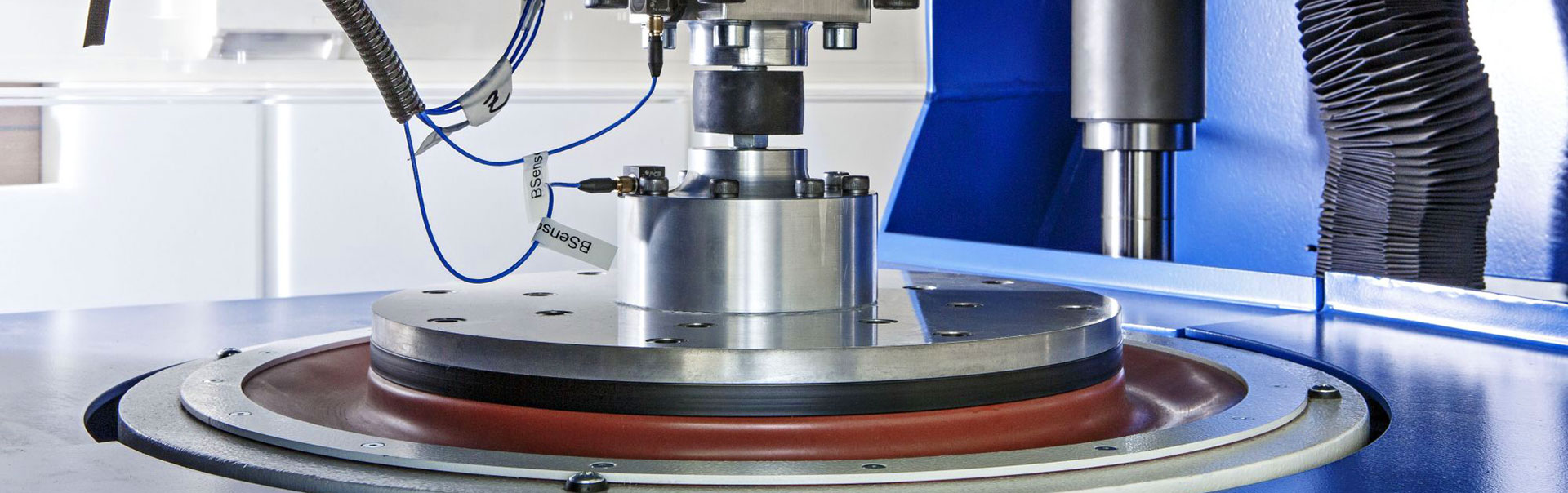
The OECD guideline 104 Vapor pressure, published under the OECD guidelines on responsible business conduct for multinational enterprises (OECD guidelines), describes eight methods for measuring vapor pressure. Each can be applied across different vapor pressure ranges. The vapor pressure of a substance (in Pascals) is defined as the saturation pressure above a solid or liquid substance and is determined at various temperatures (in Kelvin).
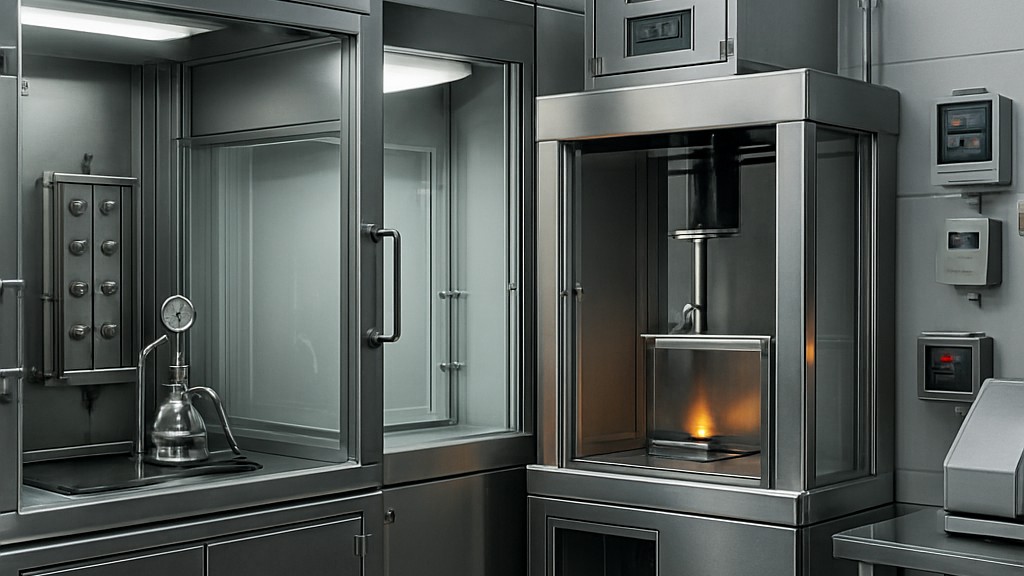
The methods used are:
These methods are applicable only to compounds that do not decompose under the test conditions. Where experimental methods are not applicable for technical reasons, the vapor pressure can also be estimated, and a suggested estimation method is included in the appendix of the guideline.
The vapor pressure in any of these methods must be determined for at least two temperatures. Three or more temperatures within the range of 0 to 50 degrees Celsius are preferred to verify the linearity of the vapor pressure curve. For effusion methods and gas saturation methods, a temperature range of 120 to 150 degrees Celsius is recommended instead of 0 to 50 degrees Celsius.
In the world of chemical safety and environmental regulations, accurately determining the physical properties of substances is crucial. One such property is vapor pressure, the pressure exerted by a vapor in thermodynamic equilibrium with its liquid or solid phase at a given temperature. This value helps predict how a chemical might evaporate, disperse in air, or behave in industrial processes.
OECD 104, a standard protocol developed to measure vapor pressure reliably and reproducibly, ensures that data generated in laboratories worldwide are mutually accepted by regulatory bodies such as the European Chemicals Agency (ECHA) under REACH or the US Environmental Protection Agency (EPA).
Vapor pressure is defined in this guide as the saturation pressure above a solid or liquid substance and is measured in Pascals (Pa) at various temperatures in Kelvin (K). High vapor pressure indicates a substance is volatile and may pose respiratory risks or contribute to air pollution, while lower values indicate stability. Therefore, this guide is considered important.
Vapor pressure data are a key element of risk assessments. These data influence how chemicals are classified under international systems and their labeling, transportation, and handling requirements. For example, high vapor pressure volatile organic compounds (VOCs) are studied for their role in smog formation.
OECD 104 stands out for its flexibility, describing eight different vapor pressure measurement methods, each tailored to different pressure ranges and substance types (e.g., liquids, solids, or substances that may decompose under heat). These methods are compared in a handy table included in the guide, outlining their principles, applicability, and range: from ultra-low pressures to atmospheric levels. Importantly, all methods assume the test substance remains stable under the test conditions; decomposition invalidates the results.
A breakdown of the basic methods is as follows:
To perform an OECD 104 test, a sample of 0,1–10 g is typically prepared and measurements are taken at multiple temperatures (e.g., in increments of 20–50 degrees Celsius). Safety is paramount; volatile substances require fume hoods, and temperature controls prevent explosions.
Challenges include ensuring the absence of segregation (verified by pre- and post-test purity checks) and accounting for impurities. For temperature extrapolation, the guideline recommends caution beyond 20 K from measured points. Predictive methods can complement, but not replace, experimental data.
Today, the OECD continues to update guidelines for emerging challenges such as nanomaterials. Because the particle size of nanomaterials can alter volatility, nanomaterial-specific adjustments are made to vapor pressure tests. As climate change raises concerns about volatile emissions, the role of these guidelines in sustainable chemistry is growing.
Ultimately, OECD 104 provides a robust and adaptable framework for vapor pressure determination, setting an example for international cooperation in chemical testing. By standardizing methods, it not only facilitates regulatory compliance but also protects public health and the environment. In an era of rapid chemical innovation, tools like OECD 104 emphasize that precise measurement is the foundation of responsible management.
Our organization, which has been serving for many years and meticulously following global developments in science and technology, conducts testing, measurement, and analysis in a wide range of areas for businesses across all sectors with a skilled team and extensive infrastructure. In this context, we also provide testing services in accordance with the OECD 104 Vapor Pressure Guide.
To get an appointment, to get more detailed information or to request an evaluation, you can ask us to fill in our form and reach you.