Product Safety Engineering Guidelines
These guidelines cover more common issues in product safety engineering.
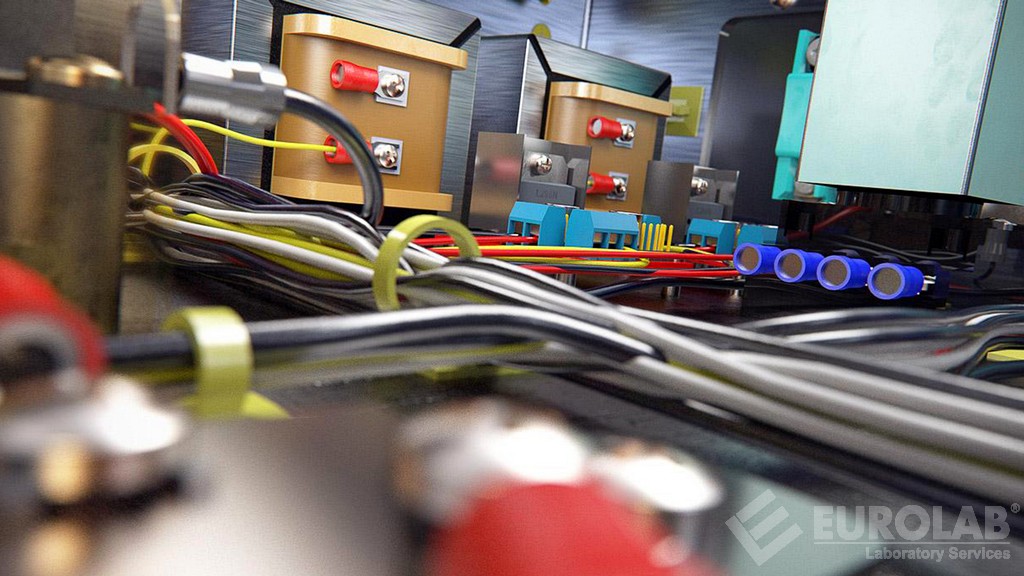
Have the standard
- Obtain and maintain a current copy of all applicable product safety standards
- Read the standard
- Apply the standard during initial product design
Choose suitable components
- Use components certified by third parties. NRTL certified parts generally meet this requirement. CE Mark and CB Certified components may require additional research and testing and special oversight.
- Achieve acceptance conditions for critical components
- Use components in their ratings
- If specific non-certified components must be used, have them evaluated as early as possible
Siege
- Understand what is required for containment: Does it need to provide mechanical protection? Electric protection? Fire hazard protection?
- Choose materials that can meet the tests required by the standard
- If polymeric material is used, know what properties are critical to acceptability
- If conductive material is used, consider spacing from circuits as well.
Openings in products
- Keep openings to a minimum
- Design vents or other openings to not only meet your service needs, but also to allow the product to maintain proper integrity and reduce the risk of electric shock, fire or mechanical hazard.
- Avoid the openings in the bottom. Be aware of tests and requirements that may be required, if possible.
- Avoid the openings in the top. Be aware of tests and requirements that may be required, if possible.
Circuit separation / range
- Know how to classify each different circuit in terms of potential danger: Grid? SELV? TNV? Other?
- Know what is required for physical distances, insulation thickness, type and amount of insulation
- The intended use height can influence the choice of requirements
- When assessing range requirements, appropriately consider the nature of the voltage involved: Is the voltage sinusoidal? Is it direct current? Are there repetitive peaks like typical ones in switched power supply?
- Special conditions apply where conductive coatings can be used.
Plastic and printed circuit boards
- Most plastics will need to have a minimum flame rating.
- Know what is required for every plastic: HB? V0? 5V?
- Consider the use of plastic: Is it for containment? Is it an insulator?
- Special conditions apply for the use of conductive coatings
- The same is true for printed circuit board materials.
- Additional requirements may apply for printed circuit boards that support hazardous energy
Radiation sources
- Products using laser emitters are covered by the US Federal Regulations Act, Title 21, Section 1040 and the Canadian Radiation Emitting Devices Act, REDR C1370.
- There is some conformance with IEC 60825-1 classifications
- Products that generate ionizing radiation are covered by the US Federal Regulations Act, Title 21, Section 1020, and the Canadian Radiation Emitting Devices Act, REDR C1370.
- There are often additional requirements for products that generate ultraviolet emission.
Outdoor products
- Generally UL 50 in the United States and CSA C22.2 No. 94 requirements.
- Beyond the IEC 60529 declaration of conformity, additional requirements apply
- UL 50 / CSA C22.2 No. 94 has requirements that include the evaluation of plastics against UV rays and seals used for ingress protection.
- Where conductive coatings are used, additional requirements may apply
Product markings and documentation
- Identify all the necessary signs. Place them on the product as desired or create markup text and drawings showing where to place them: Electrical values
- Model and manufacture or trademark
- Security warnings
- Installation instructions and user / operating instructions
Preparing for surveillance
- Prepare for at least two factory surveillance visits per year
- Get ready to show that the labeled product remains compliant
- Production line testing may be required; this usually includes electrical strength testing and earthing continuity testing
- When you get the descriptive test report, review it; what our inspectors use to inspect
EUROLAB, with its highly expert team and internationally accredited laboratories, Product Safety Engineering Guidelines It performs all test, analysis, measurement, evaluation and report generation services completely and reliably.



