
EN IEC 62053-23 Static Meters for Reactive Energy (Classes 2 and 3)

EN IEC 62053-23 Static Meters for Reactive Energy (Classes 2 and 3)

The standard “EN IEC 62053-23 Electrical measuring equipment - Special requirements - Part 23: Static meters for reactive energy (classes 2 and 3)”, developed by the International Electrotechnical Commission (IEC) and later published as a European standard as part of harmonization efforts, applies only to static current metering devices with accuracy classes 2 and 3, used for measuring alternating current electrical reactive energy in 50 Hz or 60 Hz networks, and only for type testing purposes.
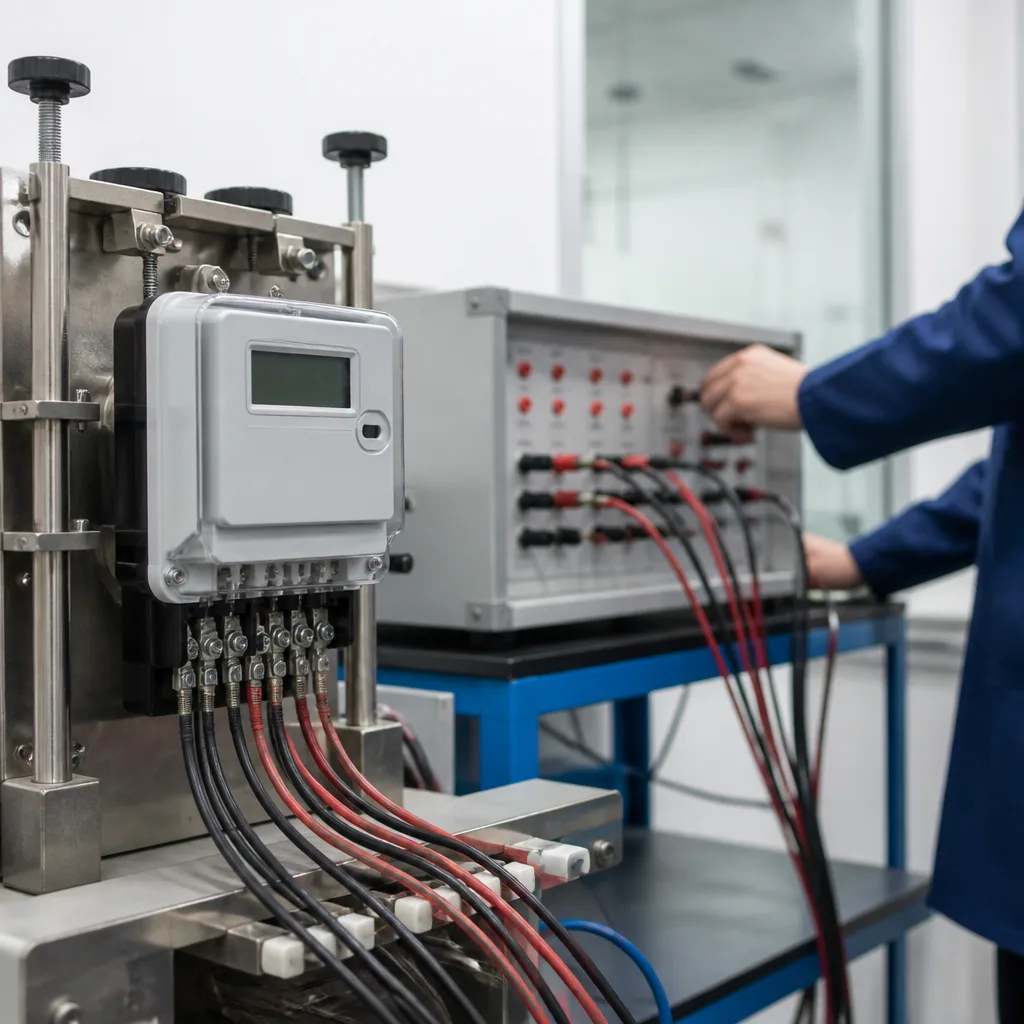
EN IEC 62053-23 Static Meters for Reactive Energy (Classes 2 and 3)

For practical reasons, this standard relies only on a conventional definition of reactive energy for sinusoidal currents and voltages that include the fundamental frequency. This standard applies to electrical measuring equipment designed for the following purposes:

  • Measuring and controlling electrical energy in power grids with voltages up to 1000 Volts AC.
  • Except for the display screens, all functional elements, including additional modules, must be housed within a single meter housing or in a way that forms part of such a housing.
  • Operating with integrated or separate display screens, or without a display screen.
  • To be mounted in a specified suitable socket or rack.
  • Optionally, providing additional functions besides measuring electrical energy.

Meters designed to work with low-power measuring transformers as defined in the IEC 61869 series can only be considered compliant with this standard when these meters and low-power measuring transformers are tested together and meet the requirements for directly connected meters.

This standard does not apply to:

  • Meters where the line-neutral voltage derived from the nominal voltage exceeds 1000 Volts AC.
  • Meters designed for connection with low-power measuring transformers (as defined in the IEC 61869 series) but tested without these transformers.
  • Measurement systems consisting of multiple devices that are physically distant from each other (excluding low-power measurement transformers).
  • Portable meters.
  • Meters used in railway vehicles, cars, ships, and airplanes.
  • Laboratory and meter testing equipment.
  • Reference standard meters.
  • Data interfaces to the meter recording device.
  • Matching sockets or racks used for mounting electrical measuring equipment.
  • Additional functions provided in electricity meters.

In short, the EN IEC 62053-23 standard describes the specific requirements for static electricity meters used to measure reactive energy (var-hours). This standard applies to accuracy classes 2 and 3 and is widely used throughout Europe by electricity companies, meter manufacturers, testing laboratories, and certification bodies.

Reactive energy measurement is crucial for monitoring the efficiency of electrical systems, particularly in commercial and industrial installations where inductive or capacitive loads can significantly impact power quality. The EN IEC 62053-23 standard specifies uniform performance and testing requirements to ensure reactive energy meters provide reliable and consistent measurements.

The EN IEC 62053-23 standard applies to:

  • Static (electronic) reactive energy meters
  • Accuracy classes 2 and 3
  • AC electrical networks operating at 50 Hz or 60 Hz
  • Type testing of newly manufactured meters
  • Electrical measuring equipment operating on networks up to 1.000 Volts AC.

This standard covers meters with the following characteristics:

  • Measuring reactive electrical energy.
  • It may include integrated or remote displays.
  • Capable of containing additional functional modules within the same enclosure.
  • Designed for indoor or outdoor installation, depending on its specifications.

This standard does not address tampering prevention measures or fraud detection requirements that are covered by other standards.

The main objectives of the EN IEC 62053-23 standard are as follows:

  • Standardizing reactive energy measurement.
  • Ensuring measurement accuracy.
  • Verifying long-term meter stability
  • To define environmental and electrical performance requirements.
  • To provide harmonized testing procedures.
  • To facilitate conformity assessment in international markets.

By following a common standard, manufacturers can demonstrate that their meters provide reliable measurements under normal operating conditions and under specified environmental influences.

The EN IEC 62053-23 standard specifies two accuracy classes:

  • Class 2: General commercial and industrial reactive energy measurement.
  • Class 3: Basic reactive energy measurement where lower accuracy is acceptable.

Allowable measurement errors vary depending on the following:

  • Current level
  • Voltage
  • Power factor
  • Environmental conditions
  • Test configuration

This standard defines the maximum permissible errors during type testing to ensure acceptable metrological performance.

The EN IEC 62053-23 standard specifies the following requirements:

  • Measuring instrument accuracy: Measuring instruments must maintain their stated accuracy throughout the defined operating range. Tests verify performance under the following conditions:
    • Different trends
    • Different voltages
    • Various reactive power conditions
    • Leading and lagging power factors
  • Electrical performance: The behavior of measuring devices is evaluated under the following conditions:
    • Voltage changes
    • Frequency changes
    • Load current variations
    • Starting current
    • No-load conditions
  • Environmental performance: Measuring devices must continue to function correctly under the following conditions:
    • high temperatures
    • Low temperatures
    • Gender

Mechanical tension

    • Electromagnetic disturbances
  • Electromagnetic compatibility (EMC): This standard requires immunity to the following types of disturbances:
      • Electrostatic discharge (ESD)
      • Fast transient bursts
      • Overvoltages
      • Radio frequency electromagnetic fields
      • Conductive breakdowns

    These tests confirm reliable operation in electrically noisy environments.

    The EN IEC 62053-23 standard specifies numerous type tests, including:

    • Verification of accuracy
    • Initial performance
    • No-load operation
    • Effect quantity test
    • Voltage variation tests
    • Frequency change tests
    • Temperature effect tests
    • Harmonic effect
    • Electromagnetic immunity
    • Mechanical investigations
    • Repeatability test

    Each test verifies that the meter continues to meet its stated accuracy class under the defined conditions.

    The EN IEC 62053-23 standard is part of the IEC 62053 series of standards for electrical measuring equipment. Related standards include:

    • EN IEC 62053-21 Static meters for active energy (Class 1 and 2)
    • EN IEC 62053-22 Static meters for active energy (Class 0.2S and 0.5S)
    • EN IEC 62053-24 Static meters for reactive energy with higher accuracy classes.

    Together with the IEC 62052 series of standards, which cover general requirements and safety, these standards form the basic framework for the design and testing of electricity meters.

    The EN IEC 62053-23 standard is generally applied in the following areas:

    • Electric Grids
    • Smart meter systems
    • Industrial power monitoring
    • Commercial energy management
    • Power distribution networks
    • Meter production
    • Calibration laboratories
    • Certification bodies

    In conclusion, the EN IEC 62053-23 standard is a key standard regulating the performance and testing of static reactive energy meters with accuracy classes 2 and 3. It sets strict requirements for measurement accuracy, environmental robustness, electromagnetic compatibility, and type testing to ensure reliable reactive energy measurement in AC power systems.

    For many years, our organization, with its competent and experienced staff, has been understanding the needs of its clients, providing the advanced testing services they require, and assisting them in the establishment, implementation, and improvement of management systems. Within this framework, we also provide testing services compliant with the EN IEC 62053-23 standard.

    WhatsApp

