

The “EN 13200 Audience facilities” standard, which is a European standard, consists of the following subsections published under the same title:
Environmental aspects should be taken into account in the design and management of the service area. The following are recommended:
The elements and barriers included in this standard are:
These properties and criteria are determined to provide adequate resistance to static and dynamic stresses and atmospheric agents. This standard specifies comfort, functionality, and safety requirements to prevent serious injury from normal use and abuse that could reasonably be expected to occur. This standard does not include any fire behavior or resistance requirements.
Telescopic stands are constructed from a variety of materials, including steel, aluminum, plywood, timber, paints, and plastic components. Where materials, components, and design and construction methods are not specifically covered by European standards, the designer must ensure that the materials and methods used provide adequate levels of safety, durability, integrity, strength, serviceability, and performance. Alternatively, a test rig should be constructed to test the structure, component, material, or method in question. The test rig should be representative of the design and construction details and materials for which approval is sought.
Demountable (temporary) stands incorporate elements from a variety of materials, including steel, aluminium, timber, plywood, paints, and plastic components. Where materials, components, and design and construction methods are not specifically covered by European standards, the designer must ensure that the materials and methods used provide adequate levels of safety, durability, integrity, strength, serviceability, and performance. Alternatively, a test rig should be constructed to test the structure, component, material, or method in question. The test rig should be representative in terms of the design and construction details and materials for which approval is sought.
Spectator movement within a facility is generally characterized by their entrance, the nature of the event, and their exit at the end of the event. An extraordinary event may trigger a full or partial emergency evacuation. Spectator movements occur in the following areas, which are schematically illustrated in the figures provided within the standard: the viewing area, the service area, and the outdoor area. These areas are defined in EN 13200-1 Spectator facilities - Part 1: General requirements for the spectator viewing area.
This standard does not apply to the roles and responsibilities of those who are part of the security system (police and security companies).
The foundation of effective security management must be a security culture that permeates all levels of management, from the most senior to all staff, including commercial and marketing departments. Management must formulate a detailed security policy that includes protection for children, young people, and those with special needs.
The most important requirement for the security of spectator facilities is determining the maximum number of spectators that can be accommodated. In spectator facilities, the security management team must determine the capacities for the entire facility and for each section of the viewing venue.
This standard provides guidance on how to determine safe capacity in any spectator facility. It emphasizes that this capacity depends not only on available viewing facilities and entrance and exit capacities, including emergency exit capacity, but also on the physical condition of the spectator facilities and the quality of security management. The safe capacity of a seated stand may be less than the number of seats within it.
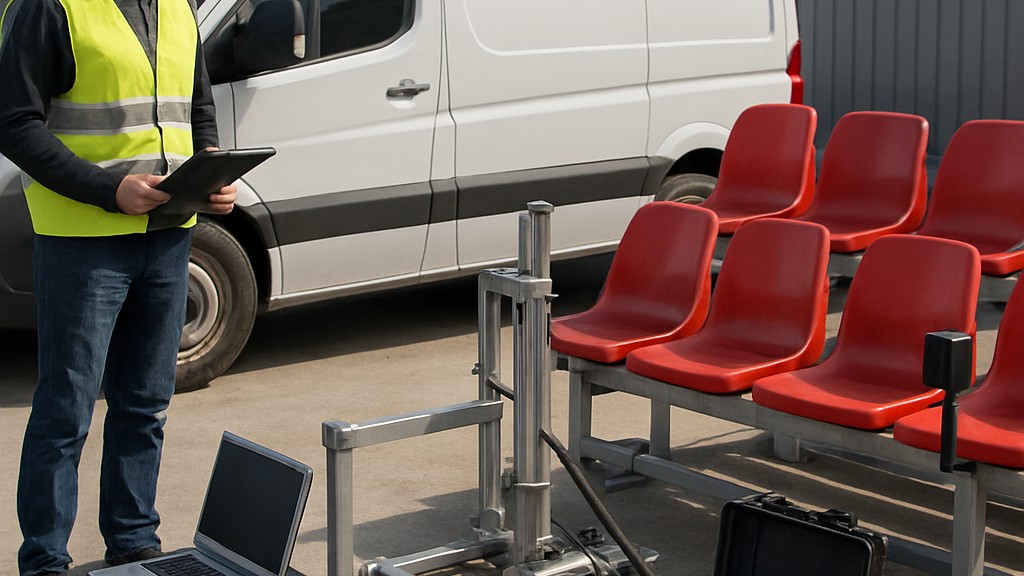
Our organization, which has been supporting businesses across all sectors for years through a wide range of testing, measurement, analysis, and evaluation activities, has a strong team of employees who closely follow global developments in science and technology and are constantly improving themselves. In this context, we also provide testing services to businesses in accordance with the "EN 13200 Audience Facilities" standard.
To get an appointment, to get more detailed information or to request an evaluation, you can ask us to fill in our form and reach you.

