EN IEC 50289 Specification for Test Methods for Communication Cables
The standard “EN IEC 50289 Communication cables - Specification for test methods”, which is based on a European standard and subsequently published by the International Electrotechnical Commission (IEC), consists of the following subsections published under the same title:
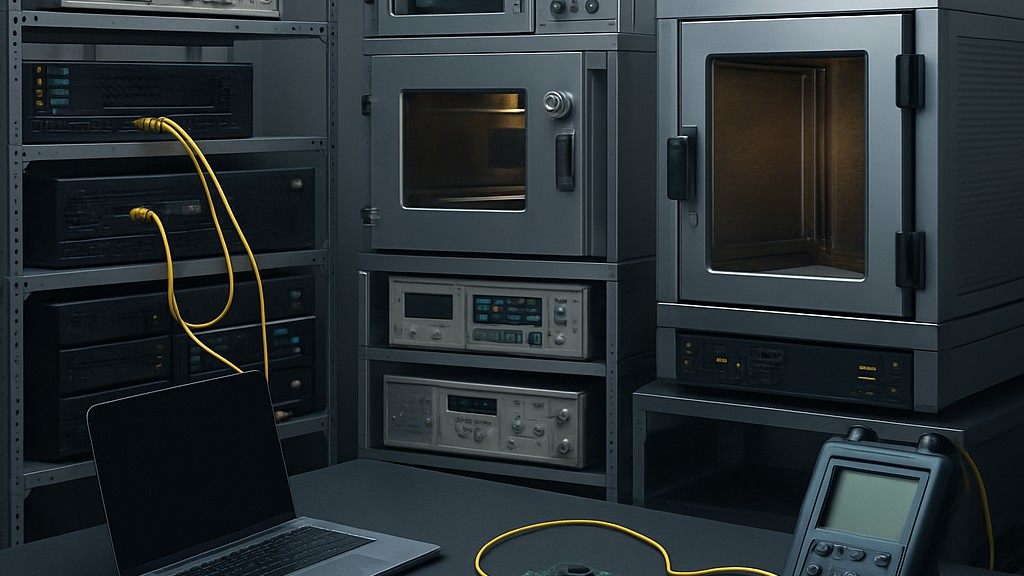
- The standard "EN IEC 50289-1-1 Part 1-1: Electrical test methods - General requirements" describes electrical test methods for cables used in analog and digital communication systems. Further test details and test requirements are included in the relevant cable standard.
Unless otherwise specified in the applicable test method, the cable length under test shall be selected to account for the dynamic range of the measuring equipment and the specified frequency range to achieve the required level of accuracy. Unless otherwise specified in the applicable cable specification, the length shall be measured to an accuracy better than 1 percent.
- The standard "EN IEC 50289-1-2 Part 1-2: Electrical test methods - DC resistance" describes in detail test methods for determining the DC resistance properties of conductors of cables used in analog and digital communication systems. These properties are defined by conductor resistance, loop resistance, and resistance unbalance.
- The standard "EN IEC 50289-1-3 Part 1-3: Electrical test methods - Dielectric strength" describes in detail the test methods for verifying the dielectric strength of the insulation of finished cables used in analog and digital communication systems. This standard should be read in conjunction with the basic provisions of EN IEC 50289-1-1.
- The standard "EN IEC 50289-1-4 Part 1-4: Electrical test methods - Insulation resistance" describes in detail the test methods for determining the insulation resistance of finished cables used in analog and digital communication systems. This standard should be read in conjunction with the basic provisions of EN IEC 50289-1-1.
- The standard "EN IEC 50289-1-5 Part 1-5: Electrical test methods - Capacitance" describes in detail the test methods for determining the capacitance characteristics of finished cables used in analog and digital communication systems. This standard should be read in conjunction with the basic provisions of EN IEC 50289-1-1.
- The standard "EN IEC 50289-1-6 Part 1-6: Electrical test methods - Electromagnetic performance" details four different test methods for determining the electromagnetic performance characteristics of cables used in analog and digital communication systems. This standard addresses test methods intended to facilitate selection of the applicable electromagnetic test method. This standard should be read in conjunction with EN IEC 50289-1-1, which contains the basic provisions.
- The standard “EN IEC 50289-1-7 Part 1-7: Electrical test methods - Velocity of propagation” describes in detail the test methods for determining the velocity of propagation of finished cables used in analog and digital communication systems. This standard should be read together with the EN IEC 50289-1-1 standard, which contains the basic provisions.
- "EN IEC 50289-1-8 Part 1-8: Electrical test methods - Attenuation describes in detail test methods for determining the attenuation of finished cables used in analogue and digital communication systems. This standard should be read in conjunction with EN IEC 50289-1-1, which contains the basic provisions.
- The standard "EN IEC 50289-1-9 Part 1-9: Electrical test methods - Unbalance attenuation (transverse transform loss TCL, transverse transform transfer loss TCTL)" describes in detail the test methods for determining the attenuation of converted differential-mode signals into common-mode signals and vice versa, due to the balance characteristics of cables used in analog and digital communication systems, using the transmission measurement method. This standard should be read in conjunction with the basic provisions of EN IEC 50289-1-1.
- The standard "EN IEC 50289-1-10 Part 1-10: Electrical test methods - Crosstalk" describes in detail the test methods for determining crosstalk in cables used in analog and digital communication systems. The crosstalk effects are the near-end crosstalk, far-end crosstalk, equal-level far-end crosstalk, attenuation crosstalk ratio, and the total crosstalk power. This standard should be read in conjunction with EN IEC 50289-1-1, which contains the basic provisions.
- The standard "EN IEC 50289-1-11 Part 1-11: Electrical test methods - Characteristic impedance, input impedance, return loss" describes in detail the test methods for determining the characteristic impedance, input impedance, and return loss of cables used in analog and digital communication systems. This standard should be read in conjunction with the basic provisions of EN IEC 50289-1-1.
- "EN IEC 50289-1-12 Part 1-12: Electrical test methods - Inductance standard describes in detail the test methods for determining the inductance characteristics of cables used in analog and digital communication systems. This standard should be read in conjunction with EN IEC 50289-1-1, which contains the basic provisions.
- The standard "EN IEC 50289-1-13 Part 1-13: Electrical test methods - Coupling attenuation or shielding attenuation of patch cords/coaxial cable assemblies/pre-connectorized cables" describes in detail the test methods for determining coupling attenuation or shielding attenuation for patch cords, coaxial cable assemblies and pre-connectorized cables used in analogue and digital communication systems. This standard should be read in conjunction with the standard EN IEC 50289-1-6, which contains the basic provisions.
- The standard "EN IEC 50289-1-14 Part 1-14: Electrical test methods - Coupling attenuation or shielding attenuation of connecting hardware" describes in detail the test methods for determining coupling attenuation or shielding attenuation for connecting hardware cables, coaxial cable assemblies, and pre-connected cables used in analogue and digital communication systems. This test method describes in detail how to test a single piece of connecting hardware (e.g., a wall socket or plug only) as well as how to test a combined pair of connecting hardware. This standard should be read in conjunction with the standard EN IEC 50289-1-6, which contains the essential provisions.
- A laboratory test method for determining coupling attenuation for links and channels used in analog and digital communication systems is detailed in "EN IEC 50289-1-15 Part 1-15: Electromagnetic performance - Coupling attenuation of links and channels (laboratory conditions)". This standard should be read in conjunction with EN IEC 50289-1-6, EN IEC 50289-1-13 and EN IEC 50289-1-14, which contain the essential provisions.
- A field test method for determining coupling attenuation for installed links and channels used in analog and digital communication systems is detailed in "EN IEC 50289-1-16 Part 1-16: Electromagnetic performance - Coupling attenuation of cable assemblies (field conditions)." This standard should be read in conjunction with EN IEC 50289-1-6 and EN IEC 50289-1-15, which contain the essential provisions.
This method is used to determine the attenuation of the interference force relative to the signal strength in a wiring system, and vice versa. This determines the impact of the wiring on the EMC performance of a system. The coupling attenuation of installed connections and channels depends on the performance of the wiring components (balancing and shielding, if applicable), workmanship (especially shield termination), and grounding and grounding. This procedure determines the overall effect of these parameters. This method cannot be used to verify compliance with EMC emission and immunity standards for the entire system, including active components.
- The standard "EN IEC 50289-1-17 Part 1-17: Electrical test methods - Exogenous crosstalk ExNEXT and ExFEXT" describes in detail the test methods used to determine cable-to-cable (external) crosstalk between four-pair cables used in analog and digital communication systems. These external crosstalk effects are near-end crosstalk, far-end crosstalk, and equal-level far-end crosstalk. This standard should be read in conjunction with EN IEC 50289-1-1, which contains the basic provisions. Reference is also made to EN 50289-1-10, which gives definitions and test methods for crosstalk. The test method for external crosstalk and the processing of the results to simulate the installation condition of a disturbed cable in contact with six disturbed cables are described.
- “EN IEC 50289-3-1 Part 3-1: Mechanical test methods - General requirements" describes mechanical test methods for cables used in analog and digital communication systems. Further test details and test requirements are included in the relevant cable standard.
- The standard "EN IEC 50289-3-2 Part 3-2: Mechanical test methods - Tensile strength and elongation for conductors" describes in detail the test methods for determining the tensile strength and elongation of conductors in cables used in analog and digital communication systems. This standard should be read in conjunction with the standard EN IEC 50289-3-1, which contains the basic provisions.
- The standard "EN IEC 50289-3-3 Part 3-3 Mechanical test methods - Dimensional stability" describes in detail the test methods for determining the dimensional stability of conductors in cables used in analog and digital communication systems. This standard should be read in conjunction with the standard EN IEC 50289-3-1, which contains the basic provisions.
- The standard "EN IEC 50289-3-4 Part 3-4: Mechanical test methods - Tensile strength, elongation and contraction of insulation and sheathing" describes in detail the test methods for determining the tensile strength, elongation and contraction of insulation and sheathing of cables used in analog and digital communication systems. This standard should be read in conjunction with EN IEC 50289-3-1, which contains the basic provisions.
- The standard "EN IEC 50289-3-5 Part 3-5: Mechanical test methods - Crush resistance of cables" describes in detail the test methods for determining the crush resistance of cables used in analog and digital communication systems. This standard should be read in conjunction with the basic provisions of EN IEC 50289-3-1.
- The standard "EN IEC 50289-3-6 Part 3-6: Mechanical test methods - Impact resistance of cables" describes in detail the test methods for determining the impact resistance of cables used in analog and digital communication systems. This standard should be read in conjunction with the standard EN IEC 50289-3-1, which contains the basic provisions.
- The standard "EN IEC 50289-3-7 Part 3-7: Mechanical test methods - Abrasion resistance of cable sheaths" describes in detail the test methods for determining the abrasion resistance of cable sheaths used in analog and digital communication systems. This standard should be read in conjunction with the standard EN IEC 50289-3-1, which contains the basic provisions.
- EN IEC 50289-3-8 Part 3-8: Mechanical test methods - Abrasion resistance of cable sheath markings" describes in detail the test methods for determining the abrasion resistance of sheath markings on finished cables used in analog and digital communication systems. This standard should be read in conjunction with EN IEC 50289-3-1, which contains the basic provisions.
Depending on the type of marking and as specified in the relevant cable specification, one of the following two methods is used:
- Method 1: Suitable for hard marking types such as embossing, indentation and sintering.
- Method 2: Applicable to marking types other than embossing, indentation and sintering.
The standard “EN IEC 50289-3-9 Part 3-9: Mechanical test methods - Bending tests” describes in detail the following test methods to determine the bending tests used in analog and digital communication systems:
- Bending around a test mandrel
- Repeated bending
- Repeated stretching during service
- Stretching during service
- Bending around rollers or springs during installation
- Measuring the stiffness of such a cable
- Curl test
This standard should be read together with the EN IEC 50289-3-1 standard, which contains the basic provisions.
- The standard "EN IEC 50289-3-10 Part 3-10: Mechanical test methods - Torsion and bending" describes in detail the test methods for determining the mechanical bending and torsional strength of finished cables used in analog and digital communication systems. The primary purpose of the torsion test is to measure any change in the optical power transmittance of a fiber or the electrical performance of a copper cable when subjected to torsional and bending forces outside the cable sheath. The secondary purpose is to assess the likelihood of physical damage resulting from such stresses. The primary purpose of the torsion test is to determine the change in return loss and near-end crosstalk when the cable assembly is subjected to bending or twisting. This standard should be read in conjunction with the standard EN IEC 50289-3-1, which contains the essential provisions.
- The standard "EN IEC 50289-3-11" Part 3-11: Mechanical test methods - Cable cut resistance" describes in detail the test methods for determining the cut resistance of cables used in analog and digital communication systems. This standard should be read in conjunction with the standard EN IEC 50289-3-1, which contains the basic provisions.
- EN IEC 50289-3-12 Part 3-12: Mechanical test methods - Shotgun damage" describes in detail the test methods for determining the ability of a cable used in analog and digital communication systems to withstand shotgun damage. This standard should be read in conjunction with EN IEC 50289-3-1, which contains the basic provisions.
- The standard "EN IEC 50289-3-13 Part 3-13: Mechanical test methods - Aeolian vibration" describes in detail the test methods for determining the ability of open overhead cables used in analogue and digital communication systems to withstand dynamic stresses similar to those imposed by laminar wind flow-induced vibrations in overhead lines. This standard should be read in conjunction with the standard EN IEC 50289-3-1, which contains the basic provisions.
- The standard "EN IEC 50289-3-15 Part 3-15: Mechanical test methods - Resistance of underwater cables to hydrostatic pressure" describes in detail the test methods for determining the ability of an underwater cable used in analog and digital communication systems to withstand hydrostatic pressure. This standard should be read in conjunction with the standard EN IEC 50289-3-1, which contains the basic provisions.
- The standard "EN IEC 50289-3-16 Part 3-16: Mechanical test methods - Cable tensile performance" describes in detail the test methods for determining the tensile performance of cables used in analog and digital communication systems. This standard should be read in conjunction with EN IEC 50289-3-1, which contains the basic provisions.
- The standard "EN IEC 50289-3-17 Part 3-17: Mechanical test methods - Dielectric and sheath adhesion" describes in detail the test methods for determining the dielectric and sheath adhesion of coaxial cables used in analog and digital communication systems. This standard should be read in conjunction with the standard EN IEC 50289-3-1, which contains the basic provisions.
- The standard "EN IEC 50289-4-1 Part 4-1: Environmental test methods - General requirements" describes environmental test methods for cables used in analog and digital communication systems. This standard provides a general introduction and general test conditions under which the various tests should be performed. Further test details and test requirements are included in the relevant cable standard.
- The standard "EN IEC 50289-4-2 Part 4-2: Environmental test methods - Water penetration" describes in detail the test methods for determining the ability of a cable used in analog and digital communication systems to prevent the passage of water over a specified length. This test applies to cables blocked by water. This standard should be read in conjunction with EN IEC 50289-4-1, which contains the basic provisions.
- The standard "EN IEC 50289-4-3 Part 4-3: Environmental test methods - Moisture permeability" describes in detail the test methods for determining the moisture permeability of a cable used in analog and digital communication systems. This test is valid for cables blocked by water. This standard should be read in conjunction with the standard EN IEC 50289-4-1, which contains the basic provisions.
- EN IEC 50289-4-4 Part 4-4: Environmental test methods - Resistance to solvents and contaminating liquids" describes in detail the test methods for determining the ability of a cable used in analog and digital communication systems to withstand solvents and contaminating liquids. This standard should be read in conjunction with EN IEC 50289-4-1, which contains the basic provisions.
- The standard "EN IEC 50289-4-5 Part 4-5: Environmental test methods - Climatic sequence" describes in detail the test methods for determining the stability of the transmission performance of a finished cable used in analog and digital communication systems when exposed to temperature changes that may occur during use, storage, or transport. This standard should be read in conjunction with the standard EN IEC 50289-4-1, which contains the basic provisions.
- EN IEC 50289-4-6 Part 4-6: Environmental test methods - Temperature cycling" describes in detail the test methods for determining the stability of the transmission performance of a finished cable used in analog and digital communication systems when exposed to temperature changes that may occur during use, storage, or transport. This standard should be read in conjunction with EN IEC 50289-4-1, which contains the basic provisions.
- EN IEC 50289-4-7 Part 4-7: Environmental test methods - Damp heat, steady state" describes in detail the test methods for determining the stability of the transmission performance of a finished cable used in analog and digital communication systems when exposed to the damp heat steady state that may occur in service. This standard should be read in conjunction with EN IEC 50289-4-1, which contains the essential provisions.
- The standard "EN IEC 50289-4-8 Part 4-8 Environmental test methods - Nuclear radiation" describes in detail the test methods for determining the stability of the transmission performance of a finished cable used in analog and digital communication systems when exposed to nuclear radiation that may occur during use, storage, or transport. This standard should be read in conjunction with the standard EN IEC 50289-4-1, which contains the essential provisions.
- The standard "EN IEC 50289-4-9 Part 4-9: Environmental test methods - Pneumatic resistance" describes in detail the test methods for determining the pneumatic resistance of finished cables used in analog and digital communication systems. This standard should be read in conjunction with the basic provisions of EN IEC 50289-4-1. This test is only valid for cables protected by gas pressure.
- EN IEC 50289-4-10 Part 4-10: Environmental test methods - Ageing" describes in detail the test methods for determining the stability of the transmission performance of a finished cable used in analog and digital communication systems when subjected to ageing, which may occur during use, storage or transport. This standard should be read in conjunction with EN IEC 50289-4-1, which contains the basic provisions.
- The standard "EN IEC 50289-4-11 Part 4-11: Environmental test methods - Horizontal integrated fire test method" describes a horizontally integrated fire test method for determining flame spread distance, optical smoke density, total heat release rate, ignition time and flame droplets/particles for communication cables. The cables are tested in a representative installed condition.
- The standard "EN IEC 50289-4-12 Part 4-12 Environmental test methods - Acid gas evolution" describes in detail the test methods for determining the stability of the transmission performance of a finished cable used in analog and digital communication systems when exposed to acid gas evolution, which may occur during use, storage or transport. This standard should be read in conjunction with the standard EN IEC 50289-4-1, which contains the essential provisions.
This standard applies to small communication cables with a diameter of 14 mm or less, assembled in bundles on a test scale to obtain a total normal volume of non-metallic material equal to a test specimen of 0,5 l/m. The application time is 20 minutes. The recommended tests are for communication cables requiring testing of cables for low-density installations.
- EN IEC 50289-4-13 Part 4-13 Environmental test methods - Smoke development" describes in detail the test methods for determining the stability of the transmission performance of a finished cable used in analog and digital communication systems when exposed to smoke development conditions that may occur during use, storage, or transport. This standard should be read in conjunction with EN IEC 50289-4-1, which contains the essential provisions.
- EN IEC 50289-4-14 Part 4-14: Environmental test methods - Lightning" describes in detail the test methods for determining the ability of a cable used in analog and digital communication systems to withstand a lightning surge. This standard should be read in conjunction with EN IEC 50289-4-1, which contains the basic provisions.
- The standard "EN IEC 50289-4-15 Part 4-15: Environmental test methods - Toxic gas emission" describes in detail the test methods for determining the ability of a cable used in analog and digital communication systems to withstand toxic gas emission. This standard should be read in conjunction with EN IEC 50289-4-1, which contains the basic provisions.
- The standard "EN IEC 50289-4-16 Part 4-16: Environmental test methods - Circuit integrity under fire conditions" describes the criteria for circuit integrity of control and communication cables. This standard covers, for example, wires with metallic conductors, symmetrical cables, and coaxial cables used in telecommunications, data transmission, radio frequency, video communication, and signaling and control equipment. The test method to be applied is described in EN 50200 and EN 50577. This standard should be used in conjunction with these European standards.
Our organization, which has been supporting businesses across all sectors for years through a wide range of testing, measurement, analysis, and evaluation activities, has a strong team of employees who closely follow global developments in science and technology and are constantly improving themselves. In this context, we also provide testing services in accordance with the "EN IEC 50289 Communication cables - Specification for test methods" standard.