EN ISO 80079 Explosive Atmospheres
The “EN ISO 80079 Explosive Atmospheres” standard, developed by the International Organization for Standardization (ISO) and later published as a European standard within the scope of harmonization efforts, consists of the following sub-sections published under the same title:
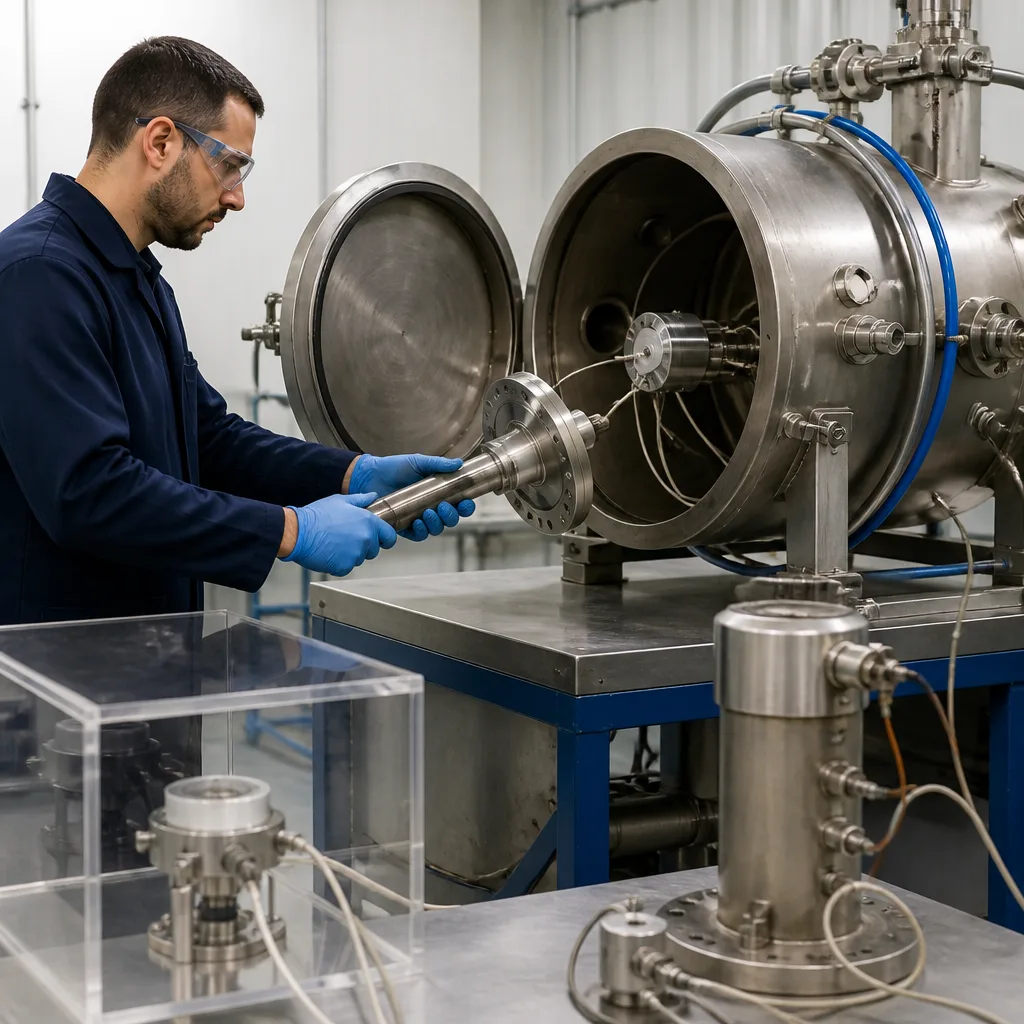
- “EN ISO 80079-20-1 Material properties for gas and vapor classification - Test methods and data” is an internationally recognized standard providing test methods and reference data for the classification of flammable gases and vapors used in explosive atmospheres.
This standard serves as a critical reference for manufacturers, testing laboratories, certification bodies, and safety engineers involved in the design and certification of equipment designed and certified for use in hazardous (Ex) environments.
The primary purpose of the EN ISO 80079-20-1 standard is to provide standardized methods for determining the flammability properties of gases and vapors. These properties are used for:
- Separating gases into explosive groups.
- Identifying equipment groups for hazardous areas.
- Assigning temperature classes based on ignition behavior.
- To support the safe design and certification of explosion-proof (Ex) equipment.
- To provide validated material property data for use in hazardous area engineering.
This standard helps ensure that electrical and non-electrical equipment selected for use in explosive atmospheres provides an adequate level of explosion protection.
The EN ISO 80079-20-1 standard covers the following:
- Test methods for measuring the maximum experimental safe gap.
- Test methods for determining the automatic ignition temperature.
- Reference data for numerous flammable gases and vapors.
- Classification of substances according to their explosive groups.
- Material specifications required for selecting explosion-proof equipment.
This standard primarily addresses gas-air and vapor-air mixtures under standard atmospheric conditions:
- Temperature: 20 degrees
- Pressure: 101,3 kPa
Test methods can also be applied to gas-air-inert mixtures, but reference values for inert mixtures are generally not included.
Not all flammable gases behave the same way upon ignition. Some ignite easily, allowing flames to pass through narrow gaps, while others require larger openings. Correct classification is crucial because it determines:
- Explosion-proof housing design
- Flame path dimensions
- Maximum allowable surface temperatures
- Selecting internally safe equipment.
- Installation requirements in hazardous areas
Incorrect classification can lead to inadequate explosion protection and increased safety risks.
- The standard “EN ISO 80079-20-2 Material properties - Combustible dust test methods” specifies laboratory test methods used to identify combustible dusts and combustible dust layers, and provides for the classification of hazardous areas where explosive dust atmospheres may occur. These classifications support the correct selection and installation of electrical and mechanical equipment designed for use in explosive dust atmospheres.
The primary purpose of the EN ISO 80079-20-2 standard is to establish uniform procedures for determining whether a solid material is considered a combustible powder and for measuring properties that affect explosion hazards. This standard helps organizations in the following areas:
- To determine whether a powder poses an explosion risk.
- To determine the ignition properties of flammable powders.
- Classifying hazardous areas according to explosion protection requirements.
- Selecting suitable explosion-proof (Ex) equipment.
- Improving industrial safety through standardized testing methods.
This standard applies to combustible dusts and dust layers that can form explosive atmospheres under normal atmospheric conditions. It specifies test methods for determining:
- Whether a material is a flammable powder.
- Flammability characteristics of dust clouds.
- Flammability properties of powder layers.
- The electrical conductivity of dust.
- Additional physical characteristics required for hazardous area classification.
The standard atmospheric conditions used in the tests are as follows:
- Temperature: -20 degrees to +60 degrees
- Pressure: 80 kPa to 110 kPa
- Air containing approximately 21 percent oxygen by volume
“EN ISO 80079-34 Implementation of quality management systems in the production of products suitable for use in explosive atmospheres” is an internationally recognized standard that specifies the quality management system requirements for the production of equipment designed for use in explosive atmospheres (explosive atmosphere products).
This standard is designed to complement the ISO 9001 standard by introducing additional requirements specific to the production of explosion-proof (Ex) equipment. It is widely used by manufacturers seeking ATEX and IECEx certification for their products.
The primary objective of the EN ISO 80079-34 standard is to ensure that Ex products are manufactured consistently in accordance with their certified designs and approved documentation. This standard helps organizations in the following areas:
- Specifically, establishing a quality management system for Ex-product manufacturing.
- Maintaining the integrity of certified explosion protection features.
- Ensuring that every product manufactured conforms to its certification.
- To meet the quality assurance requirements of ATEX and IECEx certification schemes.
- To reduce the risk of defects that could compromise blast protection.
The EN ISO 80079-34 standard applies to organizations that manufacture the following products:
- Electrical equipment for explosive environments.
- Non-electrical Ex equipment.
- Protective systems.
- Ex components.
- Installations requiring Ex certification.
Rather than defining technical design requirements, this standard focuses on the manufacturing quality system needed to ensure consistent production of certified products.
This standard does not replace ISO 9001. Instead, it enhances ISO 9001 by adding specific explosive control measures. While ISO 9001 addresses general quality management principles such as customer focus, leadership, risk-based thinking, and continuous improvement, EN ISO 80079-34 offers additional controls in the following areas:
- Certified design documentation.
- Critical explosive material properties.
- Traceability.
- Supplier management.
- Examination and testing.
- Checking for design changes.
- Product compliance with certification.
Organizations typically first implement the ISO 9001 standard and then expand their systems to meet the requirements of the EN ISO 80079-34 standard.
- “EN ISO 80079-36 Non-electrical equipment for explosive atmospheres – Basic methods and requirements is a key international standard that defines the basic requirements for the design, construction, testing, documentation, and marking of non-electrical equipment designed for use in explosive atmospheres. This standard replaces the earlier EN 13463-1 standard, incorporating non-electrical explosion protection into the EN ISO 80079 series of standards.”
The primary objective of the EN ISO 80079-36 standard is to ensure that non-electrical equipment operating in potentially explosive atmospheres does not become an ignition source. This standard provides a systematic framework for:
- Identifying potential ignition sources.
- Assessment of ignition risks.
- Implementation of appropriate protective measures.
- Verification that the equipment has reached the required level of explosion protection.
- Ensuring consistent labeling and documentation.
Unlike standards that focus on electrical equipment, the EN ISO 80079-36 standard addresses hazards associated with mechanical, thermal, hydraulic, and pneumatic equipment.
This standard applies to:
- Non-electrical Ex equipment.
- Ex components.
- Protective systems.
- Devices and apparatus that have their own potential ignition sources.
Specifies the requirements for equipment designed for use in equipment groups I, II, and III, covering mining, gas/steam, and combustible dust environments, respectively.
However, this standard does not apply in the following cases:
- Hand tools or manually operated equipment that do not have stored energy.
- Static process equipment that does not have a natural ignition source (such as tanks or fixed pipelines).
- General operational safety unrelated to explosion hazards.
The EN ISO 80079-36 standard assumes operation under normal atmospheric conditions:
- Temperature: -20 degrees to +60 degrees
- Pressure: 80 kPa to 110 kPa
- Air containing approximately 21 percent oxygen by volume
These conditions are used when evaluating explosion risks and equipment performance.
While electrical sparks are a known ignition source, many industrial explosions originate from mechanical equipment. Potential ignition sources include:
- Friction heating.
- Mechanical impact sparks.
- Hot surfaces.
- Compression heating.
- Static.
- Adiabatic compression.
- Bed malfunctions.
- Overheated brakes or clutches.
- Mechanical friction between rotating parts.
The EN ISO 80079-36 standard requires manufacturers to identify and control these hazards during the design process.
One of the cornerstones of this standard is ignition hazard assessment. Manufacturers must systematically assess the following:
- All possible ignition sources.
- The probability of each ignition source occurring.
- Operating conditions under which ignition may occur.
- Appropriate protective measures.
- Risks remaining after mitigation.
The evaluation should take the following into account:
- Normal operation.
- Expected malfunctions.
- Rare malfunctions (where applicable).
- Maintenance and foreseeable misuse.
Ignition hazard assessment is part of the technical documentation supporting product certification.
- “EN ISO 80079-37 Non-electrical equipment for explosive atmospheres – Types of non-electrical protection: “c” structural safety, “b” ignition source control and “k” liquid immersion” is an international standard specifying the design and construction requirements for non-electrical equipment intended for use in explosive atmospheres. This standard is based on EN ISO 80079-36, which provides the basic methodology and ignition hazard assessment requirements for non-electrical Ex equipment. Where there are differences between these two standards, the requirements of EN ISO 80079-37 take precedence.”
The primary purpose of the EN ISO 80079-37 standard is to define specific types of protection that prevent non-electrical equipment from becoming an ignition source in explosive gas or dust environments. This standard helps manufacturers in the following areas:
- Designing mechanically safe equipment for hazardous environments.
- Implementing well-known non-electrical explosion protection concepts.
- To demonstrate compliance with ATEX and IECEx certification requirements.
- To reduce the risk of ignition from mechanical equipment.
- To ensure consistent safety and reliability throughout the equipment's lifespan.
The EN ISO 80079-37 standard applies to non-electrical equipment based on one or more of the following protection concepts:
- Structural safety “c”
- Checking the ignition source “b”
- Attacking the liquid "k"
These protection methods may be used individually or in combination, depending on the results of the ignition hazard assessment required by EN ISO 80079-36. This standard applies to equipment designed for the following purposes:
- Group I Mining applications
- Group II Explosive Gas Atmospheres
- Group III Combustible dust atmospheres
However, protection types “c”, “b”, and “k” are not suitable for Group I Equipment protection level Ma without additional protective measures.
EN ISO 80079-36 and EN ISO 80079-37 standards are designed to be used together. EN ISO 80079-36 defines the general principles, terminology, and ignition hazard assessment process. EN ISO 80079-37 specifies how to apply three accepted non-electrical protection techniques.
In practice, manufacturers first conduct an ignition hazard assessment under the EN ISO 80079-36 standard and then apply one or more types of protection described in the EN ISO 80079-37 standard.
- “EN ISO 80079-38 Equipment and components for explosive atmospheres in underground mines” is an international standard specifying explosion protection requirements for equipment and components used in underground mines where explosive atmospheres caused by methane gas (methane) or combustible dust may be present.
This standard provides requirements for the design, construction, evaluation, marking, maintenance information, and repair manual for mining equipment intended to operate safely in hazardous underground environments. It addresses both electrical and non-electrical aspects of mining machinery.
The primary purpose of the EN ISO 80079-38 standard is to reduce the risk of explosions in underground mines by ensuring that equipment does not become an ignition source in environments containing methane gas, combustible coal dust, or a combination of both. This standard helps manufacturers and mine operators in the following areas:
- Designing equipment that minimizes ignition risks.
- Assessing explosion hazards associated with mining machinery.
- Implementing appropriate explosion protection measures.
- To demonstrate compliance with ATEX and IECEx certification requirements.
- To improve the safety of personnel working in underground mines.
The EN ISO 80079-38 standard applies to the following:
- Methane gas-sensitive equipment for underground mines.
- Equipment that operates in flammable dust environments.
- Individual pieces of equipment.
- Complete machine parts.
- Mechanical and electromechanical components supplied as part of mining systems.
This standard assumes operation under normal atmospheric conditions:
- Temperature: -20 degrees to +60 degrees
- Pressure: 80 kPa to 110 kPa
- Air containing approximately 21 percent oxygen by volume.
Underground mines present unique explosion risks because methane released from coal seams can mix with air to create an explosive atmosphere. Coal dust released into the air during mining operations can further intensify explosions. Potential ignition sources include:
- Hot surfaces.
- Mechanical friction.
- Mechanical impact sparks.
- Electrical failures.
- Overheated beds.
- Static.
- Lubricant ignition.
- Brake overheating.
- Cutting and drilling operations.
Unlike many industrial facilities, underground mines typically have enclosed spaces and limited ventilation, making explosion prevention particularly critical.
The EN ISO 80079-38 standard defines the requirements for mining equipment according to equipment protection levels.
- Equipment protection service Ma: Ma-protected equipment provides a very high level of safety and is intended to remain safe even when an explosive atmosphere is continuously present. It must continue to operate reliably despite rare failures and should be used where the highest degree of protection is required.
- Equipment protection service Mb: Mb-protected equipment provides a high level of safety under normal operating and anticipated failure conditions. It is intended to cut off power or decommission the equipment if an explosive atmosphere becomes persistent. While the EN ISO 80079-38 standard provides the basic requirements for Mb equipment, Ma equipment also relies on the requirements of the EN ISO 80079-36 standard.
“EN ISO 80079-49 Flame arresters – Performance requirements, test methods and limits of use” is an international standard that specifies the performance requirements, test methods, construction principles, marking and operating limits for flame arresters used in explosive atmospheres.
This standard replaces ISO 16852, introducing updated technical requirements and aligning flame arrestor requirements with the EN ISO 80079 family of explosion protection standards.
The primary purpose of the EN ISO 80079-49 standard is to ensure that flame arresters effectively prevent the passage of flames through pipelines, vents, tanks, and process equipment containing combustible gas-air or vapor-air mixtures. This standard assists manufacturers and users in the following areas:
- Designing and manufacturing reliable flame arresters.
- To verify flame arrester performance through standardized tests.
- Defining safe operating limits for flame arresters.
- Improving explosion protection in industrial processes.
- To support compliance with ATEX, IECEx and other international explosion safety requirements.
A flame arrester is a passive safety device that prevents flames from spreading through a pipeline or opening while allowing gases or vapors to flow. It works as follows:
- It absorbs heat from the flame.
- It cools the combustion gases below their ignition temperature.
- It prevents the flame front from passing beyond the containment element.
Flame arresters are commonly used in the following locations:
- Storage tanks.
- Pressure vessels.
- Ventilation lines.
- Process pipes.
- Vapor recovery systems.
- Chemical reactors.
- Fuel transport equipment.
Their primary function is to prevent an explosion from spreading from one part of the process to another.
The EN ISO 80079-49 standard applies to flame arresters used with:
- Flammable gas-air mixtures.
- Flammable vapor-air mixtures.
This standard covers:
- Performance requirements.
- Classification.
- Building requirements.
- Test procedures.
- Marking.
- Usage information.
- Safe working limits.
This standard applies to equipment operating within the following pressure range: 80 kPa to 160 kPa.
The operating temperature is between -20 degrees and +200 degrees, provided that it does not exceed 80 percent of the autoignition temperature of the gas-air mixture.
In addition to the sub-sections described above, the EN ISO 80079 standard also has the following sub-sections:
- EN ISO 80079-40 Trace gases used in explosive atmosphere sensor performance testing.
- EN ISO 80079-41 Equipment using optical radiation
- EN ISO 80079-46 Equipment assemblies
- EN ISO 80079-47 Equipment using hybrid protection concepts
- EN ISO 80079-48 Dust explosion ventilation protection systems
EN ISO 80079 standards complement the IEC 60079 series of standards, especially for non-electrical equipment, competence and quality systems.
For many years, our organization, with its competent and experienced staff, has been understanding the needs of its clients, providing the advanced testing services they require, and assisting them in the establishment, implementation, and improvement of management systems. Within this framework, we also provide testing services in accordance with the EN ISO 80079 standard.



