

The European standard “EN 549 Rubber materials for seals and diaphragms for gas appliances and gas equipment” describes the requirements and relevant test methods for rubber materials used in gas installations, gas equipment, and gas appliances that come into contact with class 1, 2, and 3 combustible gases, as classified in EN 437. LPG, biomethane, and bioLPG of the same quality are also covered.
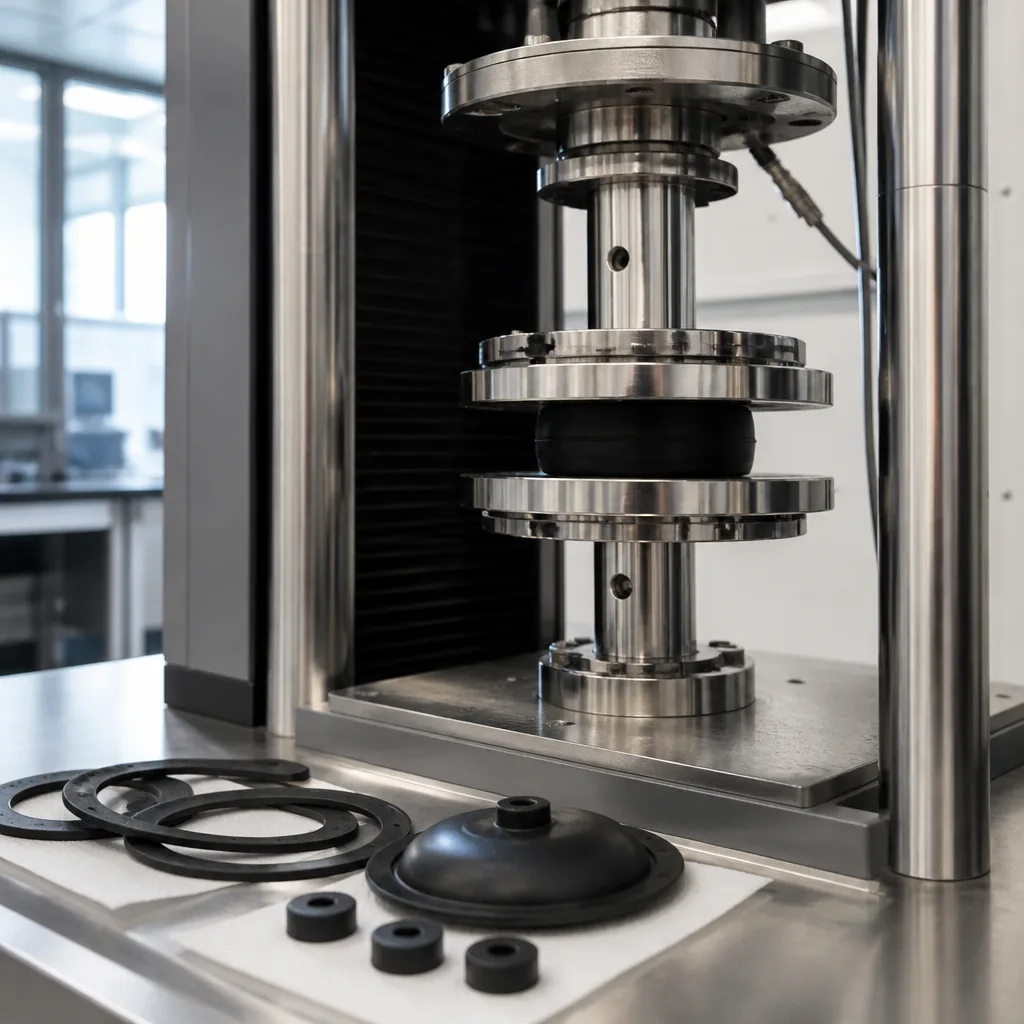
On the other hand, this standard also establishes a classification based on temperature range and hardness. This standard applies to materials used to manufacture homogeneous gaskets and homogeneous or reinforced diaphragms.
Since the dimensions and shape of the components differ from the standard test pieces taken from sheet material used in type testing of rubber materials according to this standard, tolerances for the components have been made in accordance with the requirements specified in the annex to this standard, compared to those specified for standard test pieces (Annex A).
The operating temperature range covered by this standard is from -40 degrees to +150 degrees. This standard does not apply to silicone rubber in applications where potential condensation is present.
The EN 549 standard defines the requirements and test methods for rubber materials used in the manufacture of sealing elements and diaphragms in gas appliances, gas equipment, and gas installations. Its primary purpose is to ensure that elastomeric materials maintain adequate mechanical and chemical performance when exposed to flammable gases and the temperatures encountered during use.
Rubber sealing elements are critical components in gas systems. They are used to prevent gas leakage at connection points, valves, regulators, appliance components, and other interfaces. Diaphragms are also used in gas control equipment where they need to flex repeatedly while maintaining a gas tightness.
A rubber compound that performs well under normal conditions may degrade when exposed to flammable gases, high temperatures, low temperatures, or other environmental conditions. Therefore, the EN 549 standard defines material requirements and relevant test methods to provide a consistent basis for evaluating these materials.
This standard also classifies rubber materials according to temperature range and hardness, helping manufacturers select a suitable material for a specific application.
The EN 549 standard applies to rubber materials used in the following areas:
This standard covers materials intended for contact with Class 1, 2, and 3 combustible gases as classified in the “EN 437 Test gases - Test pressures - Equipment categories” standard. It also covers LPG, biomethane, and bio-LPG of the relevant grade. The specified operating temperature range is approximately between -40 degrees and +150 degrees, depending on the material classification and application.
The EN 549 standard deals with elastomeric/rubber compounds rather than finished gas appliances. The material can then be formed into gaskets or diaphragms. Typical elastomer families used in gas applications might include:
However, the fact that an elastomer belongs to one of these families does not, in itself, mean that it complies with the EN 549 standard. Compliance depends on the specific composition, formulation, hardness, temperature classification, and test results.
The EN 549 standard sets out requirements aimed at demonstrating the suitability of rubber materials for gas service applications. Depending on the applicable material classification, the assessment may focus on the following characteristics:
A particularly important aspect of the EN 549 standard is that it covers both seals and diaphragms. A seal forms a barrier between two surfaces and prevents gas leakage. It can be fitted to a valve, fitting, regulator, appliance connection, or similar component.
A diaphragm is a flexible rubber component that can move or deform in response to pressure variations. Diaphragms are commonly found in gas control and regulation equipment.
This standard acknowledges that actual components may have different dimensions and geometries than laboratory test specimens. Consequently, specific tolerances are provided for components in relation to the requirements applicable to standard test specimens.
Temperature is a critical factor, especially for elastomeric gas seals. At low temperatures, rubber can harden and lose its flexibility. At high temperatures, it can soften, age faster, or lose its mechanical properties.
Therefore, the EN 549 standard offers a classification system based in part on temperature range and hardness. This allows manufacturers and designers to select materials according to expected operating conditions, rather than choosing rubber based on the general polymer type.
The importance of the EN 549 standard stems primarily from gas tightness and safety. A leak can lead to a gas leak. Depending on the gas and the surrounding environment, a leak can pose risks such as fire, explosion, and loss of equipment functionality. This standard provides a common technical basis for evaluating rubber material before its incorporation into gas equipment. It helps to:
EN 549 is a materials standard, therefore the suitability of the rubber compound does not automatically indicate that a complete gas appliance or finished sealing component is suitable for every application. The final component may have additional requirements relating to:
For many years, our organization, with its competent and experienced staff, has been understanding the needs of its clients, providing the advanced testing services they require, and assisting them in the establishment, implementation, and improvement of management systems. Within this framework, we also provide testing services in accordance with the EN 549 standard.
To get an appointment, to get more detailed information or to request an evaluation, you can ask us to fill in our form and reach you.

