

The requirements described in the “UL 207 Refrigerant-containing components and accessories, non-electric” standard, developed by Underwriters Laboratories (UL), cover non-electric refrigerant-containing components and accessories that are filled with refrigerants defined for use in refrigeration systems, air conditioning equipment, or both, and designed for field installation in accordance with the “ANSI/ASHRAE 15 Safety standard for refrigeration systems and identification and safety classification of refrigerants” standard. The requirements also apply to components and accessories designed by manufacturers for use in factory-assembled systems or units. In this case, the component or accessory is also evaluated under the requirements applicable to the relevant system or unit.
These requirements do not apply to:
UL 207 is a safety standard developed for components and accessories containing refrigerants, and it focuses particularly on flexible cables and appliance hose valves.
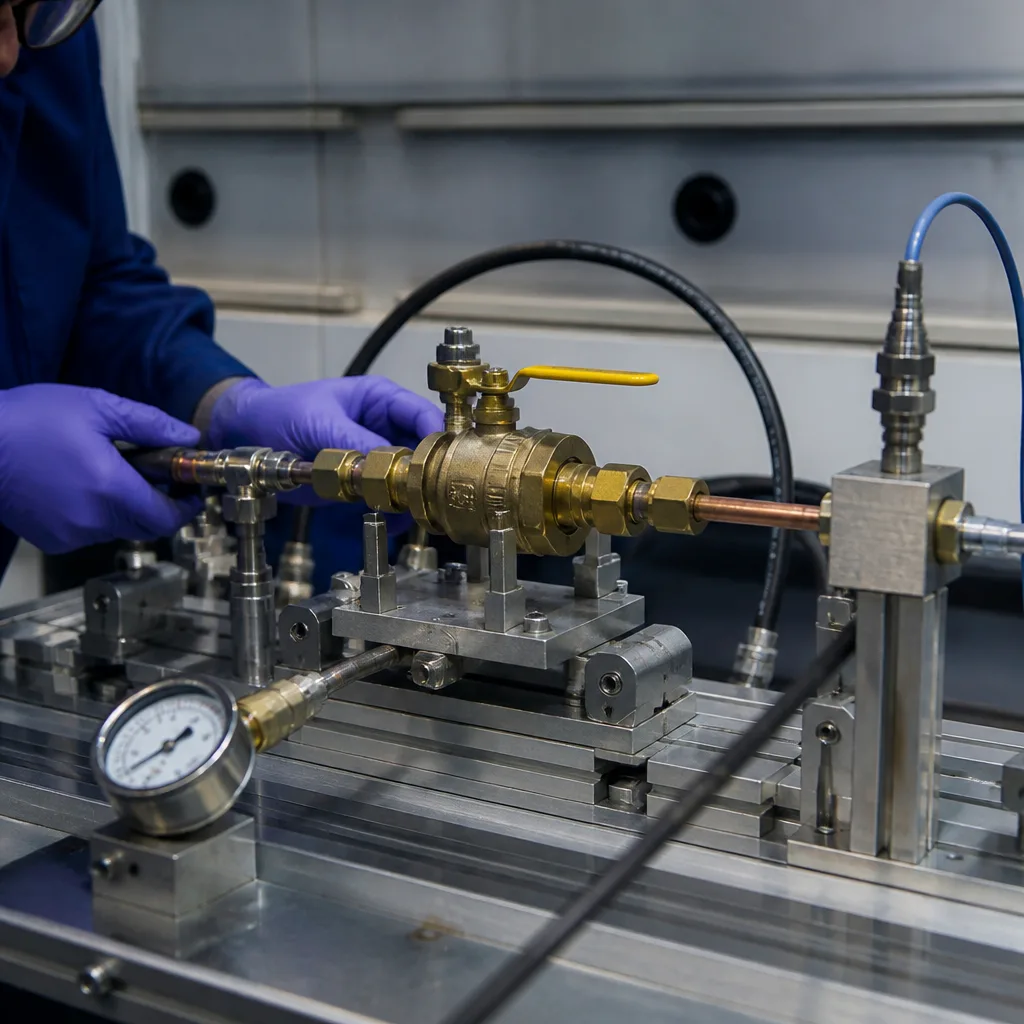
This standard contains comprehensive requirements for the construction, performance, and testing of valves used in refrigeration and air conditioning systems. Its aim is to reduce the risks associated with mechanical failure, leakage, and incorrect material selection. Because these valves are often exposed to varying pressures, temperatures, and refrigerant types, standardized assessment is essential for safe and reliable operation. The UL 207 standard covers a range of aspects, including design specifications, pressure ratings, durability testing, resistance to vibration and corrosion, and proper sealing against leaks. In short,
Manufacturers designing valves for use with refrigerants in heating, ventilation, air conditioning, and refrigeration equipment must demonstrate compliance with the UL 207 standard. These requirements apply to both component parts and complete valve assemblies. This standard specifies the necessary tests for durability under repeated operating conditions, prolonged exposure to refrigerants, and the ability to maintain seal integrity under specified operating conditions. UL 207 compliance is generally a prerequisite for market access in North America and serves as a benchmark for product evaluation in other regions.
Critical test requirements of the UL 207 standard include mechanical durability checks, hydrostatic and pneumatic pressure tests, durability cycling, refrigerant exposure verification, and corrosion resistance assessment. These tests are performed according to defined protocols to ensure reliable and safe valve performance in various scenarios.
In short, the UL 207 standard,
The UL 207 standard is a key safety benchmark used in the refrigeration and HVAC industry. This standard specifies safety requirements for mechanical refrigeration components that contain refrigerant but are not primarily electrically operated. It plays a vital role in ensuring the safety, durability, and reliability of refrigeration systems used in commercial, industrial, and residential applications.
The primary goal of the UL 207 standard is to reduce the hazards associated with refrigerant leaks, pressure failures, material degradation, and improper assembly of refrigeration system components. This standard applies to components designed for:
This standard is closely aligned with the ASHRAE 15 standard, which regulates the safety of mechanical refrigeration.
The UL 207 standard applies specifically to components and accessories containing non-electrical heat sinks. For example,
This standard evaluates whether these components can safely withstand operating pressures, environmental stresses, vibration, corrosion, and prolonged coolant exposure.
This standard excludes several categories covered by other standards. For example,
The UL 207 standard includes comprehensive testing and construction requirements. Some of the most important evaluation areas are:
In conclusion, the UL 207 standard is a fundamental safety standard for non-electric refrigerant-containing components used in refrigeration and HVAC systems. By establishing rigorous testing and construction requirements, this standard helps manufacturers produce safer and more reliable components, while giving contractors, regulators, and end-users greater confidence in system performance.
As cooling technologies continue to evolve, the UL 207 standard remains a fundamental framework for ensuring that critical HVAC components meet modern safety expectations and industry demands.
For many years, our organization, with its competent and experienced team, has been understanding the needs of its clients, providing the advanced testing services they require, and assisting them in the establishment, implementation, and improvement of management systems. Within this framework, we also provide testing services compliant with the UL 207 standard.
To get an appointment, to get more detailed information or to request an evaluation, you can ask us to fill in our form and reach you.

