UL 197 Commercial Electric Cooking Appliances
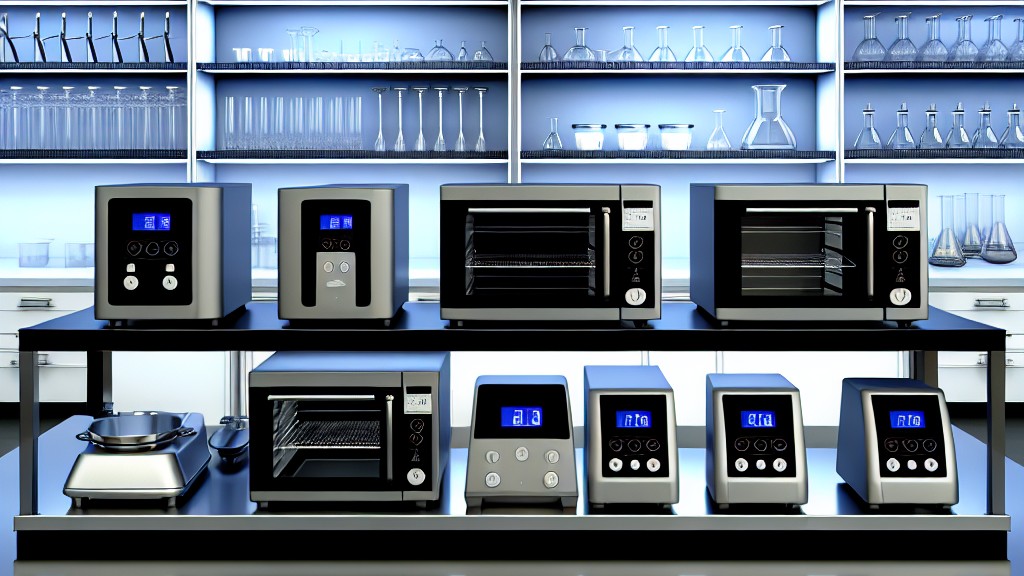
The “UL 197 Commercial Electric Cooking Appliances ” standard, developed by Underwriter Laboratories (UL) , describes the requirements for commercial electric cooking appliances designed for indoor use, rated at 600 Volts or less, and intended to be used in accordance with the “NFPA 70 National Electrical Code” standard. These requirements cover coffee makers, conductive cookers, food warmers, fryers, griddles, steamers, nut warmers, popcorn machines, stoves, pot warmers, and other appliances found in commercial kitchens, restaurants, or other food-serving establishments.
However, vending machines, cooking appliances designed for home use, commercial cooking appliances rated greater than 600 Volts, or microwave cooking appliances are outside the scope of this standard.
Additionally, an appliance designed to be mounted and supported in an outlet box, such as a food warmer, is evaluated for compliance with the requirements in this standard and the mounting and weight requirements for electric lighting fixtures.
A device that uses heat generated by a means other than electricity (for example, from a gel or liquid fuel, coal, gas or oil) is investigated for fire risk. A device that uses heat generated by a gel or liquid fuel is investigated along with the device that operates on the specific fuels for which it is intended.
Commercial cooking equipment that uses integrated systems to limit emissions of oil-laden air must be installed in accordance with and comply with the requirements of NFPA 96 Ventilation control and fire protection of commercial cooking operations. In addition, the amount of wastewater emitted from the system must not exceed 202 mg/m5 when measured in accordance with Test method 3, Determination of condensable particulate emissions from stationary sources, published by the U.S. Environmental Protection Agency.
Commercial cooking equipment should generally be made of smooth, non-absorbent, and easily cleaned materials. These criteria are important to ensure that the equipment does not provide a collection area for food residue, which can lead to the growth of microorganisms and ultimately the potential for foodborne illness. Most food regulations require equipment to meet these three general criteria. To ensure that these criteria are met, third-party testing and certification organizations have developed and used sanitation standards in their evaluations.
The general requirements for frames and enclosures are defined in the UL 197 standard as follows:
- Commercial electric cooking appliances must be constructed and assembled to have the necessary strength and durability to withstand the abuse to which they are liable, but will not increase the risk of fire, electric shock, or injury to persons from loosening or dislodging of parts or other serious failure.
- The enclosure of an appliance shall be of a material acceptable for the application and shall contain all electrical parts except a supply cord which, under any condition of use, may present a risk of fire, electric shock or injury to persons. An adjacent wall or adjacent equipment shall not be relied upon to complete the enclosure. However, if the enclosure is to be completed by another appliance in an adjacent or stacked installation, a panel completing the enclosure may be omitted.
- Factors considered when evaluating an enclosure include:
- Mechanical strength
- Impact resistance
- Moisture absorbing properties
- Resistance to burning
- Corrosion resistance
- Resistance to degradation at temperatures to which the enclosure may be exposed under normal or abnormal conditions of use.
For a non-metallic enclosure, all these factors must be taken into account with respect to thermal aging.
- The minimum thickness of the casting metal must comply with the table given in the standard.
- In addition, a sheet metal enclosure is evaluated in terms of its size and shape, the thickness of the metal, and its acceptability for the particular application. The use of sheet steel less than 0,66 mm thick if uncoated or 0,74 mm thick if galvanized, or nonferrous sheet metal less than 0,91 mm thick is not recommended except for a relatively small area or a curved or otherwise strengthened surface.
- The sheet metal to which a field cabling system will be connected must be at least 0,81 mm thick if made of uncoated steel, at least 0,86 mm thick if made of galvanized steel, and at least 1,14 mm thick if made of non-ferrous metal.
- The opening in the base of an appliance shall not be placed below an electrical part unless a solid, non-flammable pan is placed between the electrical part and the supporting surface. The pan shall have a rim, lip or other raised edge that is in a horizontal plane and extends around the pan. The base of the pan need not be flat or of any regular shape and the transition from the base to the rim, lip or the like may be of any suitable shape, but at each point immediately below the electrical part the base of the pan shall be 3,2 mm or more below the plane of the rim, lip or the like.
- The structure of the part or device can provide the equivalent of the ceiling described above here if it conforms to the shape. The raised edge can be included in the opening.
- An opening in a surface other than the base of an enclosure containing electrical components shall be provided with a barrier of the type shown to prevent the spread of flame, molten metal, burning insulation or similar materials.
- An opening in the side of an enclosure shall be located and sized to prevent the entry of foreign objects likely to create a risk of fire or electric shock and to prevent persons from coming into contact with the interior.
- An appliance enclosure should not have any openings or joints where spillage from the cooking process could enter the enclosure and affect internal wiring or any other electrical components. A removable part such as a grease tray should not be expected to provide such protection.
- Oil troughs and pans should be constructed so that oil spillage is unlikely to enter the enclosure and come into contact with live parts or wiring.
- An appliance, such as a griddle, that has a flat, unguarded cooking surface and is intended for use with grease or oil in normal cooking should be equipped with a gutter, grease-catching pan or equivalent to reduce the possibility of grease accumulating on walls, counters and other nearby surfaces when the appliance is operated.
- The drip edge of the opening in a sheet metal groove for draining into an oil pan or container must be at least 12,7 mm long. The opening of the pan or container must be closed on all sides to minimize oil from entering the appliance.
Our organization, which has been trying to support businesses from every sector with its wide range of testing, measurement, analysis and evaluation studies for years, has a strong staff that closely follows the developments in the world in the field of science and technology and constantly improves itself. In this context, testing services in accordance with the "UL 197 Commercial Electric Cooking Appliances" standard are also provided to businesses.