SGM-2015/44 Communiqué on Environmentally Friendly Design Requirements for Water Pumps
“SGM-2015/44 Communiqué on environmentally friendly design requirements for water pumps” has been prepared within the framework of harmonization with the European Union legislation, taking into account the regulation (EU) No. 547/2012 published by the European Union Commission regarding eco-design requirements for water pumps in our country.
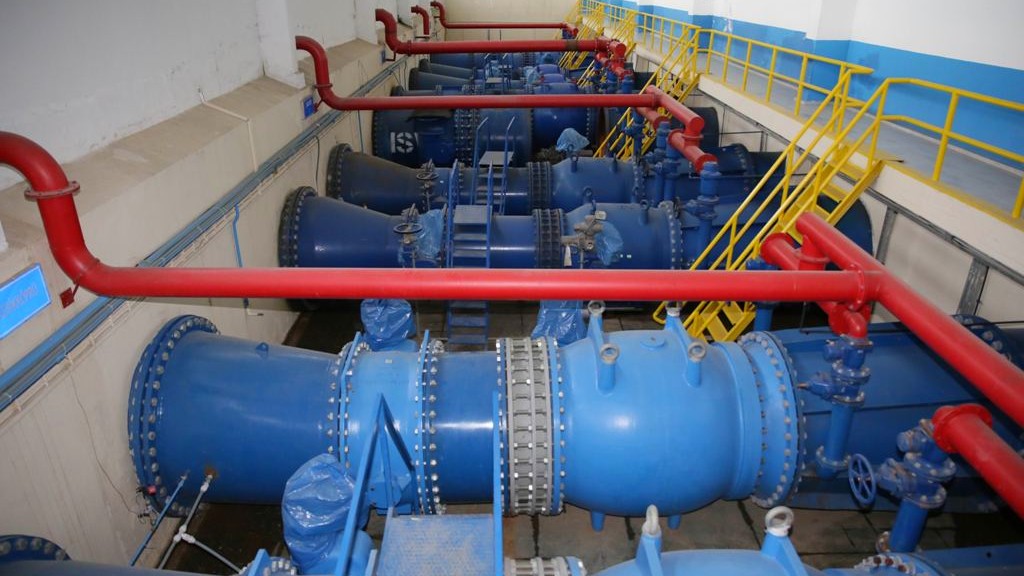
The purpose of this circular is to explain the environmentally friendly design requirements for placing water pumps on the market for the implementation of the regulation on environmentally friendly design of energy-related products.
This circular includes eco-design requirements for the marketing of centrifugal clean water pumps, including those integrated into various products. However, the following are outside the scope of this circular:
- Pumps specifically designed for clean water applications at temperatures below minus 10 degrees and above plus 120 degrees, other than those specified in the annex of this circular (except those specified in Annex II, second section, articles 11 to 13)
- Water pumps for fire fighting purposes
- Piston pumps
- Self-priming pumps
For the purposes of this circular, in addition to the definitions given in the regulation on environmentally friendly design of energy-related products, the following definitions apply:
- Nominal flow rate refers to the flow rate value at the head guaranteed by the manufacturer under normal operating conditions.
- Multistage submersible water pumps refer to rota dynamic pumps with an operating range of 0 degrees to 90 degrees at a nominal speed of 2900 rpm, designed to operate in wells with multistage nominal outside diameters of 10,16 mm and 15,24 mm.
- Vertical shaft multistage water pumps are multistage dry rotor pumps with rotating impellers placed on a vertical shaft and capable of producing up to 25 bar design pressures, 2900 rpm nominal speeds and a maximum flow rate of 100 m3/h.
- Self-priming pump refers to a pump that does not need to take in water from the front to start working when it first starts to take in clean water.
- Dry rotor (sealed) refers to the part that indicates that there is a seal between the pump body with impellers on the shaft and the motor.
- Piston pumps refer to water pumps that move clean water in a closed volume by volumetric forces.
- Rotodynamic pump refers to water pumps that move clean water by hydrodynamic forces.
- Water pumps refer to the hydraulic part of a device that mechanically or physically moves clean water and are designed to:
- End suction self-bearing
- End suction direct connection
- End suction direct coupled coaxial
- Vertical shaft multi-stage
- Multi-stage diver
- Clean water refers to water that does not contain more than 0,25 kg/m3 of non-absorbent solid particles and more than 50 kg/m3 of dissolved solid particles, and whose total gas rate does not exceed the saturated state.
- End suction pump refers to sealed, single-stage, centrifugal water pumps.
- End suction self-bearing water pumps refer to pumps that have end suction and their own bearings on their own shaft.
- End suction direct coupled water pumps refer to pumps that have end suction and whose motor shaft is extended to also serve as the pump shaft.
- End suction direct coupled coaxial water pumps refer to pumps with an extended motor shaft that also serves as a pump shaft, with the water inlet and outlet axes being the same.
In this circular, environmentally friendly design requirements are explained as follows:
- Minimum efficiency requirements and information for rotadynamic water pumps are specified in Annex II.
- Environmentally friendly design requirements are maintained according to the following time principles:
- Since the publication and entry into force of this circular, the minimum efficiencies for water pumps have been defined in Article 1 of Annex II.
- From the publication and entry into force of this circular, information on water pumps must comply with the conditions specified in Article 2 of Annex II.
- Compliance with eco-design requirements is measured and calculated in accordance with the conditions set out in Annex III.
- There are no other environmentally friendly design parameters other than those specified in Annex I, Part I of the Regulation on Environmentally Friendly Design of Energy-Related Products.
The tests required under the SGM-2015/44 circular primarily focus on energy efficiency and hydraulic performance. These tests are compatible with European Commission Regulation 547/2012. The main tests conducted within this framework are as follows:
- Hydraulic efficiency tests: These tests are performed to determine the hydraulic efficiency of a pump at a specific operating point. The pump is operated for a specific design point, and parameters such as flow, pressure, and power consumption are measured to calculate hydraulic efficiency. The mid-flow point is tested for maximum efficiency. Hydraulic efficiency is calculated by calculating the ratio of the pump's output power to its input power. The tested efficiency is compared to the minimum efficiency criteria established for the pump type. The minimum efficiency index is critical for a product to receive the CE mark. This index provides a standardized measure of the pump's energy efficiency.
- Pump performance tests: These tests measure the pump's performance characteristics, such as flow rate, head, and power consumption. These tests generate an efficiency curve and verify manufacturer claims.
- Power and energy consumption tests: These tests are performed to determine the electrical power consumed by the pump. The electrical input power is measured. If the pump and motor are combined, the overall system efficiency is also evaluated. These tests are particularly important for pumps with integrated motors.
- Conformity and labeling verification tests: These tests are conducted to verify the accuracy of the CE marking, technical documentation, and performance information. The product data sheet is checked for compatibility with the test data. Furthermore, the accuracy of the data on the label (such as nominal flow rate, pressure, efficiency) is verified.
- Integrated system tests: If the pump is part of another system, for example in a hydrophore system, the efficiency of the integrated system can also be tested.
- Vibration and noise tests: In some cases, acoustic performance is also evaluated along with energy efficiency.
- Durability and life tests: Pumps can be tested for long-term durability.
Our organization, which has been supporting businesses across all sectors for years through a wide range of testing, measurement, analysis, and evaluation activities, has a strong team of employees who closely follow global developments in science and technology and are constantly improving themselves. In this context, we also provide testing services to businesses within the scope of the "SGM-2015/44 Communiqué on Environmentally Sensitive Design Requirements for Water Pumps."



