

The standard "EN IEC 62196 Plugs, sockets, vehicle connectors and vehicle inlets - Conductive charging of electric vehicles", which is based on a European standard and subsequently published by the International Electrotechnical Commission (IEC), consists of the following subsections published under the same title:
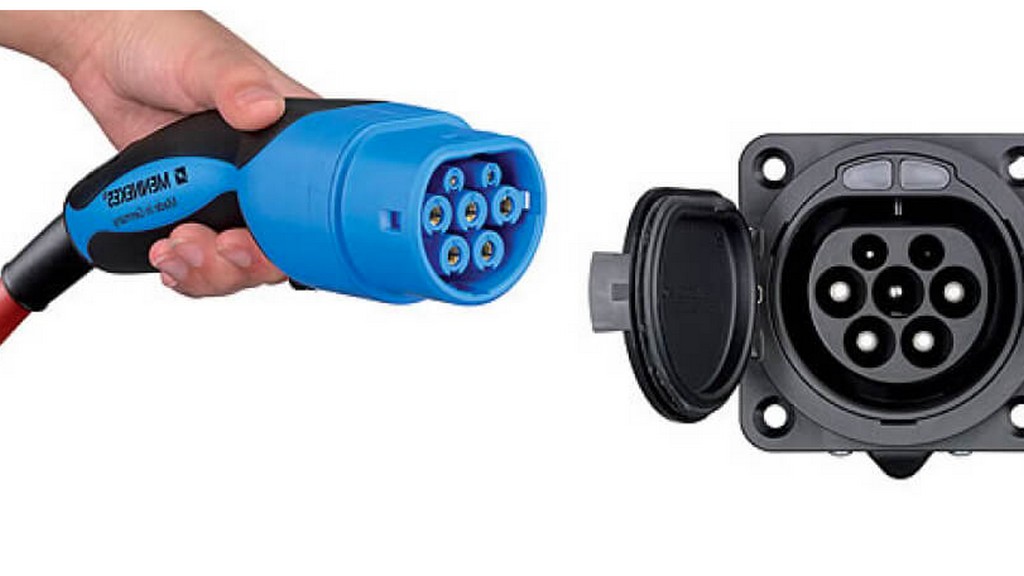
These accessories and cable assemblies are intended for installation by trained or qualified personnel only. These accessories and cable assemblies are intended for use in circuits specified in IEC 61851 (all parts) that operate at different voltages and frequencies and may include extra-low voltage and communication signals.
These accessories and cable assemblies are designed for use in ambient temperatures between -30°C and +40°C. In some countries, other requirements may apply.
The manufacturer may extend the temperature range provided the specified range information is provided. These accessories are designed for connection only to cables with copper or copper alloy conductors. The accessories included in this standard are designed for use in electric vehicle power supply equipment in accordance with IEC 61851 (all parts). This standard does not apply to standard plugs and sockets used for mode 1 and mode 2 of IEC 61851-1.
The term electric on-road vehicles (EVs) encompasses all on-road vehicles, including plug-in hybrids, that derive all or part of their power from rechargeable energy storage systems. These accessories are designed for use in circuits specified in the IEC 61851-1 standard, operating at different voltages and frequencies and may include extra-low voltage (ELV) and communication signals. The use of these accessories for bidirectional power transmission is being evaluated.
This standard applies to accessories to be used in ambient temperatures between minus 30 degrees and plus 40 degrees.
These accessories are designed for connection only to cables with copper or copper alloy conductors. The vehicle inlets and vehicle connectors described in this standard are designed for charging in modes 1, 2, and 3 (states B and C). The EV sockets and EV plugs discussed in this standard are designed for charging in modes 3 (states A and B) only. The modes and permitted connections are specified in IEC 61851-1.
The DC vehicle connectors and inputs discussed in this standard are used only in charging mode 4 according to condition C, as shown in the IEC 61851-1 standard. These vehicle couplers are designed to be used for circuits specified in the IEC 61851-23 standard (operating at different voltages and capable of incorporating ELV and communication signals).
This standard applies to vehicle couplers intended for use in ambient temperatures between -30°C and +40°C. In some countries, other requirements may apply. These vehicle couplers are designed for connection to cables with copper or copper alloy conductors only.
Accessories covered by this standard are designed for use in charging mode 4 according to standard IEC 61851-1. These accessories are designed to be connected to cables according to the IEC 62893 series for DC cables.
These accessories are intended for use in circuits specified in IEC 61851-3 (all parts). Accessories covered by IEC 62196-4 are intended for use only in electric vehicles providing a double or reinforced insulated vehicle power supply circuit or in battery systems covered by IEC 61851-3 (all parts).
These accessories and cable assemblies are designed for use in ambient temperatures between -30°C and +50°C. These accessories are designed to connect only to cables with copper or copper alloy conductors.
This standard applies to accessories and cable assemblies for use in ambient temperatures between -30°C and +40°C. The vehicle connector and vehicle inputs are designed to connect only to cables with copper or copper alloy conductors.
With the continued development and widespread use of electric power in other classes of electric vehicles (EVs) and hybrid electric vehicles, the introduction and commercialization of electric two- and three-wheelers is accelerating in the global market, addressing global concerns about carbon dioxide reduction and energy conservation. Compared to passenger cars, two- and three-wheelers have a shorter range per charge and require more charging opportunities, particularly public DC charging stations. This standard describes the general and basic requirements for a compact interface for small-sized DC EV power supply equipment that can be installed in various locations, such as convenience stores, newsstands, and lottery booths, and could contribute to the widespread adoption of two- and three-wheelers.
Our organization, which has been supporting businesses across all sectors for years through a wide range of testing, measurement, analysis, and evaluation activities, has a strong team of employees who closely follow global developments in science and technology and are constantly improving themselves. In this context, we also provide testing services in accordance with the EN IEC 62196 "Plugs, sockets, vehicle connectors, and vehicle inputs - Conductive charging of electric vehicles" standard.
To get an appointment, to get more detailed information or to request an evaluation, you can ask us to fill in our form and reach you.

