
The European standard "EN 1078 Helmets for pedal cyclists, skateboarders, and roller skaters" describes the requirements and test methods for helmets worn by pedal cyclists, skateboarders, and roller skaters. The requirements and associated test methods are given for:
For the purposes of this standard, the following terms and definitions apply:
It's important to note that the material used for the parts of the helmet that come into contact with the skin will not undergo significant changes due to contact with sweat or substances likely found in toiletries. Materials known to cause skin irritation should not be used.
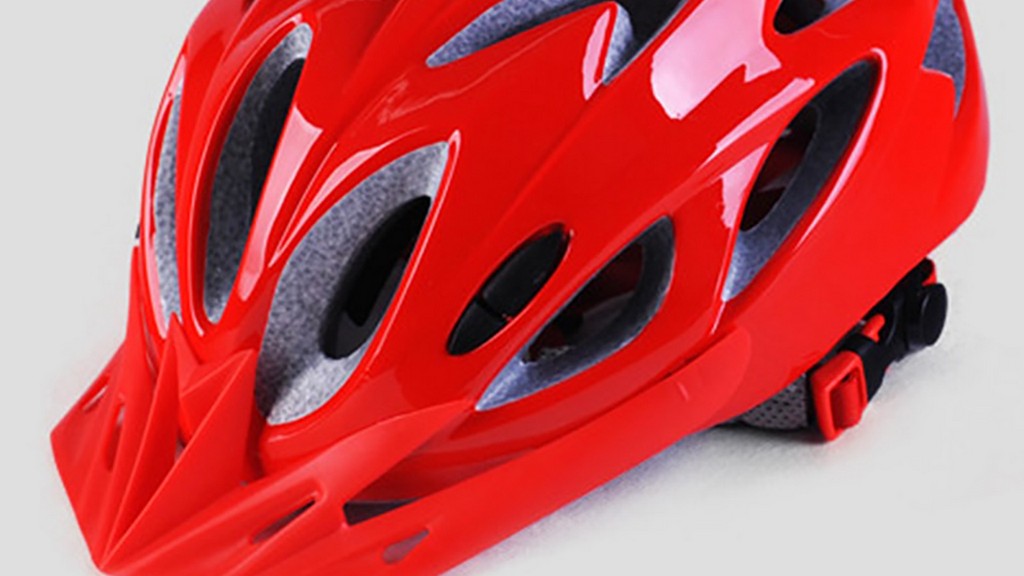
A helmet typically consists of a device to absorb impact energy and a device to hold the helmet on the head in the event of an accident. The helmet must be durable and able to withstand handling. The helmet's components (visor, rivets, fans, edges, fastening device, and the like) must be designed and shaped so that they are unlikely to injure the wearer under normal use.
Helmets must have the following features:
When tested to this standard, there shall be no obstruction to the field of view limited by the following angles:
In terms of shock absorption capacity, a helmet must provide protection to the forehead, back, sides, temples, and crown of the head. When tested according to this standard, peak acceleration on a flat anvil and a curbstone anvil shall not exceed 250 g per impact for the speeds specified in the standard. These are equivalent to theoretical drop heights of 1497 mm and 1064 mm, respectively.
Once tested, the helmet must not show any damage (sharp edges, tips) that could cause significant injury to the user.
Means must be provided to hold the helmet on the wearer's head. All parts of the retention system must be securely fastened to the helmet. The chin strap must not include a chinrest. Any chin strap must be at least 15 mm wide. Chin straps may be fitted with means to enhance wearer comfort. Any retention system must be fitted with a device to adjust and maintain tension on the system. The device must be adjustable so that the buckle does not engage the jawbone. No part of the retention system should be colored green. It is recommended that the release mechanism be marked in red or orange.
When tested to this standard, the dynamic elongation of the retention system must not exceed 35 mm, and the residual elongation must not exceed 25 mm. For this purpose, elongation includes slippage of the retention device. Damage to the retention system should be accepted provided the above conditions are met. In this test, slippage of the retention device may be measured and recorded separately from other contributions to elongation, but this is for informational purposes only and is not subject to any separate requirements. When tested to this standard, the helmet must not dislodge from the headform.
In short, the EN 1078 standard is essential because it specifies the safety and performance requirements for bicycle helmets, skateboard helmets, and inline skating helmets. The main reasons for this standard's importance are:
Our organization, which has been supporting businesses across all sectors for years through a wide range of testing, measurement, analysis, and evaluation activities, has a strong team of employees who closely follow global developments in science and technology and are constantly improving themselves. In this context, we also provide testing services to businesses in accordance with the EN 1078 "Helmets for Pedal Cyclists, Skateboarders, and Rollerblades" standard.
To get an appointment, to get more detailed information or to request an evaluation, you can ask us to fill in our form and reach you.

