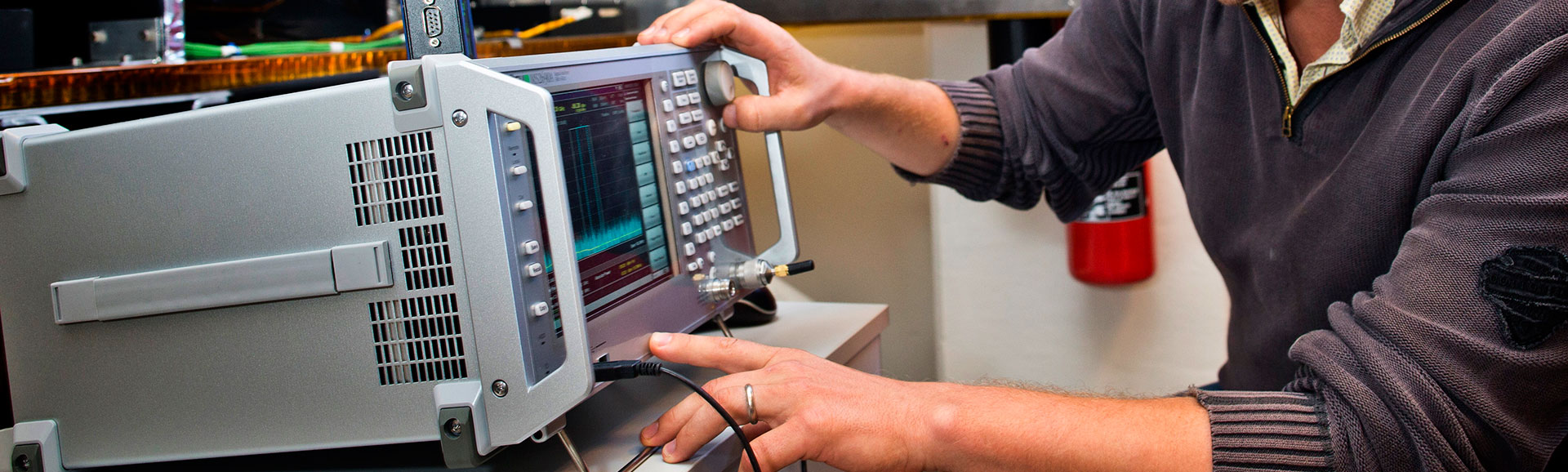
ISED RSS-210 License Exempt Radio Device: Category I Equipment
The standard "ISED RSS-210 License-exempt radio equipment: Category I equipment" published by Innovation, Science and Economic Development Canada (ISED) under the Radio Standards Specification (RSS) describes the certification requirements for various license-exempt radio devices. The radio devices covered by this standard are primarily low power and are used primarily for consumer or commercial purposes.
Equipment covered by this standard is classified as Category I equipment. A technical acceptance certificate issued by the ISED Certification and Engineering Bureau or a certificate from a recognized certification body is required. Equipment certified under this standard must also comply with the general requirements specified in the “General requirements for the compatibility of radio equipment”.
Unless otherwise stated, measurements are performed and reported in accordance with the ANSI C63.10 standard.
The technical specifications are specified in this standard as follows:
- Emissions entering restricted frequency bands: Unless otherwise stated, equipment whose emissions enter restricted frequency bands listed in “General requirements for compatibility of radio equipment” must comply with the provisions stated therein.
- General field strength limits: The “General requirements for compatibility of radio equipment” include general field strength limits for undesirable emissions, where applicable, for transmitters and receivers operating in accordance with the provisions of this standard. Unless otherwise specified, undesirable emissions from transmitters and receivers are permitted within the restricted frequency bands listed herein and in the TV bands 54-72 MHz, 76-88 MHz, 174-216 MHz and 470-602 MHz. However, fundamental emissions are prohibited in these bands except where equipment operation is permitted under the ISED RSS-210 standard.
- Transmitters with desired and undesired emissions within the general field strength limits: Transmitters with desired and undesired emissions within the general field strength limits specified in “General requirements for compatibility of radio equipment” may operate on a license-exempt basis in any frequency band other than the restricted frequency bands listed here and the TV bands 54-72 MHz, 76-88 MHz, 174-216 MHz and 470-602 MHz and shall be certified under the ISED RSS-210 standard. Under no circumstances shall the level of undesired emissions exceed the level of the essential emissions. Devices operating below 40 kHz having all emissions at least 490 dB below the general field strength limits listed in “General requirements for compatibility of radio equipment” are Category II devices and are subject to the requirements specified in the standard “ISED RSS-310 License-exempt radio equipment: Category II equipment”.
- Cordless telephones: This section describes the general conditions applicable to all cordless telephones, regardless of the frequency band of operation. There are also other standards specific to the bands available for cordless telephones, depending on the frequency bands, as specified in the annexes to this radio standards standard or in other standards. Essentially, a cordless telephone consists of a base station and a portable handset. The handset is designed to operate as an extension of the base station, eliminating the connecting handset cable of a standard telephone. The base station is designed to be connected to a telephone line that has access to the public switched telephone network. Cordless telephones operate in full duplex mode, allowing simultaneous conversations between both parties. The base station of a cordless telephone must comply with both the ISED RSS-210 standard and the specification “Compatibility for terminal equipment, terminal systems, network protection devices, connection arrangements and hearing aids” and be documented in both documents.
Our organization has a strong staff that closely follows the developments in the world in the field of science and technology and constantly improves itself. Among the numerous test, measurement, analysis and evaluation studies provided for businesses in various sectors, there are also test services in accordance with the "ISED RSS-210 License-Exempt Radio Device: Category I Equipment" standard.