LIEBHERR LF00006-TEP03 Components for Energy Storage System (LES300, LPP300)
The German-Swiss multinational equipment manufacturer LIEBHERR is one of the world's largest manufacturers of construction machinery. It is also among the leading technology providers in many areas. The standard "LIEBHERR LF00006-TEP03 Components for energy storage system (LES300, LPP300)" developed by this organization describes a test procedure for engineering pressure testing of the LES300 cooling system and LPP300 hoses. The described test method aims to reduce risk during qualification and series. Hydrostatic pressure testing is performed on pressure components designed for the flow of liquids to provide evidence of adequate tightness.
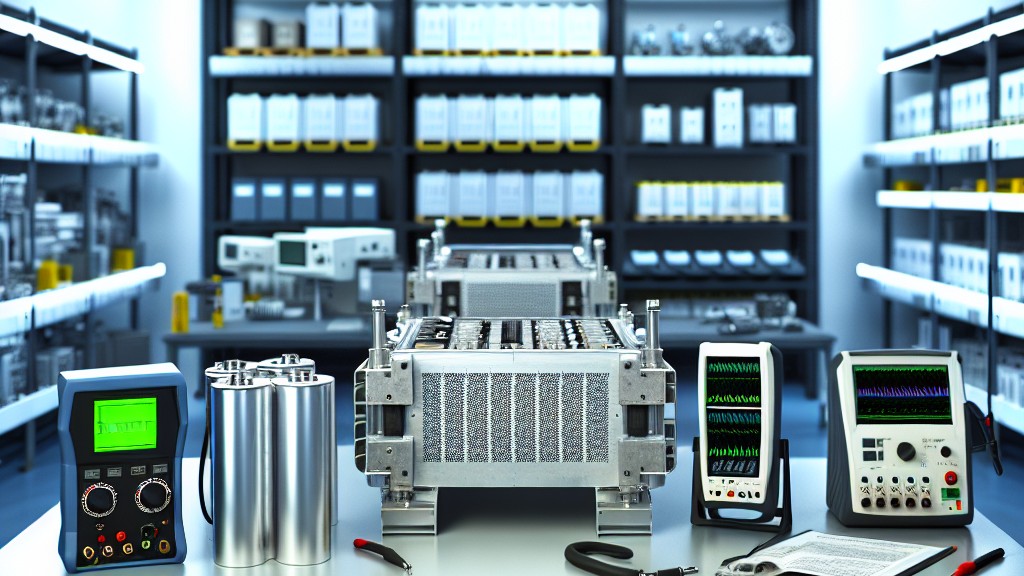
The LPP300 is a single power package and the LES300 is switchgear. Both equipment are interpreted and formulated according to the standard “DIN EN 62477-1 Safety requirements for power electronic converter systems and equipment” developed by the German Institute for Standardization (DIN).
In engineering tests, the temperature, pressure and humidity in the laboratory are controlled before, during and after the test. The average of these values should be listed in the test report.
Standard environments are:
- The temperature is between 20 degrees and 25 degrees.
- The pressure is between 84 kPa and 107 kPa.
- Humidity is at most 85 percent relative humidity.
Unless otherwise stated, the following tolerances apply:
- The temperature is plus/minus 3 degrees.
- Pressure plus/minus 5 percent of stated pressure.
Ambient conditions should be virtually unchanged during the test run.
Tests are performed essentially in the following order:
- LPP with air and 5 bar
- LES with air and 5 bar
- LPP with coolant and 5 bar
- LES with coolant and 5 bar
- LES (hydrostatic pressure test) with coolant and 7,5 bar
- Impact test with fully loaded system
- Impact test with fully loaded system
The test methods defined in this standard are:
- Hydrostatic pressure is the standard DIN EN 62477-1 for pressure testing with air. Initially, the LES/LPP is empty. When testing, the equipment under test is connected to the installation and the LPP is started. At room temperature, the pressure is tested up to the desired pressure level. The room temperature must be documented. When the pressure is reached, the adjustment phase follows. After this time, the pressure loss is measured for 1 minute. The pressure drop must be within the limit. The pressure is released. This process is repeated.
- The hydrostatic pressure is the standard for pressure testing with coolant, DIN EN 62477-1 and DIN EN ISO 20485. The system is filled with a water-glycol mixture until the desired pressure level is reached. It should be noted that the air from the LPP must be completely displaced. The pressure is held for 30 minutes. The pressure drop is measured over 30 minutes. This must be within the limit given in the table. In addition, no liquid leakage is allowed. The cooling system is drained. The process is repeated at an ambient temperature of 5 degrees and a flow temperature of minus 25 degrees (test cycle 2). The process is repeated at an ambient temperature of 60 degrees and a flow temperature of 50 degrees (test cycle 3). The process is repeated again with LES (test cycle 4).
- Impact test, in the impact test with a fully loaded system, the LES/LPP is filled with a water-glycol mixture (ratio 1:1). Applicable standards are DIN EN 62477-1, DIN ISO 6772 and EN ISO 6803. The test procedure is given in the table given in the standard. The total number of cycles is 200 thousand or until the hoses fail.
Stage 1:
- Preparation: The ambient temperature should be set to 60 degrees. The test liquid is heated to 50 degrees test temperature and the cold plate is filled.
- Adjustment phase: 5 bar pressure is held for 60 minutes.
- Impact test: Then a pulsating pressure with a uniform frequency between 0,2 Hz and 1,0 Hz is applied to the inside of the hose assemblies. The pressure pulse frequency used is recorded. 100 thousand cycles are performed.
Stage 2:
- Preparation: The ambient temperature is adjusted to room temperature. The test liquid is also adapted to this temperature, the cooling system / cooling plate must be filled.
- Setting phase: The pressure is held for 60 minutes.
- Impact test: A pulsating pressure is applied to the inside of the hose assemblies at the same frequency. 48 thousand cycles are performed.
Stage 3:
- Preparation: The ambient temperature is set to 5 degrees. The test liquid is set to minus 25 degrees and the cold plate is filled.
- Setting phase: The pressure is held for 60 minutes.
- Impact test: A pulsating pressure is applied to the inside of the hose assemblies at the same frequency. 2 thousand cycles are performed.
Stage 4:
- Stage 1 is repeated. 10 thousand cycles are done.
Stage 5:
- Stage 2 is repeated. 40 thousand cycles are done.
- The results are evaluated.
Impact test, in the impact test with a half-filled system the LES/LPP is filled with a water-glycol mixture (ratio 1:1). When performing the test, the procedure described in the impact test with a full system is repeated with a reduced number of cycles and only with a half-filled cold plate (approx. 0,3 l). The total number of cycles is 100 thousand or until the hoses fail. If an unusually high pressure drop is detected, the LES300/LPP300 should be examined immediately for leaks. The hoses are expected not to spill and to withstand the pressure and temperatures at all times.Our organization has a strong staff that closely follows the developments in the world in the field of science and technology and constantly improves itself. Among the numerous test, measurement, analysis and evaluation studies provided for businesses in various sectors, there are also test services in accordance with the "LIEBHERR LF00006-TEP03 Components for energy storage system (LES300, LPP300)" standard.



