

UN shipping testing for lithium cells and batteries allows the product to demonstrate compliance with UN / DOT 38.3 and ensure that your lithium batteries are fully safe during shipping.
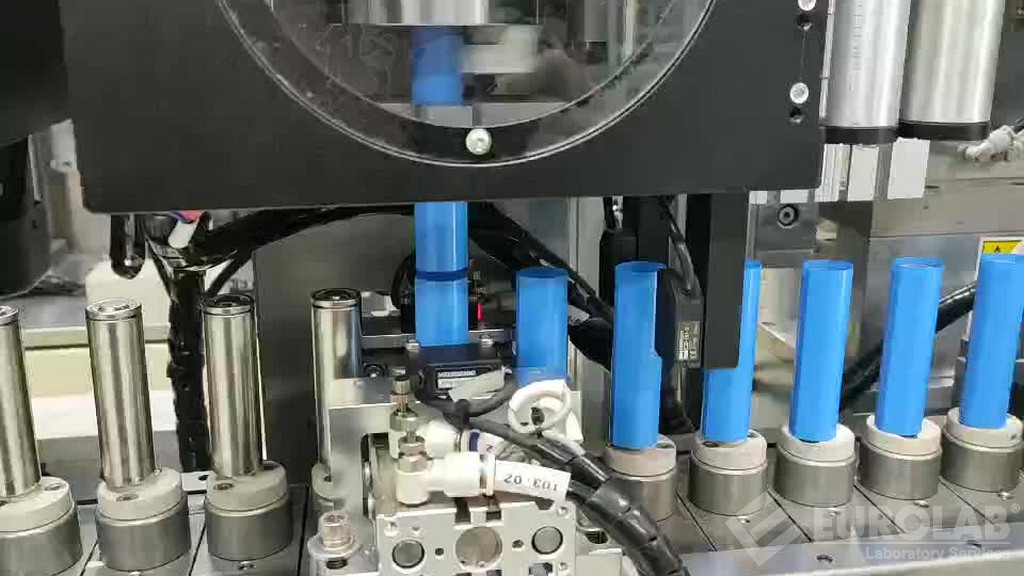
Transportation of lithium batteries is subject to international regulations, which may differ if batteries are transported by air, sea or land. The UN (United Nations), together with the US DOT (Department of Transportation), which defines the shipping regulations for the US under Sections 49 - 100, 185 CFR, publishes recommendations for the transport of dangerous goods worldwide. Various directives exist on the safe packaging and shipment of lithium metal and lithium ion batteries.
Lithium batteries are classified as hazardous materials and may pose a safety risk if not tested and packaged according to shipping regulations. As an internationally recognized independent testing laboratory with 60 years of product safety expertise, we help you ensure your lithium batteries comply with shipping regulations to be considered safe for shipping.
EUROLAB, UN Manual of Tests and Criteria 38.3 can provide all necessary tests on rechargeable, non-rechargeable batteries or battery packs - within individual units or equipment - in accordance with the relevant transport of dangerous goods regulations as detailed in the US DOT. Dangerous Goods Regulations (HMR; 49 CFR, Part 171-180) and IATA Dangerous Goods Regulations (DGR).
EUROLABis a global leader in testing and certification services for lithium batteries and your single-source laboratory for UN/DOT 38.3 battery testing and certification. Our ISO 17025 accredited battery laboratory has a wide range of Maccor battery analyzers, experienced battery testing engineers and many years of practical experience with lithium-ion batteries to ensure the highest level of accuracy.
Thanks to the laboratory network EUROLABcan help you ensure your lithium cells and batteries meet electrical, mechanical, performance, reliability and safety compliance requirements to achieve the certifications you need for faster market access. It can perform all tests according to UN/DOT 38.3 in one place, saving you time and resources when bringing new products to the global market.
UN / DOT 38.3: Lithium Battery Transport Test Capabilities
UN / DOT 38.3 details the test requirements applicable to all lithium batteries and batteries. Lithium battery manufacturers and products using lithium batteries must meet these testing requirements in the design, manufacture, and distribution of their products.
UN 38.3 provides a combination of significant environmental, mechanical and electrical stresses designed to evaluate the ability of lithium batteries to withstand the prescribed harshnesses expected during transportation. EUROLABcan perform all necessary tests according to UN/DOT 38.3 from one place.
T1 - Height Simulation (Primary and Secondary Cells and Batteries)
This is a low pressure test simulating an unpressurized aircraft area (cargo area) at an altitude of 15.000 meters. After storing batteries at 11.6kPa for> 6 hours, these criteria must be met: loss of mass, leakage, venting, disassembly, rupture or fire, and no voltage within 10% of the pre-test voltage.
T2 - Thermal Test (Primary and Secondary Cells and Batteries)
This test covers changes in extreme temperatures from -40C to + 75C. Batteries are stored for 6 hours at -40 ° C (12 hours for large cells / batteries) followed by 6 hours at + 75 ° C (12 hours for large cells / batteries) for a total of 10 cycles. The test can be done in a single room or thermal shock chamber, but less than 30 minutes pass should be used.
T3 - Vibration (Primary and Secondary Cells and Batteries)
This test simulates vibration during transportation. Test Sinus Sweep: 15Hz - 7Hz - 200Hz in 7 Minutes; 12 Sweeps (3 hours); 3 mutual vertical axes.
T4 - Shock (Primary and Secondary Cells and Batteries)
This test also simulates vibration during transportation. The test is a Half Sine pulse: 150G / 6ms for small cells / batteries; 50G / 11ms for large cells / batteries; 3 pulses per direction; 6 directions (+/- z, +/- x, +/- y).
T5 - External Short Circuit (Primary and Secondary Cells and Batteries)
This test simulates an external short circuit to the cell or battery terminals. At + 55C temperature, apply short circuit (<0.1ohm) to terminals. Wait at least one hour after the sample temperature returns to +55 +/- 2 ° C. Transition criteria: Case temperature does not exceed + 170 ° C and there is no ripping, rupture or fire within 6 hours after testing. The fuse, current limiting circuit and activation of the ventilation mechanism are allowed.
T6 - Impact (Primary and Secondary Cells)
This test is valid for primary and secondary cells only. For cylindrical cells with a diameter greater than 20 mm, it simulates an effect on the cell state. For cylindrical cells
T7 - Overcharge (Secondary Batteries)
This test is for secondary or rechargeable batteries only. Simulates the overcharge state of a rechargeable battery: 24 times the manufacturer's recommended charging current for 2 hours. The battery should be monitored for 7 days for fire or disassembly.
T8 - Forced Discharge (Primary and Secondary Cells)
This test simulates the forced discharge condition for primary and secondary cells only.
EUROLAB, with its highly expert team and internationally accredited laboratories, UN Shipping Test for Lithium Cells and Batteries (UN / DOT 38.3) It performs all test, analysis, measurement, evaluation and report generation services completely and reliably.
To get an appointment, to get more detailed information or to request an evaluation, you can ask us to fill in our form and reach you.

