

The ASTM D711-23 Standard Test Method for Road Marking Removal Time, developed by the American Society for Testing and Materials (ASTM) , describes a laboratory procedure for determining the removal time of road markings.
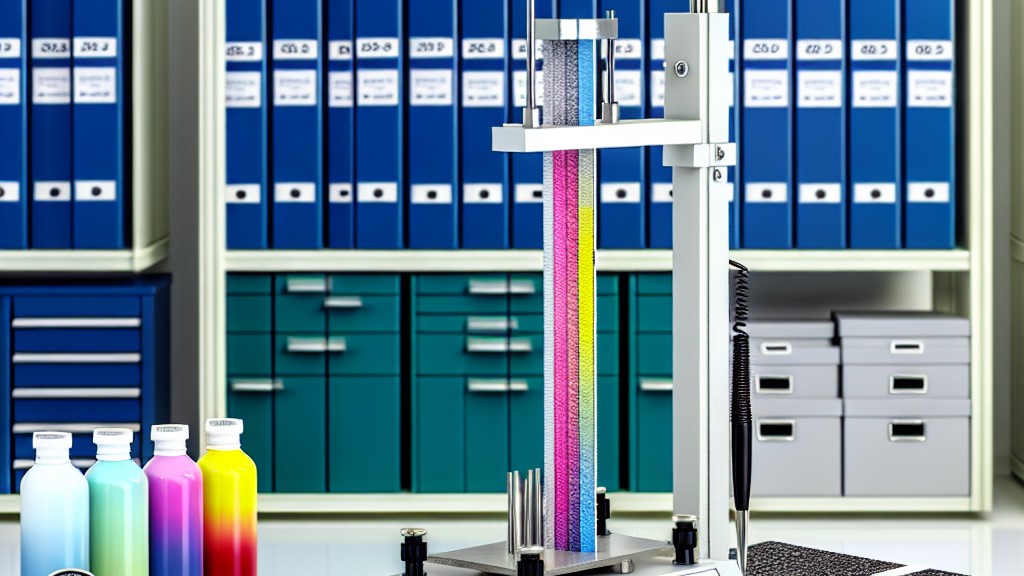
This test method uses a wheel consisting of a metal cylinder with rubber O-rings. The wheel is rolled repeatedly down a ramp over a freshly applied road marking film until there is no more transfer of the marking material to the rubber rings. The time from the application of the road marking film to the point where no transfer of the marking material occurs is the no-take time.
The key variables to be controlled during testing are wet film thickness, temperature, humidity, airflow and the use of retro-reflective optics. This standard provides three options for testing the non-reception time for road markings. The first option, Method A, specifies controls for temperature, humidity and airflow during testing. The second option, Method B, specifies controls for temperature and humidity during testing. The third option, Method C, provides guidance for achieving this with a reduction in the application of retro-reflective optics such as glass beads.
Water-based and solvent-based pavement markings are generally tested using Method A or Method B without a drop application on retroreflective optics. Two-component 100 percent solids pavement markings are generally tested using Method C. These test methods serve as a laboratory control test method.
Types of pavement markings that can be tested by this method are water-based traffic paint, solvent-based traffic paint, and some two-component 100 percent solids liquid pavement markings such as epoxy and modified epoxy pavement markings. If wet film thickness, temperature, and humidity are controlled within the tolerances specified herein, this method can be useful for relative testing of pavement markings and potentially qualifying pavement markings for field application to approved specifications.
For better repeatability and meaningful comparison of tested pavement marking samples, consistent airflow over the pavement marking films during testing is important. The buyer and seller should agree on airflow conditions, whether static or carefully regulated airflow. Because of the large number of variables that affect field application of road markings (e.g. wet film thickness, air temperature, humidity, wind speed, asphalt or concrete road type, film profile on the road, road temperature, road porosity, road moisture content, and presence or absence of direct sunlight during striping), it is difficult to obtain a direct correlation between the results of this test and field applications. However, if the test protocol is followed, relative field performance can be estimated using this method.
For testing of two-component 100 percent solids liquid road markings, a certain amount of droplet retro-reflective optics are usually applied to the markings prior to testing. For these types of road markings, airflow regulation is not necessary due to the drying mechanics of the product.
The apparatus used in these tests shall consist of a steel cylinder of the specified shape and dimensions, two replaceable O-rings, and a ramp of the shape and dimensions shown. The detailed dimensional requirements of the steel cylinder are shown in the figure provided in the standard. The total weight of the assembly with the O-rings shall be 5386 g plus/minus 28 g. The detailed dimensional requirements of the ramp and a picture of the apparatus tested with pavement marking film are shown in the figure. The replaceable O-rings shall be made of synthetic rubber or rubber-like material. The O-rings and rubber products shall also conform to “ASTM D1414-15 Standard Test Methods for Rubber O-rings.” The dimensional requirements of the O-ring are included in the standard.
The following three test methods are described in detail in the ASTM D711-23 standard:
Our organization, which has been trying to support businesses from every sector with its testing, measurement, analysis and evaluation studies carried out in a wide range for years, has a strong staff that closely follows the developments in the world in the field of science and technology and constantly improves itself. In this context, testing services in accordance with the "ASTM D711-23 Standard test method for the period of non-removal of road signs" standard are also provided to businesses.
To get an appointment, to get more detailed information or to request an evaluation, you can ask us to fill in our form and reach you.

