

The standard “TSC3000G General test method test for lighting devices” developed by the Japanese Industrial Standards Organization (JIS) describes a procedure to provide the most similar simulated condition for the fogging condition of car headlights, day and night mode of driving on rainy days, and day and night mode of fast cooling car wash.
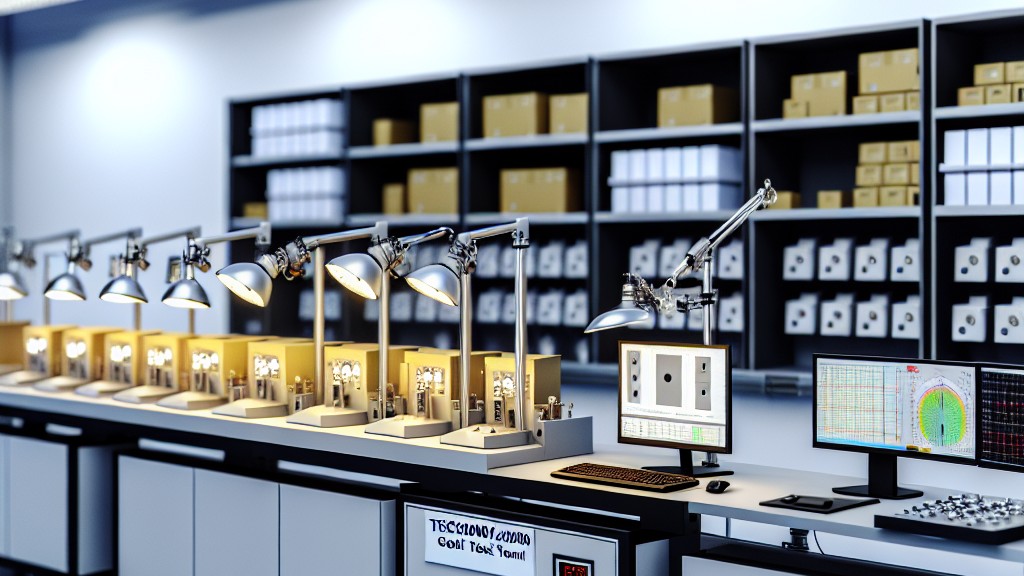
The dual-temperature fogging test chamber for car headlights has the ability to simulate two different situations: driving on rainy days and extinguishing car washes, as well as simulating different seasons.
The dual temperature fogging test chamber for car headlights provides the temperature and humidity environment required for car headlights. The constant temperature water supplied by the constant temperature water tank is evenly sprayed onto the surface of the car headlight mirror by the nozzle. The combination of the hose and infrared light simulates a fast-cooling car wash environment.
When performing this procedure, after the initial humidity adjustment, the test product is placed on the test machine in the normal delivery state. The surface of the lamp body is adjusted to 20, the back of the lamp (base side) is adjusted to 23, and the relative humidity is 55 percent, and the light is left off for 1 hour. The back of the lamp is adjusted to 80, and then the low beam is turned on (including the lamp with the low beam lighting function) (the bulb voltage is 13 Volt). The temperature behind the lamp is controlled from 23 degrees to 80 degrees. The temperature increases linearly in 30 minutes plus/minus 5 minutes, but the humidity is below 80 percent relative humidity at 10 degrees. After lightning, fog formation is observed every 10 minutes, and the time for fog formation is measured. If there is no fog for one consecutive hour, the observation should be extended to every 1 minutes at intervals of 30 hour, 2 minutes, and 30 hours. The side of the lamp housing is observed, and the lights are used to confirm the fog formation (the lamp should be off when there is fog).
These tests determine whether fog will form on vehicle headlights during rain or car washing, and whether this will affect lighting performance.
Solar irradiance (IR) testing uses heat lamps (infrared) in an environmental test chamber to simulate the heating effects of prolonged sun exposure. Advanced laboratories use a combination of multiple proprietary radiant heat sources that can achieve precise temperature controls, humidity systems, wind speed adjustments, and a variety of incident angles to perform the test as required. The radiant heat solar array is positioned at a specific angle over a test sample while controlling the radiation. Radiation levels are controlled to the black panel temperature, the surface temperature of the sample, or a specific irradiance measured with a pyrometer.
The purpose of this test is to investigate the extent to which equipment or components are affected by simulated solar radiation and associated heating elements. The effects of solar exposure are important to understanding design robustness and risk reduction. The heating effect of a radiant heat source such as the sun is different from the effect of high air temperature alone. Heat absorption is affected by color, reflectance and surface irregularities (e.g. smoothness). How heat is absorbed by two different materials can exacerbate mechanical deterioration or damage.
The two most common types of solar radiation (IR) tests are steady-state exposures and cyclic exposures. For steady-state exposure, the room air temperature is fixed at the ambient temperature decided upon prior to irradiation, while cyclic exposure can increase or decrease temperature and radiation as anticipated.
The results reported from an IR test are often post-exposure evaluations or functional tests. Common post-test inspections include checking for fading, warping, bubbling, or peeling. Functional checks often include hardness measurements, dimensional measurements, photometric checks, and/or simple operational checks. Monitoring internal component temperatures during exposure is also common.
This test is important for any sample that may be exposed to intense sunlight during use. Testing can be performed on complete assemblies, components, or wafers or samples.
Our organization, which has been trying to support businesses from every sector with its testing, measurement, analysis and evaluation studies carried out in a wide range for years, has a strong staff that closely follows the developments in the world in the field of science and technology and constantly improves itself. In this context, testing services in accordance with the "TSC3000G General Test Method Test for Lighting Devices" standard are also provided to businesses.
To get an appointment, to get more detailed information or to request an evaluation, you can ask us to fill in our form and reach you.

