

The European standard “EN 12368 Traffic control equipment - Signal heads” applies to signal heads used for road traffic, which have round red, yellow or green signal lamps with diameters of 200 mm and 300 mm, and optical units to be integrated into these signal heads. This standard defines the visual, structural, environmental performance and test characteristics of signal heads and optical units for pedestrian and road traffic use, and the rules for evaluating the conformity of these products.
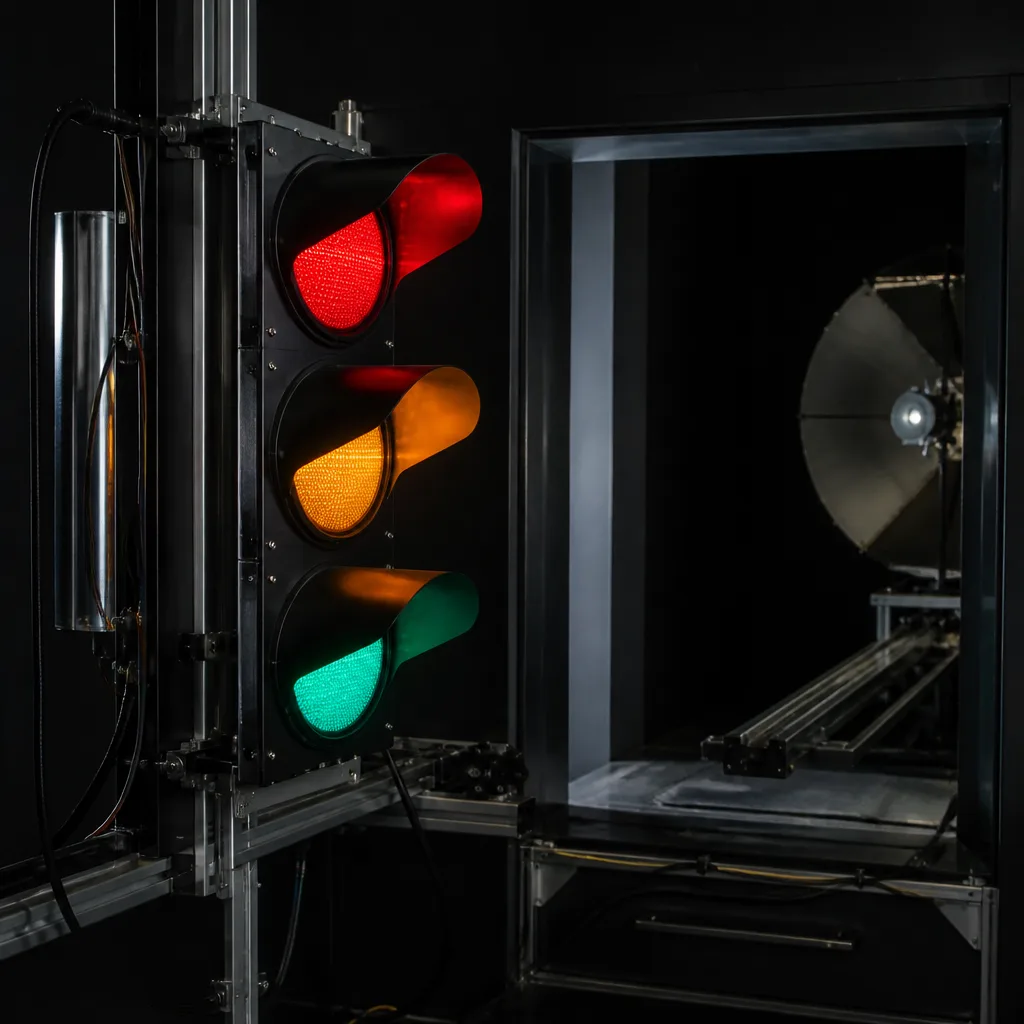
This document may be applied, partially or fully, to other signal heads outside the scope mentioned above, such as white optical units or signal heads with a diameter smaller than 200 mm, on an optional basis.
The structural product characteristics have been defined as follows:
The choice of construction and materials must ensure that the product delivers the declared performance over a reasonable economic lifespan, as verified by the relevant tests specified in this standard.
The supplier must specify in detail in its documentation what maintenance, cleaning methods and materials will be used to ensure that the optical performance is maintained at least 80 percent of the minimum values specified in this standard for the supplier's defined lifespan.
For the stated lifespan of the optical unit, the colors must remain within the color boxes specified in the provided table.
An IP65 sealing rating can still lead to a risk of water accumulation inside the optical housing due to condensation.
If optical units require separate protection, they must be protected to IP55 or IP65 level. The signal head, including its optical components, must be designed so that, after installation and throughout the service life defined by the supplier, including component replacement, the optical and mechanical product characteristics meet the requirements of this standard.
In short, the EN 12368 standard covers the technical, performance, safety, and environmental requirements for traffic signal lamps used on roads across Europe, including vehicle traffic lights, pedestrian signals, and other illuminated traffic control devices. This standard ensures that traffic signal equipment is reliable, visible, durable, and safe under a variety of environmental and operational conditions.
The EN 12368 standard applies to signal lamps used for the following purposes:
This standard covers both traditional lamp-based systems and modern LED traffic signal modules.
The main requirements described in the EN 12368 standard are as follows:
Proper optical performance reduces driver interference and improves response time.
This ensures a long service life even in harsh climates.
LED modules, in particular, benefit from standardized electrical performance.
Mechanical robustness is critical for roadside installations.
This helps municipalities provide predictable traffic control.
Test methods defined in the EN 12368 standard include the following:
Manufacturers are required to test products before applying CE marking and placing them on the market.
The EN 12368 standard is important for the following reasons:
Without a consistent standard, traffic signal performance can vary significantly, creating safety risks and supply inconsistencies.
The EN 12368 standard is widely used in the following sectors:
In conclusion, the EN 12368 standard is a fundamental standard for traffic signal lamps and ensures that traffic lights across Europe meet consistent requirements in terms of visibility, durability, electrical safety, and environmental performance. This standard plays a significant role in road safety, infrastructure reliability, and the modernization of traffic control systems.
For many years, our organization, with its competent and experienced staff, has been understanding the needs of its clients, providing the advanced testing services they require, and assisting them in the establishment, implementation, and improvement of management systems. Within this framework, we also provide testing services in accordance with the EN 12368 standard.
To get an appointment, to get more detailed information or to request an evaluation, you can ask us to fill in our form and reach you.

