

The ANSI Z136 series of standards, developed by the American National Standards Institute (ANSI), includes requirements and test procedures for the safe use of lasers.
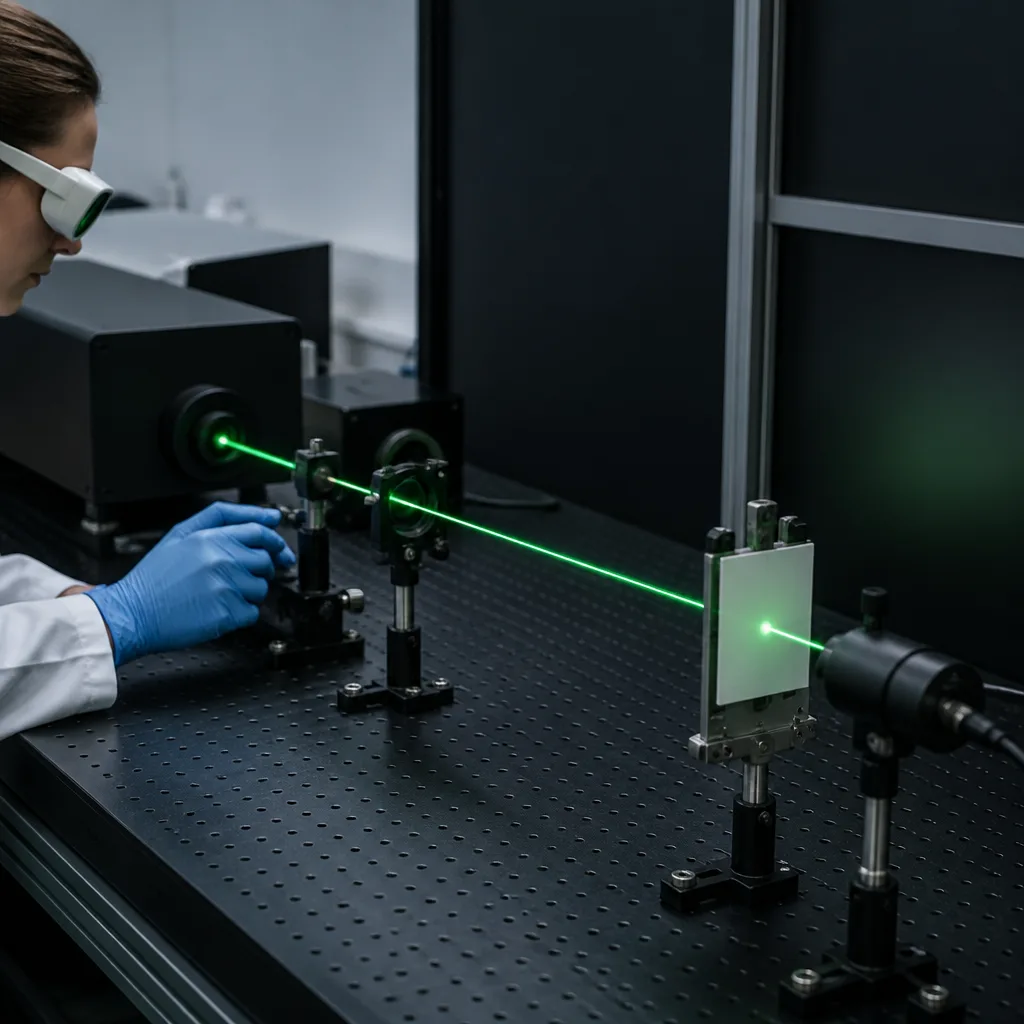
“ANSI Z136.1 American National Standard for the Safe Use of Lasers” is the fundamental horizontal standard. Laser safety programs provide general requirements on hazard assessment, classification (Class 1, 1M, 2, 2M, 3R, 3B, 4), maximum allowable exposure, control measures, non-radiation hazards, and similar issues. All other ANSI Z136 standards refer to or are based on this section.
Other ANSI Z136 standards are specialized (vertical) standards. These apply to specific environments or applications and generally take precedence over the ANSI Z136.1 standard within their particular scope.
The ANSI Z136 standard consists of the following sub-sections:
Today, laser technology is widely used in industries all over the world. While the possibility of material damage in laser processes is an important consideration, the main concern is the danger to anyone operating the equipment.
The ANSI Z136.1 standard provides comprehensive recommendations for the safe use of lasers and laser systems operating at wavelengths between 180 nm and 1000 μm (1 mm). While focusing on protecting people from hazards associated with laser radiation, it also addresses non-radiation hazards.
This standard applies to industrial, medical, research, educational, military, and outdoor laser applications. It is widely recognized by OSHA and serves as the de facto benchmark for laser safety programs.
One of the most important contributions of this standard is the seven-class laser classification system based on the potential of the laser to cause biological damage to the eye or skin:
This classification categorizes each type of laser according to its potential to cause biological harm. Class 1 lasers are exempt from all controls as they pose no hazard, while Class 4 lasers require rigorous controls to reduce the risk of eye or skin exposure. Specific controls for each classification are detailed in the standard.
Optical communication systems include end-to-end optical fiber-based links, fixed terrestrial point-to-point free-space links, or a combination of both. This standard is designed for use by those installing end-to-end systems and by service, maintenance, and other personnel who may interact with these systems in situations where access is uncontrolled, controlled, or restricted. It provides detailed safety information for systems where optical energy is accessible and source parameters are uncertain or not under user control.
This standard includes control measures appropriate to the specific hazard level (optical fiber connections) and access level (free-space connections). Most assessments can be performed analytically, and a number of representative hazard assessment examples are given in the appendices.
This standard addresses two main types of systems:
Unlike conventional lasers, fiber optic systems are generally enclosed and operate as Class 1 (inherently safe) under normal conditions. However, hazards arise during servicing, maintenance, installation, or when the fibers are disconnected (when accessible optical radiation is present).
Fiber optic networks are growing rapidly. Technicians frequently work with live or potentially energized fibers in uncontrolled environments. The ANSI Z136.2 standard helps prevent eye injuries from invisible infrared laser radiation, which is a real risk during splicing or testing.
This standard applies to all settings where a laser used in healthcare laser systems is used as a medical device. This includes hospital facilities, outpatient surgical centers, and individual medical, dental, and veterinary offices, as well as non-medical settings such as salons and spas.
Healthcare laser systems include a distribution system to direct the laser output, a power supply with laser controls and calibrations, a protective housing, and associated fluids and gases.
Medical lasers are used in thousands of procedures every day. Hazards include eye injury, skin burns, surgical fires, inhalation of laser fumes (which may contain viruses and carcinogens), and electrical risks. This standard helps facilities prevent these incidents through structured controls, training, and supervision.
This standard is the gold standard for laser safety in the healthcare sector. Compliance with this standard protects patients and staff, reduces liability risks, and ensures the safe and effective use of medical lasers.
Furthermore, this standard specifically addresses the measurement of parameters related to the laser output beam necessary to obtain values for quantities used in classification or hazard assessment calculations. The assessment consists of comparing the measured exposures with the maximum allowable exposure values specified in the ANSI Z136.1 standard, based on the ability of the direct, reflected, or scattered laser beam to cause biological damage to the eye or skin.
This standard provides detailed guidance on how to perform optical measurements of laser beams, which are necessary for assessing hazards and classifying lasers according to the ANSI Z136.1 standard. It covers the measurements required to determine the following basic parameters:
These measurements are necessary for the following:
This standard applies to lasers operating between 180 nm and 1 mm (UV to far infrared).
This standard provides the technical basis for accurate laser hazard assessment. While more specific and measurement-focused than other Z136 standards, it is indispensable for anyone wishing to classify lasers, calculate nominal hazard zones, or reliably verify safety controls. The correct application of this recommended practice helps bridge the gap between theoretical safety limits and real-world laser performance.
In short, this standard addresses laser safety concerns specific to teaching and demonstration settings. It covers the safe use of lasers and laser systems in classrooms, laboratories, science fairs, and school demonstrations, and particularly emphasizes the following:
This standard applies to lasers operating between 180 nm and 1 mm and primarily focuses on low- to medium-power lasers (Class 1, 2, 3R and some Class 3B) commonly used in education.
One of the most significant concerns regarding the outdoor use of light-stimulated emission methods is that laser beams can travel freely without being blocked by the same barriers that hinder laser dispersion indoors. Diffraction of the laser beam can cause it to spread over longer distances, posing a danger to a larger number of people. This standard also addresses atmospheric effects that can alter lasers when used only outdoors. For example, scintillation caused by temperature changes leads to alterations in the energy distribution of the beam, while attenuation caused by aerosols changes the wavelength of the beams.
This standard addresses the unique challenges of outdoor laser use, where factors such as long atmospheric propagation, unpredictable public access, weather conditions, and aviation concerns significantly increase the risk. This standard covers lasers operating between 180 nm and 1 mm (UV to far infrared).
The main application areas are:
This standard emphasizes protecting not only operators but also the general public, aircraft, and sensitive receivers (e.g., observatories).
Outdoor lasers can pose a danger over very long distances. A high-powered Class 4 laser can be dangerous for kilometers. Common risks include:
This standard helps organizations implement proportionate controls while enabling valuable outdoor laser applications. It is particularly important for laser show producers who must comply with this standard and FAA regulations for airspace permits.
This standard provides test procedures to ensure that laser protective materials and equipment maintain their specified level of protection throughout the product's lifespan. These protective devices include laser eye protection devices or instrument filters, laser window filters, and laser field protection barriers, screens, or beam-blocking curtains. Different test methods may be required depending on the protective device, laser type, transient operating mode, and wavelength(s). This standard aims to provide reasonable and adequate guidance on test methods, protocols, and specifications for devices used to provide eye protection from lasers and laser systems.
In short, this standard provides manufacturers, testing laboratories, and users with clear recommendations for the evaluation and labeling of laser protective materials and equipment. This standard covers the following:
This standard applies to lasers operating between 180 nm and 1000 μm. It emphasizes rigorous testing to ensure the equipment maintains the specified level of protection throughout its service life. Key limitations of this standard include:
This standard plays a vital role in the laser safety ecosystem by ensuring that protective equipment is reliably tested and clearly labeled. In an era of increasingly powerful and diverse laser applications, this standard helps maintain confidence in equipment that protects the eyes, the body's most vulnerable part.
Test environments may deviate from normal laser operations and may require access to laser radiation levels higher than the achievable emission limits for the assigned laser class. Bearing these considerations in mind, safety is ensured primarily by classifying lasers according to their relative hazards and then determining control measures based on these hazards and operating conditions.
This standard addresses challenges that differ from those in industrial or clinical settings:
This standard is primarily applicable to indoor environments, but also includes provisions for controlled outdoor experiments. It is based on and complements the ANSI Z136.1 standard, while also offering more flexible and practical approaches suitable for R&D.
Research laboratories frequently use 3D and Class 4 lasers in non-routine configurations. Common risks include eye exposure during alignment, unexpected beam reflections, and inadequate controls in modified systems. This standard helps organizations balance cutting-edge research with safety by providing realistic and adaptable requirements. This standard is widely used by:
This standard provides practical, industry-specific guidance for the safe use of lasers and laser systems in manufacturing and industrial settings. This standard covers lasers with wavelengths between 180 nm and 1 mm² (UV to far infrared) used in processes such as the following:
This standard addresses the unique challenges of manufacturing environments, including high-volume production, automated machinery, integration with robotic systems, and the presence of non-laser industrial hazards.
This standard remains the fundamental reference for laser safety in the manufacturing sector. It translates the broad principles of laser safety into practical, production-oriented requirements that support both worker protection and efficient operations. For any facility using lasers in industrial processing or automation, this standard is an indispensable tool for establishing a robust and compliant laser safety program. The guidance of this standard remains highly relevant for modern smart factories and advanced manufacturing.
This standard addresses the unique challenges of the following environments:
This standard covers lasers operating between 180 nm and 1 mm, and focuses specifically on Class 3B and Class 4 lasers, which are widely used in the entertainment industry.
This standard serves as a much-needed, specialized guide for the safe and creative use of lasers in shows and exhibitions.
For many years, our organization, with its competent and experienced team, has been understanding the needs of its clients, providing the advanced testing services they require, and assisting them in the establishment, implementation, and improvement of management systems. Within this framework, we also provide testing services compliant with ANSI Z136 standards.
To get an appointment, to get more detailed information or to request an evaluation, you can ask us to fill in our form and reach you.

