

ITU-T standards are standards developed for various optical fibers used in telecommunications. These standards define the properties and characteristics of optical fibers to ensure compatibility, performance and interoperability in telecommunications networks.
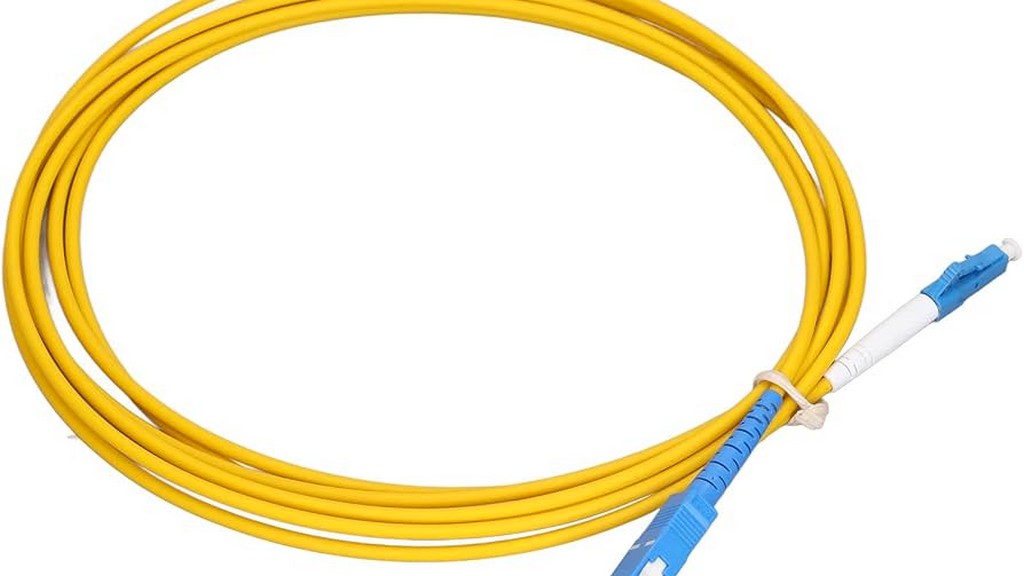
The standard "ITU-T G.652 Specification of single-mode optical fiber and cable", developed by the International Telecommunication Union Telecommunication Standardization Sector (ITU-T), describes the geometric, mechanical and transmission properties of single-mode optical fiber and cable with a zero-dispersion wavelength around 1310 nm. Such fibers are the most widely used optical fiber for long-distance terrestrial applications.
The main feature of single mode optical fiber and cable is that it was initially optimized for use in the 1310 nm wavelength region, but is now also usable in the 1550 nm region. The latest update of this standard aims to continue the ongoing commercial success of this fiber in the evolving world of high performance optical transmission systems.
Unlike multimode optical fiber, single-mode fiber does not exhibit modal dispersion. This is because the fiber has a very small cross-section and only the first mode is transmitted. Therefore, single-mode fibers are better at maintaining the fidelity of each light pulse over longer distances than multimode fibers.
The ITU G.652 standard is the first single-mode fiber standard designed by the ITU-T. It has undergone four revisions over time. Among these, G.652.A and G.652.B fibers are now rarely used due to their poor performance in modern WDM applications. WDM (wavelength division multiplexed) is widely used in communication systems and optical fiber sensing systems. G.652.C and G.652.D fibers have a reduced water crest in the wavelength region between 1310 nm and 1550 nm, supporting CWDM (coarse wavelength division multiplexed ) transmission. G.652.D fiber is the most current technology, recommended as the preferred fiber for most applications as it not only provides maximum return on investment but also offers the best shielding when deploying single-mode optical fiber.
Single-mode fibers usually have a relatively small core (only a few microns in diameter) and a small difference in refractive index between the core and the cladding. The mode radius is typically a few microns. However, there are also large-mode-field fibers that have a relatively large mode field.
The characteristics of single-mode fiber optic cabling include their ability to maintain signal quality over long distances (they have low loss capacity), making them a preferred choice for long-distance communications. Unlike copper cabling, fiber optic cables do not conduct electricity and have less crosstalk, ensuring that optical signals in one fiber do not interfere with those in adjacent fibers. Single-mode fibers typically use laser technology for signal transmission, which is suitable for narrow core diameters, while multi-mode fibers typically use LEDs and are designed for shorter distances with a wider core.
Single-mode fiber optic cables are used as backbone cabling in telecommunication networks due to their high bandwidth capacity, allowing more conversations or data transmissions to occur simultaneously over a single optical fiber. The optical fibers in the cables have a cladding material with a lower refractive index than the core, facilitating total internal reflection that minimizes signal loss and maintains signal integrity, making them durable and flexible.
Among the numerous testing, measurement, analysis and evaluation studies that our organization has carried out for businesses in various sectors, it also provides testing services defined in the “ITU-T G.652 Single-mode optical fiber and cable specifications” standard with its trained and expert staff and advanced technological equipment.
To get an appointment, to get more detailed information or to request an evaluation, you can ask us to fill in our form and reach you.

