MIL-F-48616 Filter (Coatings), Infrared Interference General Specifications
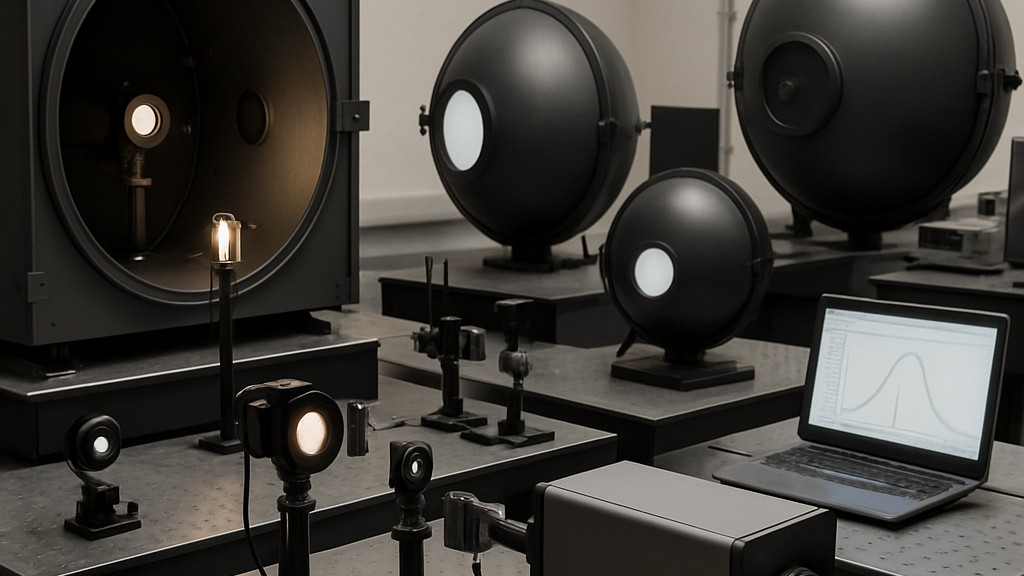
The standard “MIL-F-48616 Military specification: Filter (coatings), infrared interference general specifications” developed by the United States Department of Defense describes the general performance and durability requirements for film-coated optical elements used in the spectral region between 0,7 µm and 50,0 µm.
Unless otherwise specified in the contract or purchase order, the supplier is responsible for fulfilling all inspection requirements specified herein. Unless otherwise specified, the supplier may use its own or other suitable facilities to fulfill the inspection requirements specified herein, unless formally approved.
MIL-F-48616 is a military standard for ferrite core materials typically used in electromagnetic and electronic components, including transformers, inductors, and filters. This standard specifies the physical and electrical properties and test methods for ferrite materials used in military applications.
The ferrite materials covered by this standard are typically used in components for communications equipment, radar systems, and other military electronics where the performance and reliability of inductive components are critical.
The MIL-F-48616 standard focuses primarily on:
- Material composition: Ferrite materials typically consist of iron oxide combined with other metal oxides, such as manganese, nickel, or zinc, to form a ceramic compound. These materials have unique magnetic properties, such as high magnetic permeability and low electrical conductivity, making them useful in inductive components. This standard provides details on acceptable ferrite types, chemical composition, and expected magnetic properties.
- Magnetic properties:
- Permeability: The ability of a material to support the generation of a magnetic field is important for the design of inductive components such as transformers and coils.
- Saturation flux density: Ferrites must have sufficient flux density to ensure they can handle high current scenarios without losing their magnetic properties.
- Curie temperature: This is the temperature at which a ferrite loses its magnetic properties. This standard specifies acceptable Curie temperatures to ensure performance in harsh environments.
- Initial permeability: This property refers to the permeability of the material when the magnetic field is weak and is critical to ensuring efficiency in electromagnetic components.
- Electrical properties:
- Resistance: Ferrites used in inductive applications must have high resistance to minimize eddy current losses and increase efficiency.
- Dissipation factor: This factor indicates how much energy is lost as heat in a material due to the motion of magnetic fields. The specification sets limits on the acceptable dissipation factor for ferrite materials to ensure efficient performance.
- Physical characteristics:
- Density: Ferrite materials must meet specific density standards to ensure structural integrity and consistent performance.
- Mechanical strength: Materials must be able to withstand mechanical stresses that may occur in production and operational environments, such as temperature fluctuations and vibration.
- Testing and quality control:
- Magnetic testing: Ferrite materials are subjected to various magnetic tests to measure their properties under various conditions (such as temperature, magnetic field strength).
- Electrical testing: Electrical testing is done to evaluate resistivity, losses and other electrical properties.
- Dimensional inspection: This standard typically requires measuring the physical dimensions of the material or components made from it to ensure they meet military tolerances.
- Environmental testing: Ferrite materials must be able to withstand a range of environmental conditions, including humidity, temperature extremes, and exposure to certain chemicals.
- Packaging and handling: Because ferrite materials are brittle, this standard specifies packaging and handling standards to ensure that the material is handled and stored without damage.
- Military applications: Ferrite cores are used in military applications such as radars, communications systems, power supplies, electromagnetic interference (EMI) suppression filters, and signal processing devices. The materials must be able to maintain performance under extreme conditions such as those found in military field operations (e.g., combat, temperature fluctuations, vibrations, and exposure to humidity).
Tests under the MIL-F-48616 standard are designed to evaluate the magnetic, electrical, and mechanical properties of ferrites, and some of the most important test methods include:
- Magnetic testing methods:
- Initial permeability test: This test is performed to determine the material's response to a low-level applied magnetic field. The method typically involves using an inductance measurement setup where the material is exposed to a magnetic field and the permeability is calculated based on the change in inductance.
- Relative permeability testing at different frequencies: Ferrites behave differently at different frequencies. Permeability at specified frequencies is tested to ensure the material performs as required in its application.
- Saturation magnetization: This test measures the saturation flux density of a ferrite material. The ferrite is exposed to an increasing magnetic field until the maximum flux density is reached. The saturation magnetization is then recorded.
- Coercivity testing: These tests measure the ability of a ferrite to retain its magnetic properties when an external magnetic field is removed. High coercivity is important for applications where the material must not demagnetize easily.
- Curie temperature measurement: The Curie temperature refers to the temperature at which ferrite loses its magnetic properties. This is tested by heating the ferrite to various temperatures to measure its magnetic permeability.
- Magnetic losses: The magnetic loss factor is evaluated by applying alternating magnetic fields at different frequencies and measuring the losses as heat.
- Electrical testing methods:
- Resistance testing: Ferrites must have high resistance to minimize eddy current losses. Resistance is typically measured by applying a voltage to a sample of ferrite and using Ohm's law to calculate the material's resistance and resistivity.
- Loss tangent (dielectric loss) test: The loss tangent of a ferrite is measured by exposing the material to an alternating current and observing the energy loss over time. The loss tangent is the ratio of reactive power to actual power in an alternating current circuit.
- Eddy current testing: Ferrites need to minimize eddy current losses, so this test evaluates the material's ability to resist the formation of circulating currents that dissipate energy as heat.
- Physical testing methods:
- Dimensional inspection: Ferrites are often tested for uniformity in size and shape, which is crucial for assembly into components such as transformers or inductors.
- Density measurement: The density of the ferrite material is measured to ensure that it is within the specified range.
- Mechanical strength testing: Ferrites are brittle, so it's important to test their mechanical properties, such as compressive strength and fracture toughness. Flexural strength testing can be performed using a three-point bending test, where a ferrite sample is subjected to a bending force until it fractures.
- Environmental testing methods:
- Thermal cycling: Ferrite materials are subjected to thermal cycles in which they are repeatedly heated and cooled to simulate extreme temperature fluctuations in operational environments.
- Humidity exposure: These tests involve exposing ferrite materials to controlled high humidity conditions to ensure the material's stability and performance when exposed to moisture.
- Vibration and shock testing: Ferrite materials are subjected to vibration tests (usually sinusoidal vibrations) and shock tests (usually a drop or impact test) to test their ability to withstand these conditions.
Our organization, which has been supporting businesses across all sectors for years through a wide range of testing, measurement, analysis, and evaluation activities, has a strong team of employees who closely follow global developments in science and technology and are constantly improving themselves. In this context, we also provide testing services in accordance with the "MIL-F-48616 Military Specifications: Filters (coatings), infrared interference general specifications" standard.



