ISO 8980 Ophthalmic Optics - Uncut Finished Spectacle Lenses
The “ISO 8980 Ophthalmic optics - Uncut finished spectacle lenses” standard, published by the International Organization for Standardization (ISO) , consists of the following sub-sections published under the same title:
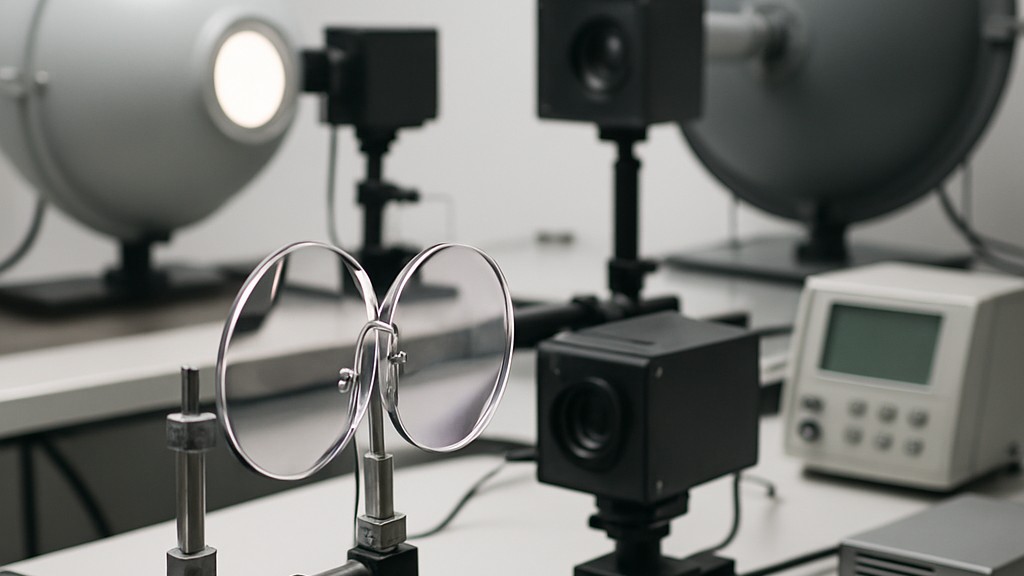
- The standard “ISO 8980-1 Part 1: Specification for single vision and multifocal lenses” describes the requirements and verification methods for optical and geometrical properties for uncut, finished single vision and multifocal lenses.
- The standard "ISO 8980-2 Part 2: Specification for power-variable lenses" specifies the requirements and verification methods for optical and geometric properties for uncut, finished power-variable lenses. In this standard, uncut, finished lenses are classified as:
- Single vision finished lenses
- Multifocal finished lenses
- Power-change finished glass
- ISO 8980-3 Part 3: Transmittance properties and test methods describes the requirements for the transmittance properties of uncut and unassembled finished spectacle lenses, including attenuation of solar radiation. This standard does not apply to:
- Spectacle lenses with certain transmittance or absorption properties prescribed for medical reasons
- Products to which specific personal protective equipment permeability standards apply
- Products designed for direct solar observation, such as viewing a solar eclipse.
This standard also applies to lenses mounted in spectacle lenses. Optical and geometrical requirements are contained in ISO 8980-1 and ISO 8980-2 for uncut finished spectacle lenses, and in ISO 21987 for mounted lenses.
In this standard, spectacle lenses are classified according to their transmittance as follows:
- Clear glass without the intended color/tint in transmittance
- Smooth tinted windows
- Pale tinted windows
- Photochromic (protects from the sun's harmful rays) lenses
- Polarized lenses
ISO 8980-4 Part 4: Requirements and test methods for anti-reflective coatings" describes optical and non-optical requirements, including durability and test methods, for anti-reflective coatings on spectacle lenses. This standard does not address the following: transmittance, absorption, and color of reflected light.For the purposes of this standard, the terms and definitions provided in ISO 13666 apply, as does the following definition: durability refers to the ability of a reflective coating to resist deterioration of its reflective properties over time under normal use. The primary factors contributing to the deterioration of a reflective coating are friction, heat, UV radiation, and moisture. The primary failure mechanism affecting the durability of reflective coatings is loss of adhesion. Therefore, the requirements of this standard relate to reflective coating adhesion.
- The standard "ISO 8980-5 Part 5: Minimum requirements for spectacle lens surfaces claimed to be abrasion resistant" describes the requirements and test method for spectacle lens surfaces claimed to provide a basic level of abrasion resistance, including coated ones. A lens claimed to be abrasion resistant must meet the requirements on both the front and back surfaces. Lens powers and surface form are limited for testing, but the test results are valid for claims made for lenses and lens surfaces having the same properties except for lens power or surface radius. This standard does not attempt to define the properties of abrasion resistant lens surfaces better than the criteria defined herein.
For the purposes of this standard, the terms and definitions given in ISO 13666 and ISO 8980-4 apply, as well as the following definition: abrasion resistance refers to the ability of a spectacle lens surface to resist damage occurring during normal use, such as scratches from cleaning or abrasion.
The ISO 8980 standards are a set of international standards related to unmounted ophthalmic lenses (that is, spectacle lenses not yet attached to frames). These standards are considered necessary for the following reasons:
- Quality assurance: These standards include standardized procedures for measuring key optical properties such as power, transmission, and surface finish, ensuring lenses meet minimum performance and safety thresholds. This helps manufacturers maintain consistent quality.
- Global consistency: These standards increase compatibility in international markets by providing a universal set of rules, ensuring that lens manufacturers and opticians worldwide work to the same specifications.
- Consumer safety and protection: These standards ensure that lenses provide accurate vision correction, do not distort light in harmful ways, and are safe for regular use. This protects end users from visual discomfort or long-term damage.
- Simplifies trade and regulation: Products compliant with these standards are easier to certify, sell, and regulate. Regulators and buyers can trust that compliant lenses meet defined technical and safety criteria.
- Supports technological innovation: These standards provide a baseline for performance and allow manufacturers to improve upon them with innovations while ensuring basic quality and safety.
Our organization, which has been supporting businesses across all sectors for years through a wide range of testing, measurement, analysis, and evaluation activities, has a strong team of employees who closely follow global developments in science and technology and are constantly improving themselves. In this context, we also provide testing services to businesses in accordance with the "ISO 8980 Ophthalmic optics - Uncut finished spectacle lenses" standard.



