EN 207 Personal Eye Protection Equipment - Filters and Eye Protectors Against Laser Radiation (Laser Eye Protectors)
The European standard “EN 207 Personal eye protection equipment - Filters and eye protectors against laser radiation (laser eye protectors)” applies to eye protectors used to protect against accidental exposure to laser radiation in the spectral range 60825 nm (1 µm) to 1 180 µm as defined in the standard “IEC 0,18-1 Safety of laser products - Part 000: Equipment classification and requirement”. The requirements described define test methods and marking. A guide to the selection and use of laser eye protectors is included in the annex of the standard (Annex B).
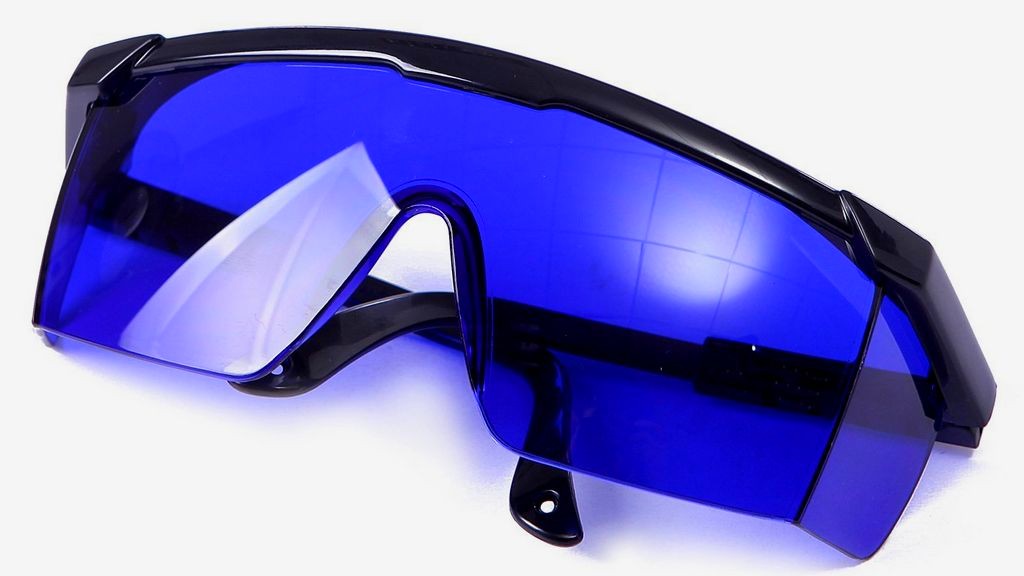
However, this standard does not apply to protectors for intentional exposure to laser radiation. Meanwhile, the standard “EN 208 Personal eye protection - Eye protectors for adjustment work on lasers and laser systems (laser adjustment eye protectors)” applies to laser adjustment eye protectors.
Before selecting eye protection according to this European standard, a risk assessment must first be carried out.
The requirements in this standard are given as follows:
- Spectral transmittance of filters and frames: when tested in accordance with this standard, the maximum spectral transmittance at the protection wavelengths or wavelength ranges shall not exceed the values specified in the table given in the standard.
- Light transmittance of filters: when assessed against this standard, the light transmittance of the filter shall be at least 11664 percent according to the ISO 2-65 standard for the D20 standard illuminant. However, a light transmittance of less than 20 percent is acceptable provided that the manufacturer provides information on increasing the lighting intensity in the relevant workplace in accordance with this standard.
- Resistance of filters and frames to laser radiation: when tested in accordance with this standard, filters and frames must meet the relevant requirements and must not lose their protective effect under the influence of laser radiation of the power/energy density specified in the table and must not show any induced transmission (reversible whitening). No splinters must be removed from the eye side of the filter under the influence of laser radiation. If the protective effect is still maintained, any melting or other damage to the surface during irradiation shall not be considered negative.
- Refractive values of filters and eye protectors: when evaluated according to this standard, the maximum refractive values of filters and eye protectors without corrective effect shall be as given in the table. The maximum refractive values are valid for the range specified in the EN 166 standard.
- Material and surface quality of filters: The material and surface defects of filters shall be assessed in accordance with this standard. Except for a marginal area of 5 mm width, filters shall be free from any material or surface defects that may impair their intended use, such as bubbles, scratches, inclusions, dull spots, mould marks, nicks or other defects resulting from the manufacturing process. No holes are permitted anywhere in the filters. The light diffusion shall not exceed the value given in the formula for the reduced light coefficient of a filter as determined in this standard.
- Stability of filters and eye protectors to ultraviolet radiation and high temperatures: When exposed to ultraviolet radiation in accordance with this standard, the properties of filters and eye protectors shall not change to such an extent that they no longer meet the requirements of this standard. The relative change in light transmittance shall not exceed 10 per cent. However, for laser wavelengths, the spectral transmittance shall in no case exceed the maximum spectral transmittance corresponding to the specified scale number. After exposure to high temperatures in accordance with this standard, filters and eye protectors shall meet the requirements of this standard. The relative change in light transmittance shall not exceed 5 per cent. However, for laser wavelengths, the spectral transmittance shall in no case exceed the maximum spectral transmittance corresponding to the specified scale number.
- Resistance of filters and frames to ignition by contact with hot surfaces: When tested in accordance with this standard, filters and frames shall not ignite or continue to glow.
- Field of view of eye protectors: Eye protectors must have a clear field of view of at least 40 degrees in the vertical and horizontal directions for each eye when measured in accordance with this standard.
- Construction of filters and frames: Filters shall be constructed in such a way that, when tested in accordance with this standard and visually inspected, no splinters can be seen from the side of the filter facing the eye. If filters consist of several separate filters, they shall be assembled in such a way that they cannot be interchanged.
- Mechanical durability of eye protectors: Filters for protection against laser radiation must meet the minimum durability requirements specified in EN 166. The frames of eye protectors must meet the requirements of EN 166.
Among the numerous tests, measurements, analyses and evaluation studies carried out for businesses in various sectors, our organization also provides testing services defined in the “EN 207 Personal eye protection equipment - Filters and eye protectors against laser radiation (laser eye protectors)” standard with its trained and expert staff and advanced technological equipment.



