EN 13319 Depth Gauges and Combined Depth and Time Measuring Devices - Functional and Safety Requirements, Test Methods
The European standard "EN 13319 Diving accessories - Depth gauges and combined depth and time measuring instruments - Functional and safety requirements, test methods" describes the functional and safety requirements for depth gauges, the depth indicating characteristics of other instruments and both the depth and time measuring characteristics of other instruments.
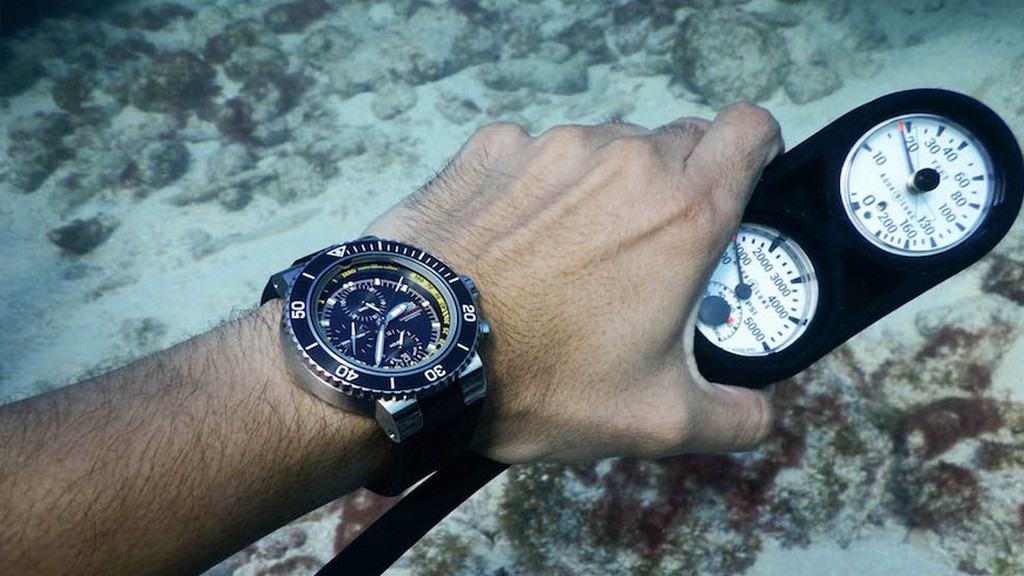
This standard does not apply to any information displayed to the user other than depth and time. Any information about decompression obligations displayed by equipment covered by this standard is expressly excluded from its scope. This standard applies to instruments used by divers that measure water depth relative to environmental pressure. Time measurement requirements are only applicable if the instruments automatically count dive time.
For the purposes of this standard, dive time refers to the time spent under overpressure measured between the limits given in this standard.
The requirements in this standard are stated as follows:
- Depth measurement:
- The measurement factor for pressure-to-depth conversion is: The measurement factor should be such that a 1 bar increase in pressure results in a 10 m increase in indicated depth. This rule assumes a water density of 1,0197 kg/l, meaning that in freshwater with a density of 1,00 kg/l, the geometric depth is 102 percent of the indicated depth, while in seawater with a density of 1,03 kg/l, the geometric depth is 99 percent of the indicated depth. Because the physiologically relevant figure is simply the ambient pressure, the geometric depth is much less important to the diver.
- Depth measurement accuracy: The depth indication within the depth range specified by the manufacturer shall correspond to the values given in the "Test Pressure" table after testing in accordance with this standard. If the maximum depth specified by the manufacturer is deeper than 60 m, the values in the table shall be extended to this specified depth with a fixed error margin (plus 10 minus 15 kPa) in 15 m increments and test pressure increments of 150 kPa.
- Display increments: At least depths of 3, 6, 9, and 12 or 15 m shall be displayed as numbers. From 9 m to 60 m, the display shall be in increments of 3 m or less. Above 60 m, the display shall have increments of 5 m or less. Testing shall be carried out in accordance with this standard.
- Dive time measurement:
- Start of dive time counting: When immersed in water, dive time counting automatically starts within 5 seconds when the pressure reaches the maximum value of p0 + 16 kPa or the display shows 1,6 m.
- Dive time counting stop: Dive time counting should not stop when the pressure drops to p0 + 16 kPa or when the display shows 1,6 m.
- Dive time display: Specified time intervals must be 1 minute or less. Dive time must be displayed continuously or intermittently with a maximum interruption of 20 seconds, or canceled on request.
- Accuracy of dive time measurement: Dive time counting error should not be more than plus/minus 1 minute in 120 minutes.
- Readability: Depth and dive time values must be clearly readable under lighting conditions of 50 plus/minus 10 lx, from a distance of 30 cm plus/minus 5 cm, and at the angle with the highest visible contrast. The readability of the display is then determined at angles 15 degrees higher or lower than the optimal angle, perpendicular to the baseline of the displayed numbers or text.
- Fastener: If a fastener is supplied as a wrist strap, it shall not become loose or be visibly damaged when tested in accordance with this standard.
- Water tightness: After the pressure cycle test, the test sample should not show any signs of leakage.
- Operability: All operations required for the depth and dive time functions while underwater must be carried out while wearing protective gloves.
- Seawater resistance: After immersion in natural or artificial seawater, the device must not show visible changes or signs of corrosion.
Unless otherwise specified, all tests in water or air are conducted at room temperature between 18°C and 28°C. Adjustments and pressure compensations must be made prior to testing according to the operating instructions. Atmospheric pressure during testing must be recorded in the test protocol.
Tests should be performed on a test sample in the following order:
- Temperature cycling
- Shock test
- Seawater resistance
- Testing the wrist fixture (if applicable)
- Pressure cycle
- Water tightness
- Legibility
- Accuracy
- Dive time functions (if applicable)
If there are indications that the test sample is inoperable after any of the above tests, the test sequence may be terminated.
The equipment used in these tests includes:
- Test manometers: For accuracy testing, test manometers must have an accuracy of plus/minus 0,2 percent.
- Test timers: Timers used for time measurements must have an accuracy of at least plus/minus 1 min/24 hours.
- Test hammer: The impact surface of the test hammer must be adapted to have at least the same dimensions as the impact surface of the test specimen.
In short, the EN 13319 standard ensures the safety, reliability, and accuracy of diving accessories (especially depth gauges and combined depth/time measuring devices). These are crucial for divers' underwater survival and performance.
This standard is considered important for the following reasons:
- Diver safety: Depth and time measurements are important to prevent decompression sickness (the bends). Reliable instruments help divers ascend at safe rates and monitor their time at depth. This standard ensures the accurate operation of these instruments under pressure and underwater conditions.
- Cross-brand standardized testing: This standard provides uniform criteria across all manufacturers. Divers can be confident that devices from different brands meet minimum performance and safety requirements.
- Quality assurance: This standard ensures that diving devices are tested for:
- Accuracy
- Compressive strength
- Waterproof
- Durability
This reduces the possibility of instrument failure during a dive.
- Supports professional and recreational use: Users of this standard include:
- Recreational scuba divers
- Commercial divers
- Rescue and military divers
So this standard is important for every diver who relies on instruments for navigation and survival.
- Legal and regulatory compliance:
- In European Union and other countries, compliance with the EN 13319 standard may be mandatory for market access.
- It helps manufacturers demonstrate their compliance with the personal protective equipment regulation EU 2016/425.
As a result, the EN 13319 standard plays a critical role in ensuring that diving instruments are accurate, safe and durable, helping to protect divers' lives and ensuring reliable underwater performance.
Our organization, which has been supporting businesses across all sectors for years through a wide range of testing, measurement, analysis, and evaluation activities, has a strong team of employees who closely follow global developments in science and technology and are constantly improving themselves. In this context, we also provide testing services in accordance with the standard "EN 13319 Diving accessories - Depth gauges and combined depth and time measuring devices - Functional and safety requirements, test methods."



