

The standard “JIS Z 8703 Standard atmospheric conditions for testing” developed by the Japanese Industrial Standards Organization (JIS) describes the standard conditions for temperature, humidity and atmospheric pressure at locations where tests (including test runs) are conducted in the mining and industrial sectors. However, conditions at the test site that require testing under special conditions are not included.
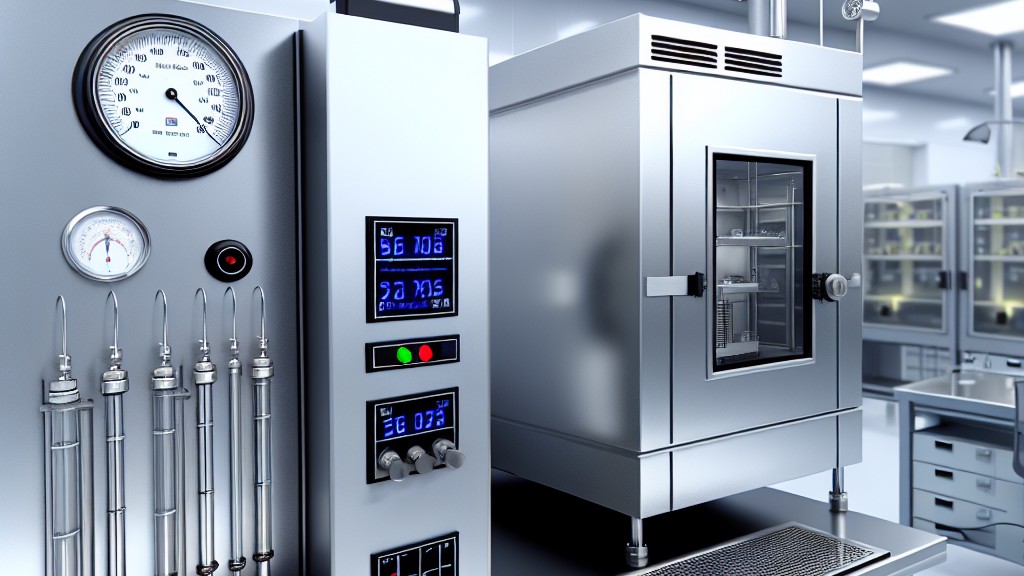
The standard condition temperature shall be 20 degrees, 23 degrees or 25 degrees, depending on the purpose of the test. The standard humidity shall be 50 percent or 65 percent relative humidity. The atmospheric pressure under standard conditions shall be between 86 kPa and 106 kPa. Standard conditions are defined as the combination of a standard temperature and a standard humidity under standard atmospheric pressure. Depending on the purpose, only the standard temperature may be specified. This condition is called the standard temperature condition.
According to the ISO 554-1976 standard, three standard conditions are defined for testing. The recommended standard conditions are 23 degrees temperature, 50 percent relative humidity, 86 kPa or higher and 106 kPa or lower atmospheric pressure.
According to IEC publication 160-1963 standard, the recommended condition ranges for measurement are temperature 15 to 35 degrees, relative humidity 45 to 75 percent, and atmospheric pressure 860 to 1060 mbar, and the standard conditions used as the basis for mutual comparison are temperature 20 degrees, relative humidity 65 percent, and atmospheric pressure 1013 mbar. In addition, three types of standard conditions are defined for measurement for training and inspection purposes.
The temperature tolerance under standard conditions is classified according to the purpose of the test as shown in the table given in the standard. The table is also valid for standard temperature conditions. The humidity tolerance under standard conditions is classified according to the purpose of the test as shown in the table given in the standard. The tolerance under standard conditions shall be a combination of one of the temperature tolerances under standard conditions and one of the humidity tolerances under standard conditions.
The specification of standard conditions is based on the temperature, humidity and tolerance standard conditions. If tolerance display is not required, it is not displayed. The specification of standard temperature condition is based on the temperature and tolerance of the standard temperature condition. If tolerance display is not required, it is not displayed.
This standard deals with the issue of measurement uncertainty, which provides information about the accuracy of measurement results. This standard
This standard is mainly used in calibration laboratories, test and analysis centers, quality control units and laboratories within the scope of ISO/IEC 17025.
The topics covered by this standard mainly include:
Measurement uncertainty is the parameter that accompanies the measurement result and provides information about where the true value can be found.
In short, this standard primarily provides measurement reliability. It determines how reliable the measurements are by calculating the measurement uncertainty. This is of critical importance, especially in production processes that involve sensitive tolerances. In addition, this standard is necessary for calibration and testing laboratories. Laboratories working within the scope of international standardization (e.g. ISO/IEC 17025) must refer to standards such as JIS Z 8703 in order to properly calculate uncertainty. At the same time, this standard, when the uncertainty of the measurement results is known, decision-making processes based on these results can be made more accurate and risk-based.
Our organization, which has been trying to support businesses from every sector with its testing, measurement, analysis and evaluation studies carried out in a wide range for years, has a strong staff that closely follows the developments in the world in the field of science and technology and constantly improves itself. In this context, testing services in accordance with the "JIS Z 8703 Standard Atmosphere Conditions for Testing" standard are also provided to businesses.
To get an appointment, to get more detailed information or to request an evaluation, you can ask us to fill in our form and reach you.

