

The International Organization for Standardization (ISO) standard "ISO 3696 Water for analytical laboratory use - Specification and test methods" describes the requirements and associated test methods for three classes of water for the analysis of inorganic chemicals in laboratories. It does not apply to water for organic trace analysis, water for the analysis of surfactants, or water for biological or medical analysis. For some purposes (e.g., for certain analytical methods or for tests requiring water to be sterile, pyrogen-free, or to have a specified surface tension), additional specialized testing and further purification or other processing may be necessary.
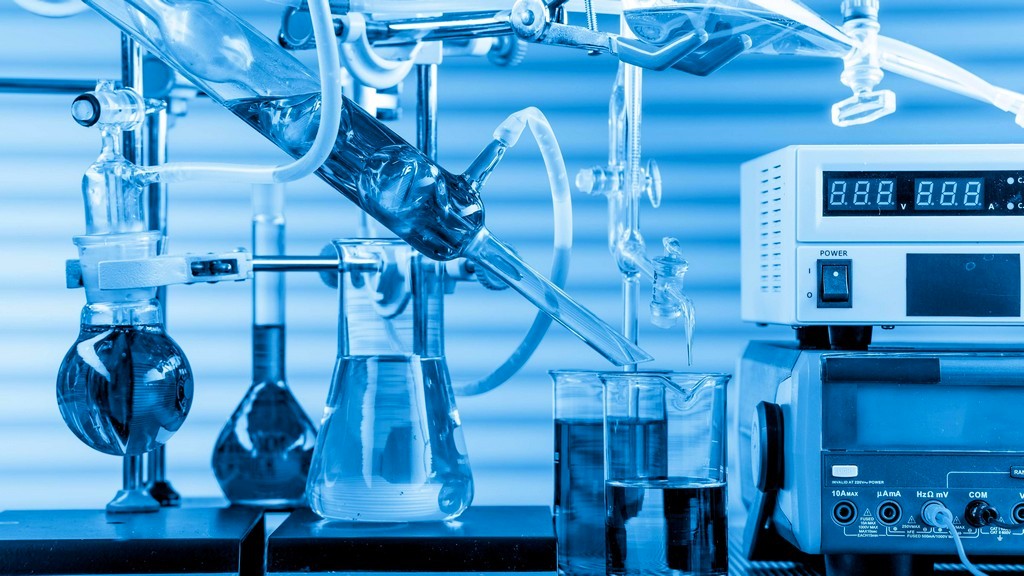
The material should be a clear, colorless liquid when evaluated by visual inspection.
This international standard covers three classes of water:
The initial feedwater is assumed to be potable and pure. If it is heavily contaminated in any way, some pretreatment may be necessary.
The material must comply with the relevant requirements in the table. Testing for conformity is carried out using the methods specified in this standard.
Due to the difficulties encountered in measuring the pH value of high purity water and the questionable significance of the obtained value, limits for the pH values of 1st and 2nd degree waters have not been determined.
It is appropriate that pollutants such as atmospheric carbon dioxide and alkalis in glass containers dissolve during storage and changes in conductivity occur.
Because compliance testing at this purity level is difficult, no limits are specified for oxidized matter and residue after evaporation for Class 1 water. The quality of Class 1 water is assured by its compliance with other requirements and the preparation method.
In accordance with this standard, a representative sample of at least 2 liters is taken from the stockpile for inspection purposes. This sample is not used for conductivity measurements in Grade 1 and Grade 2 waters.
The sample should be placed in a suitable, clean, airtight container designated solely for water samples and should be large enough to completely fill the container with the sample. Care should be taken to avoid any risk of contamination of the contents.
Aged containers made of borosilicate glass (i.e. containers boiled in hydrochloric acid solution for at least 2 hours, followed by boiling in distilled water twice for 1 hour) and suitable inert plastic containers (e.g. polyethylene or polypropylene) may be used, but it is essential to determine that the sample is not affected by storage in them, particularly with respect to oxidizable matter and absorbance.
Contamination of water during storage can primarily occur from the dissolution of soluble components in glass or plastic containers or from the absorption of atmospheric carbon dioxide and other contaminants present in the laboratory atmosphere. Therefore, storing Class 1 and Class 2 water, which is readily available for immediate use when needed, is not recommended. However, a reasonable amount of Class 2 water can be prepared and stored in suitable, inert, clean, airtight, filled containers that have been thoroughly rinsed with water of similar quality.
Storing Class 3 water presents little problem, but the containers and storage conditions should be the same as those used for Class 2 water. It is recommended that any storage container be dedicated solely to storing water of a specific quality.
It is essential that the determinations specified in this standard be carried out in a dust-free, clean environment and that appropriate precautions be taken to prevent contamination of the sample and test pieces.
The ISO 3696 standard includes the following test methods for determining the quality of water used in laboratories:
Our organization, which has been supporting businesses across all sectors for years with a wide range of testing, measurement, analysis, and evaluation activities, has a strong team of employees who closely follow global developments in science and technology and are constantly improving themselves. In this context, we also provide testing services in accordance with the ISO 3696 Water for Analytical Laboratory Use - Specification and Test Methods standard.
To get an appointment, to get more detailed information or to request an evaluation, you can ask us to fill in our form and reach you.

