EN 16280 Breath Alcohol Testing Devices for the General Public - Requirements and Test Methods
A European standard, “EN 16280 Breath alcohol testing devices for the general public - Requirements and test methods”, describes the requirements and test methods for breath alcohol testing devices that measure the alcohol concentration in an exhaled breath sample, designed and intended for use as self-testing devices for the general public and to provide a reliable indication of breath alcohol concentration during testing.
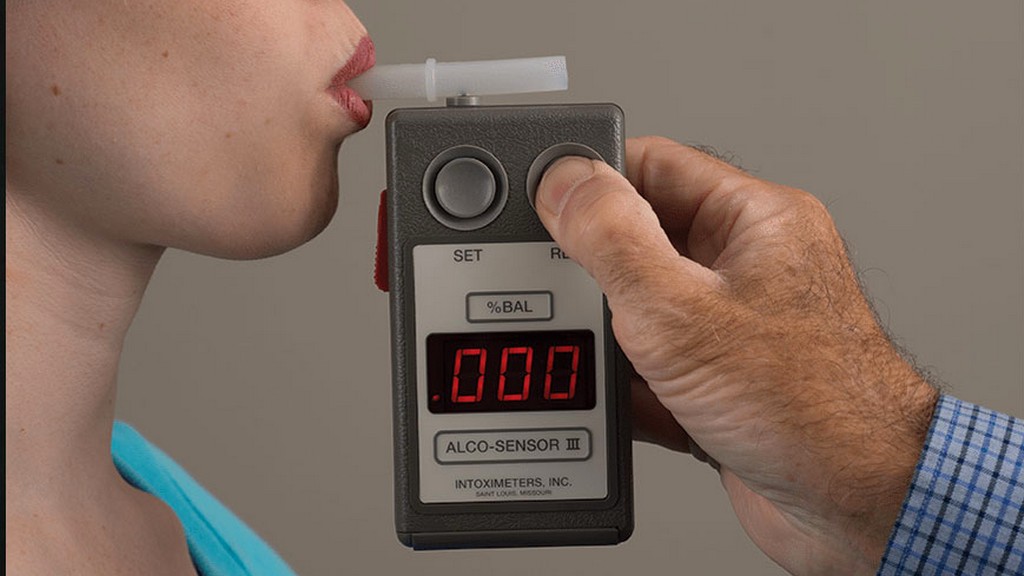
This standard includes requirements for essential safety and performance, test methods, and instructions for marking, labeling, and usage. It also provides guidelines for conformity testing procedures consisting of a series of technical performance tests.
The results of these devices are not intended to be used to refute the results of evidential breath alcohol analyzers covered by the standard “OIML R 126 Evidential breath analyzers” or breath alcohol testers used in professional applications covered by the standard “EN 15964 Breath alcohol testing devices other than single-use devices - Requirements and test methods” or similar national regulations.
Therefore, measurement results should be displayed, to the extent possible, to prevent the user from underestimating the alcohol concentration based on measurement uncertainties inherent in each measurement.
An example of type testing requirements is included in the annex to the standard (Annex A).
In this standard, the requirements for security are determined as follows:
- The device should be designed to ensure user safety to the greatest extent possible. Particular attention should be paid to the design and use of electrical connections and the materials selected for the mouthpiece construction and packaging.
- The device must be usable under hygienic conditions. The possibility of inhaling contaminated air from previous use must be eliminated. These mouthpieces must be attachable and removable without touching the part of the mouth that will come into contact with the user's lips. Mouthpieces must be supplied individually in easily opened, sealed packaging.
- The device must be able to operate within the requirements of relevant electrical safety regulations and standards. A battery charger or external power supply supplied as an accessory to the device must comply with EN 60335-2-29.
The general requirements in this standard are determined as follows:
- It should be clearly visible that the device is ready to accept a breath sample. The device may have provision for manual acceptance of the test gas presented to it during adjustment or calibration operations and metrological tests. Devices should be provided with an indicator indicating when the internal power supply is running low. If this low power indicator is provided, the device will either cease operation or may measure within the maximum permissible error. The battery warning indicator should not interfere with any other displayed function. Devices using an external power supply should be provided with an indicator indicating that the power is on. This indicator should not interfere with any other displayed function. Only authorized persons should have access to the means by which the device is calibrated or adjusted. The general functions of the device should be verified to ensure that the device performs in accordance with the manufacturer's specifications.
- The maximum allowable error up to and including the nominal alcohol concentration of 0,20 mg/L is 0,04 mg/L. The maximum allowable error is 20 percent of the nominal alcohol concentration above 0,20 mg/L.
- The devices must be capable of measuring alcohol concentrations in the range of 0,00 to 0,50 mg/L, depending on the maximum permissible error.
- Regarding operating ambient conditions, the devices must be usable between plus 10 degrees Celsius and plus 40 degrees Celsius. If the manufacturer specifies that the device can be operated outside this range, it must meet the requirements of this standard for these conditions. If the device is operated outside this temperature range, this must be stated.
- The device must be simple to use. Any impact of user errors on the results must be eliminated.
- The device must monitor the continuity of exhalation and the volume exhaled over time to determine an acceptable breath sample for analysis. The device must emit a signal if the acceptable volume is not reached and terminate the test procedure at that point, after which the device can automatically reset and indicate that it is ready to accept further attempts. For a device in its normal sampling configuration, the backpressure, volume, flow rate, and time required to collect a satisfactory breath sample must comply with the following: minimum volume of 1,2 L, minimum flow rate of 0,15 L/s, maximum backpressure of 30 hPa at a flow rate of 0,2 L/s, and minimum duration of 3 to 5 s.
- Results expression: The units of measurement shall be mg/L or equivalent units. In test mode, the device shall display the analytical result for each test rounded to the nearest 0,01 mg/L or equivalent unit. In normal mode, the reported result shall be rounded to the nearest 0,01 mg/L or equivalent unit of the analytical result by increasing the maximum permissible error in the analytical result level. For all devices, reported results shall be limited to a maximum value within the measuring range (0,50 mg/L). In normal mode, it shall not be possible to read the numerical value of a given result that is above a national limit or out of range. The reported breath alcohol content measurement result shall be expressed in one of the ways specified in the standard.
- The instrument must have a means of adjusting the measurement results to an alcohol standard. The procedure and equipment are specified by the manufacturer.
- The device must be ready to take measurements within 3 minutes after switching on throughout the operating temperature range, excluding the recovery time (time between 2 measurements).
- Once the device is ready to accept a breath sample, a minimum of 3 minutes is allowed to ensure a satisfactory sample, after which the device automatically shuts off. This period should not exceed 10 minutes.
Our organization, which has been supporting businesses across all sectors for years through a wide range of testing, measurement, analysis, and evaluation activities, has a strong team of employees who closely follow global developments in science and technology and are constantly improving themselves. In this context, we also provide testing services to businesses in accordance with the standard "EN 16280 Breath alcohol testing devices for the general public - Requirements and test methods."



