
Formaldehyde is a colorless and strong-smelling gas that is commonly used in building materials and many household products. It is widely used in pressed wood products such as particle board, plywood and particleboard, adhesives, permanent press fabrics, paper product coatings and certain insulation materials.
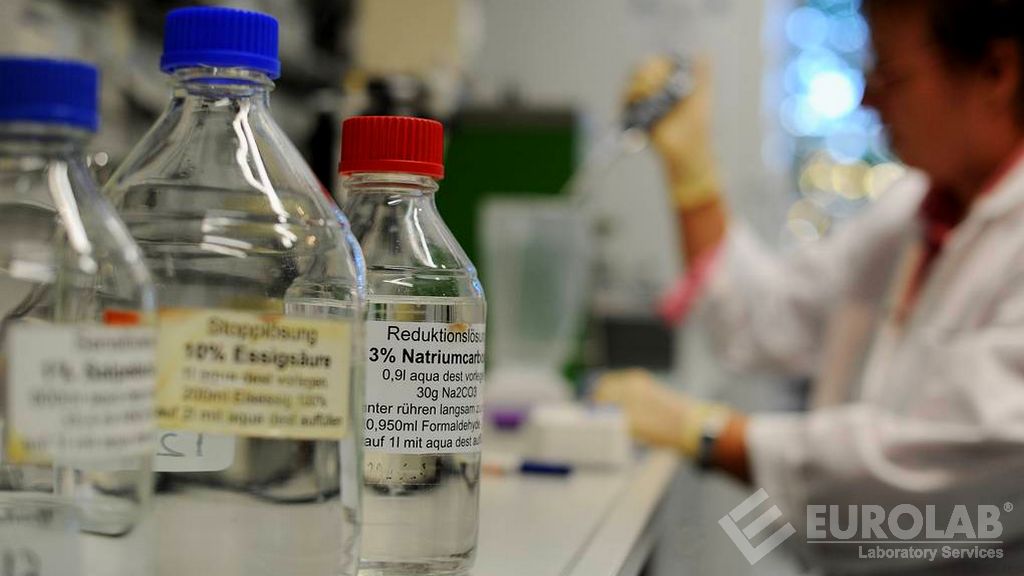
Formaldehyde gas decomposes rapidly in air, usually within hours, and dissolves easily in water. When dissolved in water, it is called formalin and is often used as an industrial disinfectant and preservative in medical laboratories.
It is also used as a preservative in some foods and products such as antiseptics, medicines, and cosmetics. Formaldehyde can be added to foods as a preservative. Formaldehyde also occurs naturally in the environment. Humans and many other living organisms produce small amounts of formaldehyde as part of normal metabolic processes.
The main form of exposure to formaldehyde is by inhalation. In liquid form, it can also be absorbed through the skin. In addition, people may be exposed to small amounts by consuming foods or liquids containing formaldehyde.
It has been determined that formaldehyde is normally present at low levels (less than 0,03 parts per million) in both indoor and outdoor air.
Pressed wood products containing formaldehyde resins are often a source of formaldehyde in homes. Appliances such as gas stoves, wood stoves, and kerosene heaters can also raise formaldehyde levels indoors.
In the test, analysis, measurement and evaluation studies carried out in our organization, national and international standards and applicable legal regulations are complied with and reliable and impartial results are obtained. Among the numerous tests performed in this context, there are also formaldehyde determination services.
To get an appointment, to get more detailed information or to request an evaluation, you can ask us to fill in our form and reach you.