
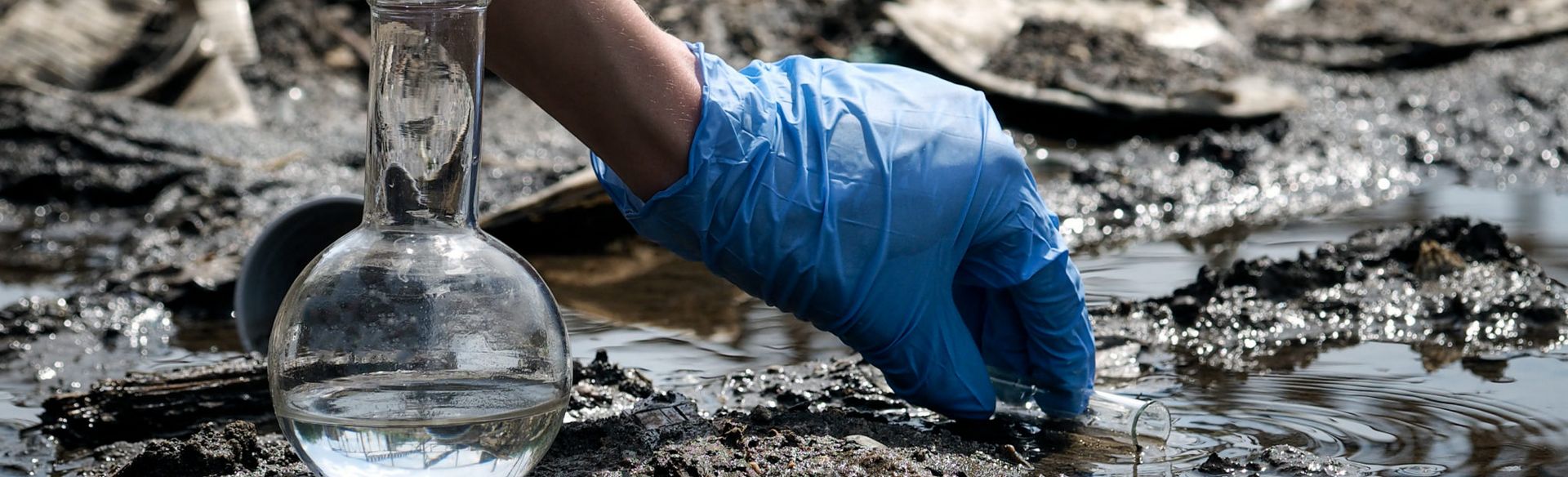
The standard "ASTM D5511-18 Standard Test Method for Determining Anaerobic Biodegradation of Plastic Materials under High-solids Anaerobic Digestion Conditions" developed by the American Society for Testing and Materials (ASTM) describes a test method for determining the extent and rate of anaerobic biodegradation of plastic materials under high-solids anaerobic conditions. Test materials are exposed to a methanogenic inoculum derived from anaerobic digesters operating only with pretreated municipal waste. Anaerobic degradation occurs under high-solids (greater than 30 percent of total solids) and static, unmixed conditions.

This test method is designed to obtain the percentage conversion of carbon in a sample to gaseous carbon under conditions found in high-solids anaerobic digesters processing municipal solid waste. This test method may also mimic some conditions in biologically active landfills where the gas produced is recovered and biogas production is actively supported by inoculation (e.g., co-accumulation of anaerobic sewage sludge, recirculation of anaerobic leachate), moisture control (e.g., recirculation of leachate), and temperature control (e.g., short-term oxygen injection, heating of recirculated leachate).
This test method is designed to be applicable to all plastic materials that do not interfere with microorganisms found in anaerobic digesters operating with household waste.
Performance claims should be limited to the numerical result obtained in the test and should not be used for unqualified biodegradable claims. Reports should clearly state the percentage of net gaseous carbon produced for both the test and reference samples at completion of the test. Additionally, results should not be extrapolated beyond the actual duration of the test.
For the purposes of this standard, the terms and definitions given in "ASTM D883-00 Standard Terminology for Plastics" apply. In addition, methanogenic inoculum refers to anaerobically digested organic waste containing high concentrations of anaerobic methane-producing microorganisms.
The test method described consists of selecting and analyzing the material to be tested, obtaining concentrated anaerobic inoculum from an anaerobic laboratory-scale digester, subjecting the material to anaerobic-static-batch fermentation to more than 20 percent solids, measuring the total carbon in the gas (carbon dioxide and methane) as a function of time, and evaluating the degree of biodegradability.
The percentage biodegradability is obtained by determining the percentage conversion of carbon in the test material to gas phase carbon (methane and carbon dioxide). This percentage biodegradability does not include the amount of carbon from the test material that is converted into cell biomass and is not metabolized to carbon dioxide and methane in turn.
The biodegradation of a plastic in a high solids anaerobic digestion unit is an important phenomenon because it affects the decomposition of other waste materials surrounded by the plastic and the quality and appearance of the digested product after the anaerobic digestion process. The biodegradation of plastics allows these plastics to be safely disposed of through aerobic and anaerobic solid waste treatment plants. This procedure was developed to allow the determination of the rate and degree of anaerobic biodegradability of plastic products when placed in a high solids anaerobic digester for the production of digested products from municipal solid waste.
Because of the wide variety in construction and operation of anaerobic digestion systems and the varying regulatory requirements for composting systems, this procedure is not intended to simulate the environment of a particular high-solids anaerobic digestion system. However, it is expected to resemble the environment of a high-solids anaerobic digestion process operated under optimum conditions. More specifically, the procedure is intended to create a standard laboratory environment that will permit rapid and reproducible determination of anaerobic biodegradability under high-solids digestion conditions.
The main equipment used in these tests includes:
The test sample must have sufficient carbon content, analyzed in accordance with ASTM D4129-05, to yield volumes of carbon dioxide and methane that can be accurately measured by the capture devices described.
The test specimen may be in the form of film, powder, pellets, shaped materials, or dog bones and shall comply with ASTM D618-21. The test setup shall be capable of handling materials 100 mm x 50 mm x 4 mm thick.
Our organization has a strong staff that closely follows the developments in the world in the field of science and technology and constantly improves itself. Among the numerous test, measurement, analysis and evaluation studies provided for businesses in various sectors, there are also test services in accordance with the standard "ASTM D5511-18 Standard test method for determining the anaerobic biodegradation of plastic materials under high solids anaerobic digestion conditions".
To get an appointment, to get more detailed information or to request an evaluation, you can ask us to fill in our form and reach you.

