
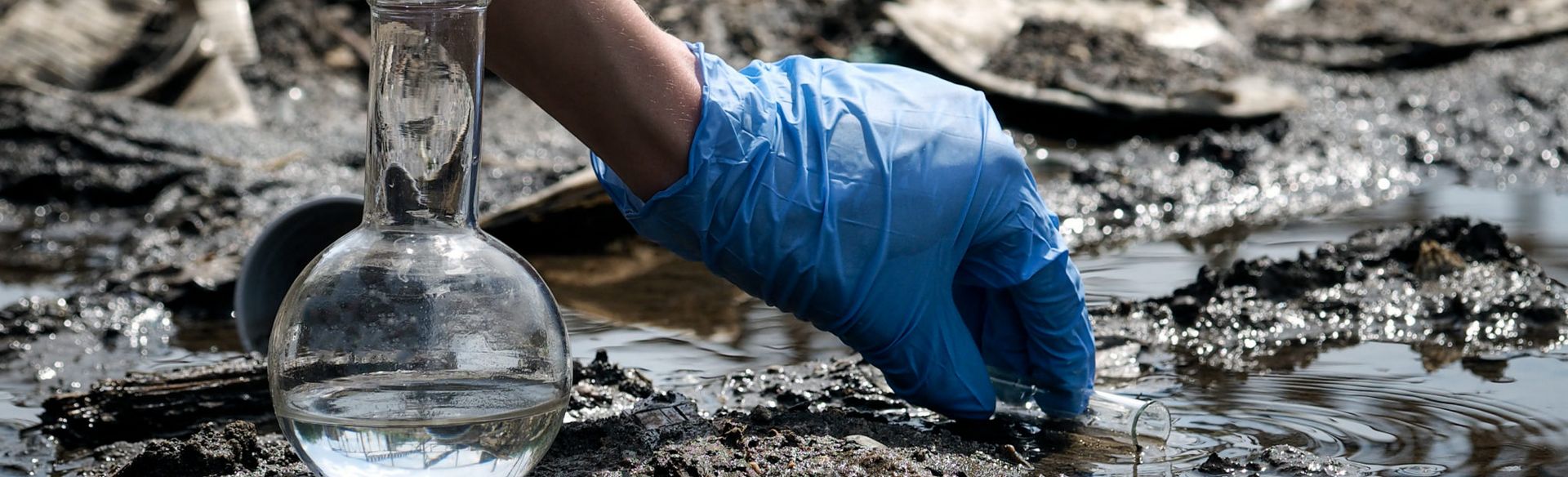
The European standard “EN 14039 Characterization of wastes - Determination of hydrocarbon content in the range of C10 to C40 by gas chromatography” describes a method for quantitatively determining the hydrocarbon content (C10 to C40) in solid wastes using gas chromatography. This method is valid for hydrocarbon content between 100 mg/kg and 10.000 mg/kg expressed on a dry matter basis.

Using this standard, all hydrocarbons with a boiling range of approximately 175 degrees to 525 degrees, such as n-alkanes (C10H22 to C40H82), isoalkanes, cycloalkanes, alkyl benzenes, alkyl naphthalenes, and polycyclic aromatic compounds, are identified as hydrocarbons, provided they are not adsorbed onto the Florisil column during cleaning. Volatile hydrocarbons cannot be quantitatively determined using this standard. This affects the identification of some common hydrocarbon fuels, such as gasoline.
Based on the peak pattern of the gas chromatogram (see Appendix A) and the boiling points of the individual n-alkanes listed in Appendix B, some qualitative information about the approximate boiling range of hydrocarbons and the nature of hydrocarbons can be obtained.
In principle, a known quantity of the homogenized waste sample is extracted by mechanical shaking or sonication with acetone/n-heptane. The organic layer is separated and washed twice with water. Polar compounds are removed by chromatography over Florisil. A portion of the purified extract is analyzed by capillary gas chromatography with a flame ionization detector.
Retention time window standards measure the total peak area between n-decane and n-tetracontane, and the amount of hydrocarbon in the sample is quantitatively determined according to an external standard consisting of equal amounts of two different types of mineral oil.
Instead of heptane, other nonpolar solvents (e.g., petroleum ether, cyclohexane, n-hexane) can be used, but their suitability for hydrocarbon extraction from waste must be proven.
The EN 14039 standard defines a laboratory method used to measure hydrocarbon pollution in waste materials, particularly in environmental and industrial contexts.
EN 14039 standard specifies a quantitative analytical method for determining hydrocarbons in solid waste using gas chromatography:
The types of hydrocarbons identified are as follows:
The EN 14039 standard method follows these basic steps:
The EN 14039 standard has some key limitations:
The EN 14039 standard is widely used in the following areas:
The importance of the EN 14039 standard lies in its role in ensuring the correct, consistent, and environmentally responsible handling of hydrocarbon-contaminated waste. The main reasons why this standard is critically important are as follows:
The EN 14039 standard provides a reliable method for detecting and quantifying these pollutants, helping to prevent long-term environmental damage.
Without such a standard, results could vary between laboratories, leading to regulatory confusion.
This also paves the way for repeatability, traceability, and data reliability.
Using the EN 14039 standard helps in the following ways:
In conclusion, the EN 14039 standard is a crucial analytical standard for determining non-volatile hydrocarbon pollution in waste. Using gas chromatography, it provides reliable, standardized data supporting environmental protection, regulatory compliance, and effective waste management.
For many years, our organization, with its competent and experienced staff, has been understanding the needs of its clients, providing the advanced testing services they require, and assisting them in the establishment, implementation, and improvement of management systems. Within this framework, we also provide testing services in accordance with the EN 14039 standard.
To get an appointment, to get more detailed information or to request an evaluation, you can ask us to fill in our form and reach you.

