
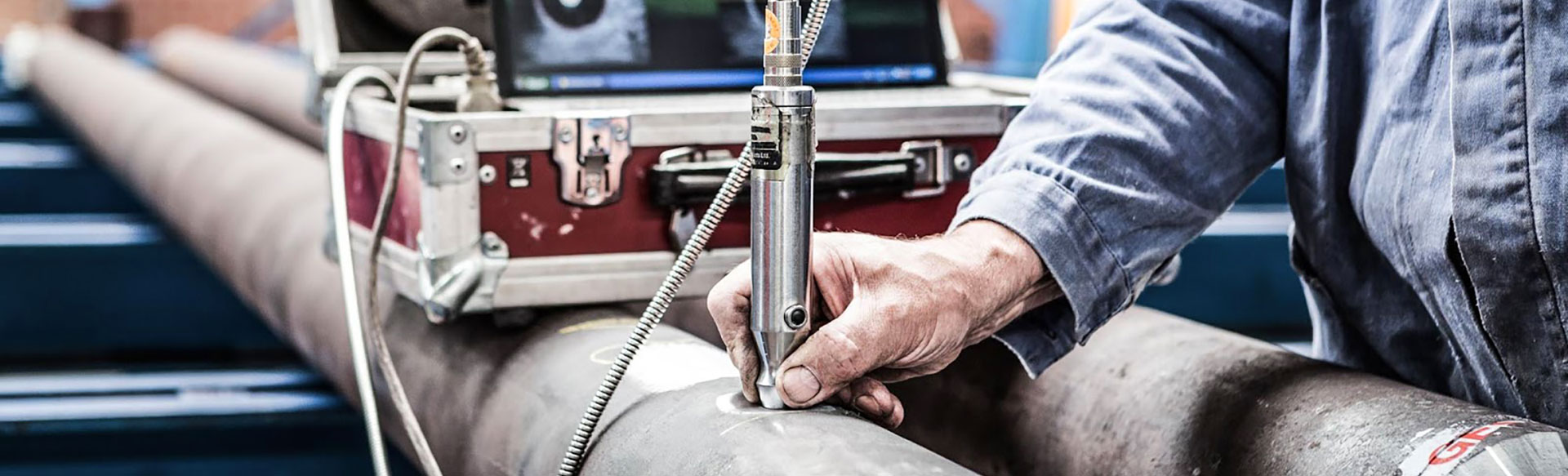
The generator is one of the most important parts of electrical energy because it is where mechanical energy is converted into electrical energy. It is therefore important that the generator is always in optimum condition. EUROLAB It offers ultrasonic testing using manipulators on generators.
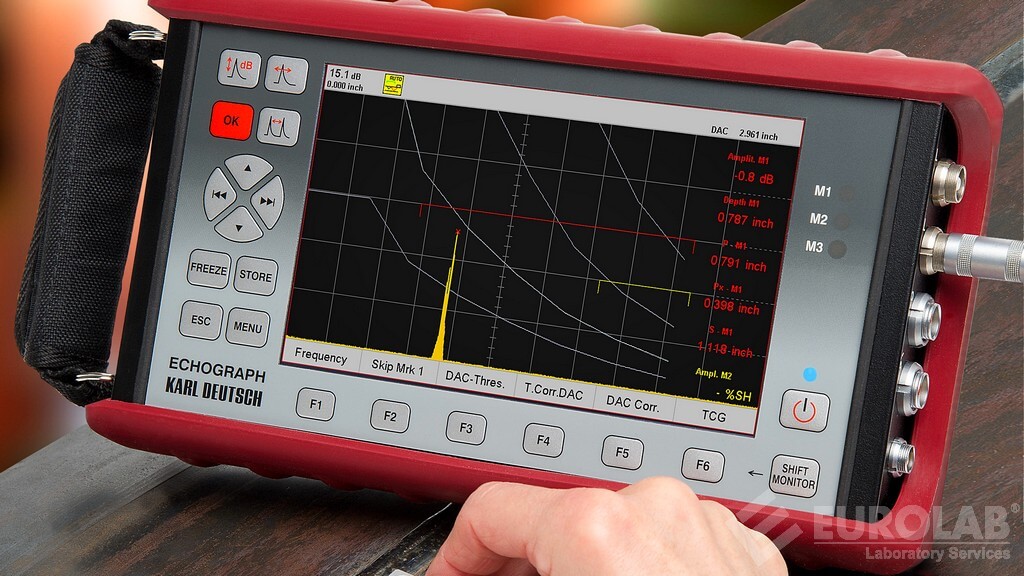
Critical components include retaining rings at both ends of the rotor. They are susceptible to damage as a result of certain chemical influences and mechanical or electrical forces. However, replacing the rings requires significant costs. The control system (KIRR) for retaining rings is a cheaper but equally effective alternative. The system has already been used to examine more than 25 generator retaining rings in 1.600 countries around the world.
Your benefits from Advanced Ultrasonic Testing
About Locking Ring Inspection
A retaining ring has a long life and usually lasts the life of the generator. However, even the smallest cracks in the retaining ring present a safety risk and can cause very costly damage. To avoid such disastrous consequences, many manufacturers recommend periodic replacement of retaining rings - an expensive exercise, which can cost up to a million euros. EUROLAB's system offers a low-cost alternative. The system detects and analyzes indicators of defects in the retaining ring, allowing you to determine whether the retaining ring needs to be replaced. You can also keep a close eye on any newly detected defect indicators in the retaining rings; They do not need to be replaced and monitor their condition during future operation. A very important advantage is that the rotor and retaining rings no longer need to be dismantled for inspection, resulting in cost savings of up to 200.000 euros.
The KIRR system can be adjusted to fit almost all generators and large engines. This flexible system, combined with our extensive experience in this field, enables us to prepare an on-site inspection plan without the need for prior detailed knowledge. If necessary, the examination can be done within 24 hours. Ultrasonic crack detection focuses on shrinking areas and wall thickness steps. Damages such as stress corrosion cracking and upper tooth cracking are detected. In addition, eddy current scanning is added to accurately match the outer surface. The lining of the ring is left in place. If cracks are found, ring geometry and defect data are used in a FEM computer model to calculate the remaining life. Also, we set the inspection interval for monitoring purposes.
EUROLAB's advanced ultrasonic testing experts are certified according to ISO 9712 and Nordtest, and our tests meet the latest testing standards. Automatic and semi-automatic ultrasonic testing is performed using state-of-the-art in-flight diffraction (TOFD), pulse echo, and phased array (PA) techniques. We also offer our customers specialized data evaluation software packages for the evaluation of ultrasonic test data (ultrasonic test signal and coordinates).
The system can be applied to generators with a ring diameter of 600mm and above. Walk test Features:
ARGIS
Generators are very important components in an industrial power plant and are designed to operate reliably for years. One of the most expensive parts of a 3-phase generator is the stator, where energy from the magnetic field is converted into electrical energy. The condition of the generator and its core deteriorates over time and the probability of failure increases. Quantitative tests and periodic inspections of the generator core are required to avoid unplanned outages. ARGIS ensures that checks are not only done when the rotor is removed, but also when the rotor is still in place, saving you time, effort and money.
Big savings for In Situ inspection with ARGIS:
For the Generator Inspection Vehicle (GIV), a chain containing motor drives and a docking station is mounted around one of the generator's retaining rings. The chain is placed correctly in front of each slot so the GIV can be placed in a gap of 17 mm (0,67 inches) and smaller. The GIV then moves to the other end of the stator core and back to perform LFCT, Wedge tightness test and visual inspections to save time.
EUROLAB, with its highly expert team and internationally accredited laboratories, Ultrasonic Tests for In Situ Generator Inspection It performs all test, analysis, measurement, evaluation and report generation services completely and reliably.
To get an appointment, to get more detailed information or to request an evaluation, you can ask us to fill in our form and reach you.

