

The “ISO 9934 Non-destructive testing - Magnetic particle testing” standard, published by the International Organization for Standardization (ISO), consists of the following sub-sections published under the same title:
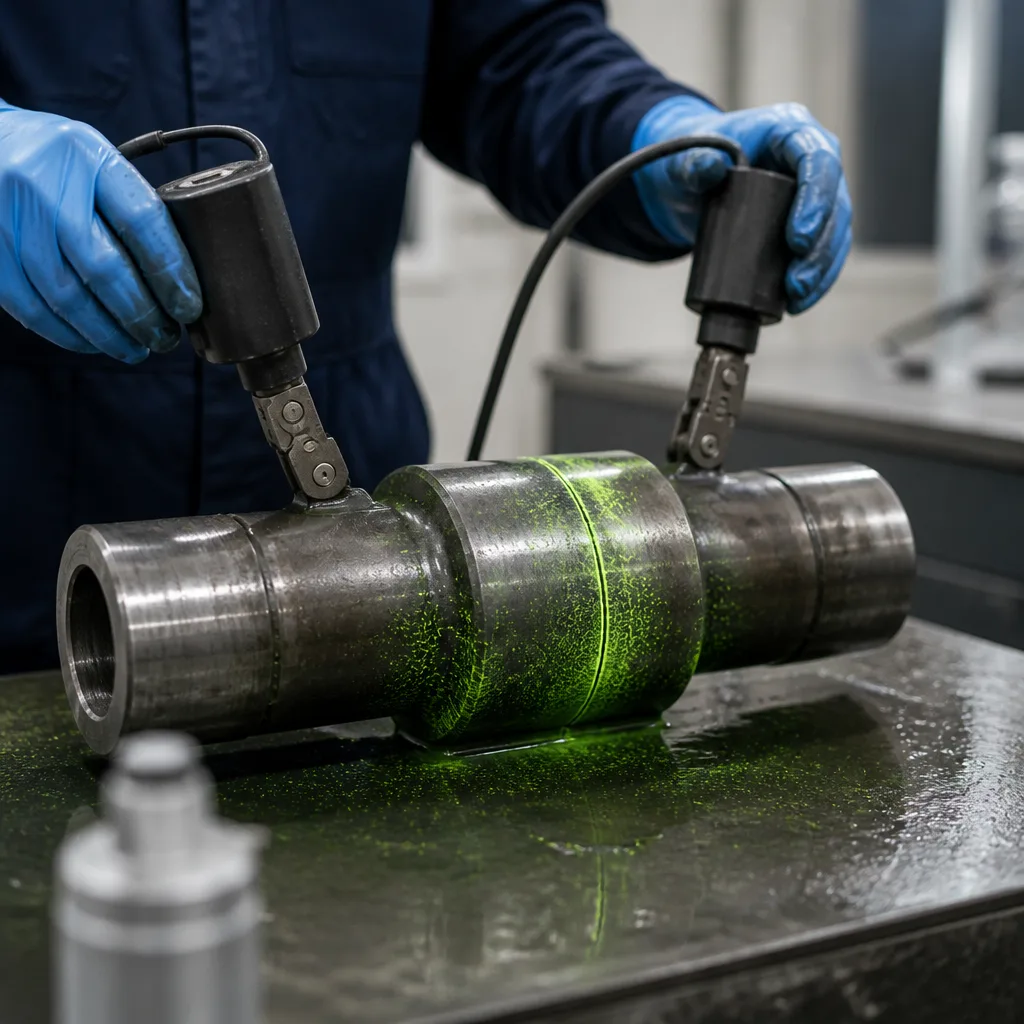
This standard specifies the surface preparation of the part to be tested, the magnetization techniques, the requirements and application of the testing medium, and the recording and interpretation of the results. Acceptance criteria are not defined. Additional requirements for magnetic particle testing of specific products are defined in the product standards.
The ISO 9934-1 standard plays a significant role in industries where structural integrity and safety are critical, including aerospace, automotive manufacturing, oil and gas, railways, shipbuilding, power generation, and heavy engineering.
Magnetic particle testing is a non-destructive testing technique used to detect discontinuities such as:
This method works by magnetizing a ferromagnetic component and applying fine magnetic particles to its surface. When discontinuities interrupt the magnetic field, runaway fields are created. Magnetic particles accumulate around these runaway fields, forming visible signs of defects.
Magnetic particle testing is particularly effective because,
However, it only works with ferromagnetic materials such as carbon steels, low-alloy steels, iron, and some nickel or cobalt alloys.
The ISO 9934-1 standard defines the general principles and requirements for conducting magnetic particle testing. This standard covers the following:
This standard does not define acceptance criteria for defects. Instead, acceptance limits are determined by product standards, customer specifications, or industry codes. This standard also no longer applies to the magnetization method.
This standard is a significant international standard in the field of non-destructive testing. It focuses on the requirements and characteristics of sensing media used in magnetic particle testing.
Magnetic particle testing is commonly used to detect surface and near-surface discontinuities in ferromagnetic materials. The effectiveness of this testing method largely depends on the quality and performance of the sensing media used during the inspection.
The ISO 9934-2 standard specifies technical requirements for magnetic particles, carrier fluids, contrast aids, and performance testing to ensure reliable and repeatable inspection results.
In magnetic particle testing, a ferromagnetic component is magnetized to create a magnetic field. If a crack or discontinuity exists, magnetic flux leakage occurs in the defect area. Detection media are then applied to the surface. Magnetic particles gather around the leakage area, creating visible markers that inspectors can assess. The accuracy and reliability of the inspection largely depend on:
This standard provides standardized requirements for controlling these factors. This standard specifies the requirements for:
This standard applies to both dry magnetic particle systems and wet magnetic particle suspensions.
The ISO 9934-2 standard categorizes sensing media into several main types.
This standard also describes magnetization, demagnetization, lighting, measurement, and monitoring equipment. It specifies the characteristics to be provided by the equipment supplier, the minimum requirements for the application, and the method of measuring specific parameters. Where applicable, measurement and calibration requirements and in-service checks are also specified.
This standard is an international standard specifying the equipment requirements for magnetic particle testing, one of the most commonly applied nondestructive testing methods for detecting surface and near-surface discontinuities in ferromagnetic materials.
Magnetic particle testing is widely used in industries such as aerospace, automotive manufacturing, oil and gas, power generation, railways, shipbuilding, and heavy engineering. The reliability of this inspection method depends not only on proper procedures and qualified personnel but also on the quality and performance of the inspection equipment.
In short, the ISO 9934-3 standard specifies the technical requirements for magnetic particle testing equipment to ensure consistent, safe, and effective inspections. Magnetic particle testing is used to detect cracks and discontinuities in ferromagnetic materials. This process includes:
Defects such as cracks interrupt the magnetic field and create leakage areas that attract magnetic particles, producing visible signs. The effectiveness of this method largely depends on the following:
The ISO 9934-3 standard focuses specifically on the equipment required to meet these conditions.
For many years, our organization, with its competent and experienced staff, has been understanding the needs of its clients, providing the advanced testing services they require, and assisting them in the establishment, implementation, and improvement of management systems. Within this framework, we also provide testing services compliant with the ISO 9934 standard.
To get an appointment, to get more detailed information or to request an evaluation, you can ask us to fill in our form and reach you.

