
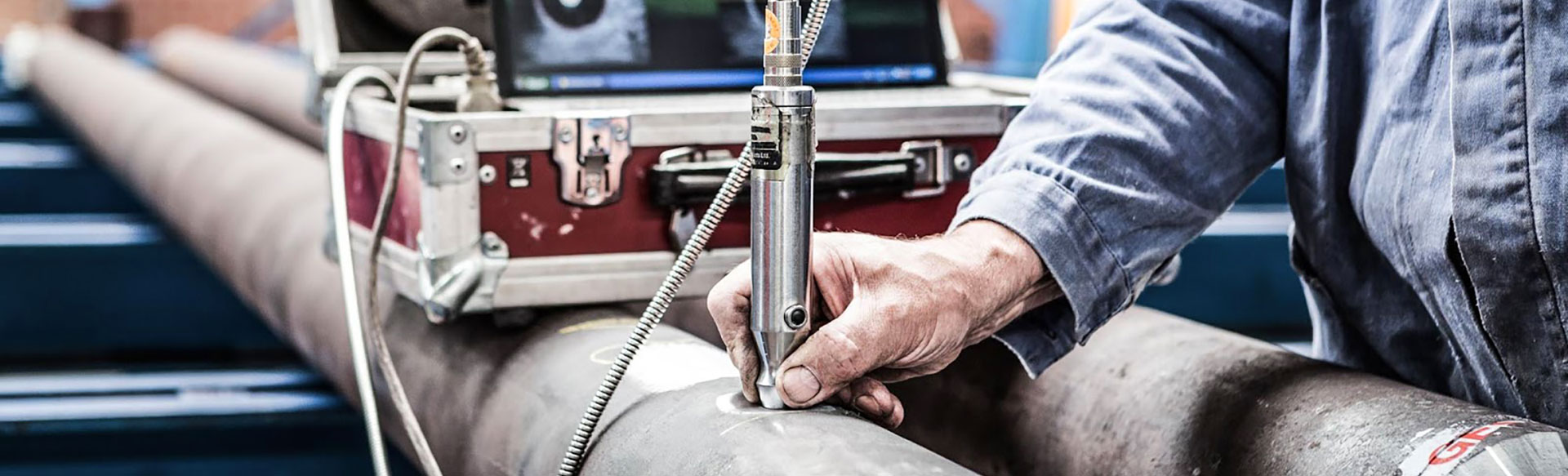
Magnetic Particle Test is a non-destructive material testing method used for detecting surface and near-surface defects in ferromagnetic materials and is primarily used for crack detection.
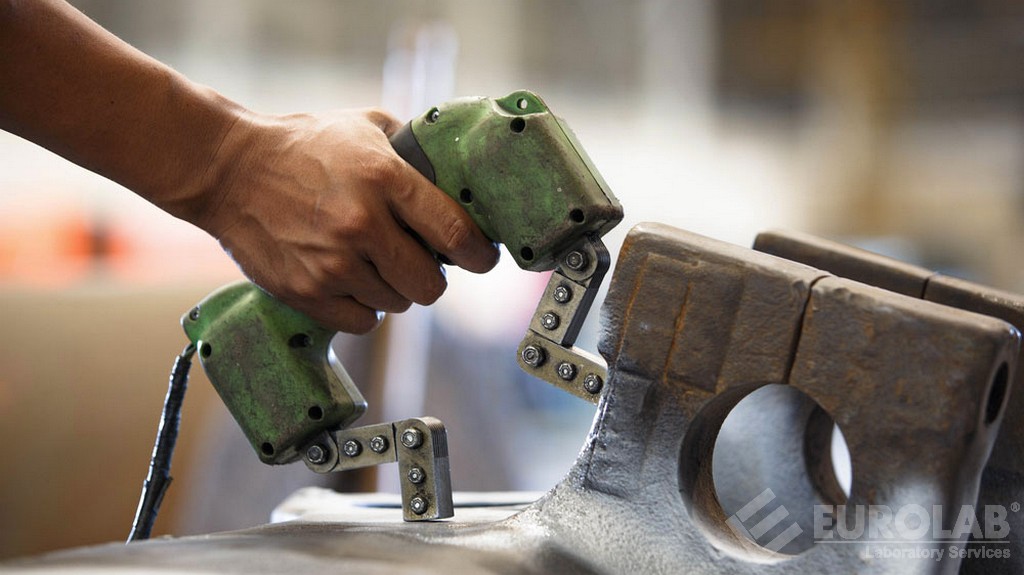
Benefits of Magnetic Particle Testing
About Magnetic Particle Test
Magnetic Particle (MP) Test is primarily used for crack detection in ferromagnetic materials. The sample is locally or generally magnetized and if there is a surface refraction defect, the magnetic field is distorted, causing local magnetic flux leakage around the defect. This leakage flux is shown by coating the surface with fine iron particles dry or suspended in liquid. Particles accumulate in areas of flux leakage, creating a visually visible buildup even for very narrow cracks. It is shown as a line of iron powder particles on the surface.
The magnetic particle testing method can be applied to all metals that can be strongly magnetized - ferritic steels and iron, but usually austenitic steels. The method is fast and the evaluation of the material is done instantly. The equipment used is portable and easily accessible to the inspection area. Magnetic particle testing can be applied to relatively rough and dirty surfaces, but defect sensitivity may be impaired.
The method is very sensitive and can detect narrow and small flaws. It is widely used during the production and testing of resources and materials in the industry, including the train industry.
EUROLAB's magnetic particle testers also use a number of fluorescence methods that use fluorescent particles that require UV-A illumination.
EUROLAB, with its highly expert team and internationally accredited laboratories, Magnetic Particle Test It performs all test, analysis, measurement, evaluation and report generation services completely and reliably.
To get an appointment, to get more detailed information or to request an evaluation, you can ask us to fill in our form and reach you.

