

Developed by JC Bamford Excavators Limited (JCB), a company that manufactures excavators of various sizes and specifications, the “JCB 9993-0005 Gearbox Component Cleaning Requirements” standard defines cleaning requirements for gearbox components and parts used in JCB construction and agricultural equipment. This internal engineering standard specifies the contamination limits, inspection methods, packaging requirements, and documentation procedures that suppliers must adhere to before gearbox components are delivered to production.
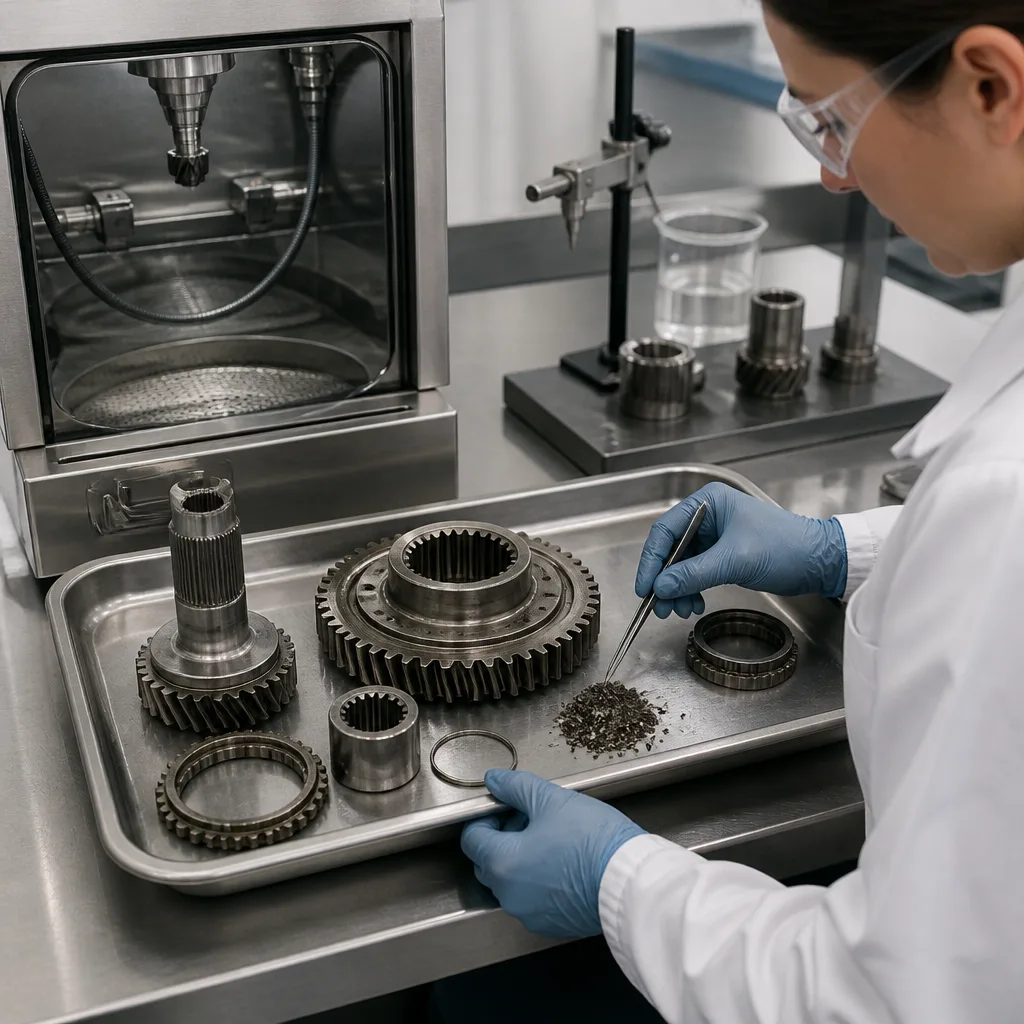
While the JCB 9993-0003 standard focuses on hydraulic cleaning for transmission systems, the JCB 9993-0005 standard treats transmission cleaning separately from hydraulic cleaning.
Modern transmission systems contain numerous precisely machined parts that operate with extremely small clearances. Even microscopic contamination can lead to:
The JCB 9993-0005 standard specifies uniform cleaning requirements to ensure that each transmission component arrives at the assembly line free from harmful contaminants.
This standard generally applies to transmission-related components such as those listed below:
This standard covers both components purchased from suppliers and parts manufactured in-house.
The JCB 9993-0005 standard is designed for the following purposes:
This specification focuses on various pollutants, including:
These particles can quickly damage gears and bearings.
These methods help ensure that contamination remains within acceptable limits before components are assembled.
Maintaining cleanliness after inspection is equally important. Therefore, the JCB 9993-0005 standard specifies the following requirements:
These measures prevent re-contamination during shipping and warehousing operations.
Suppliers are generally expected to do the following:
The JCB 9993-0005 standard complements several international cleanliness standards widely used in hydraulic and transmission manufacturing. These include:
Furthermore, the “JCB 9993-0003 Hydraulic Component Cleaning Requirements” standard highlights that transmission components are addressed separately in the JCB 9993-0005 standard and emphasizes the different cleaning checks required for transmission systems.
The JCB 9993-0005 standard applies to manufacturers and suppliers operating in the following sectors:
Organizations that comply with the JCB 9993-0005 standard can expect the following:
In heavy machinery, transmission systems are among the most expensive and mechanically complex components. Even small amounts of contamination generated during manufacturing can circulate in the lubrication system, accelerating wear and leading to costly failures. The JCB 9993-0005 standard sets rigorous cleanliness requirements throughout manufacturing, inspection, packaging, and delivery, helping to ensure transmission components enter assembly in a condition that supports long service life, reliable performance, and low maintenance costs. This forms a vital part of the overall manufacturing quality strategy for powertrain reliability.
For many years, our organization, with its competent and experienced staff, has been understanding the needs of its clients, providing the advanced testing services they require, and assisting them in the establishment, implementation, and improvement of management systems. Within this framework, we also provide testing services in accordance with the JCB 9993-0005 standard.
To get an appointment, to get more detailed information or to request an evaluation, you can ask us to fill in our form and reach you.

