

Scania is a major Swedish manufacturer of heavy-duty trucks, buses, and industrial/marine engines. As a subsidiary of the Volkswagen Group, it is a global leader in transportation solutions with a focus on sustainability, producing vehicles for logistics, construction, and urban transport. The “Scania TB1900 Mechanical Loads” standard, developed by Scania, is a technical standard detailing the requirements and verification methods for environmental stresses affecting electrical devices in Scania vehicles. The aim of this standard is to define the technical regulations, requirements, and verification methods for environmental testing of electrical components in vehicles. This standard primarily contains sections relating to mechanical loads. This standard is often listed alongside other automotive standards for vibration and shock testing (such as the VW 80000 and MBN 10306 standards).
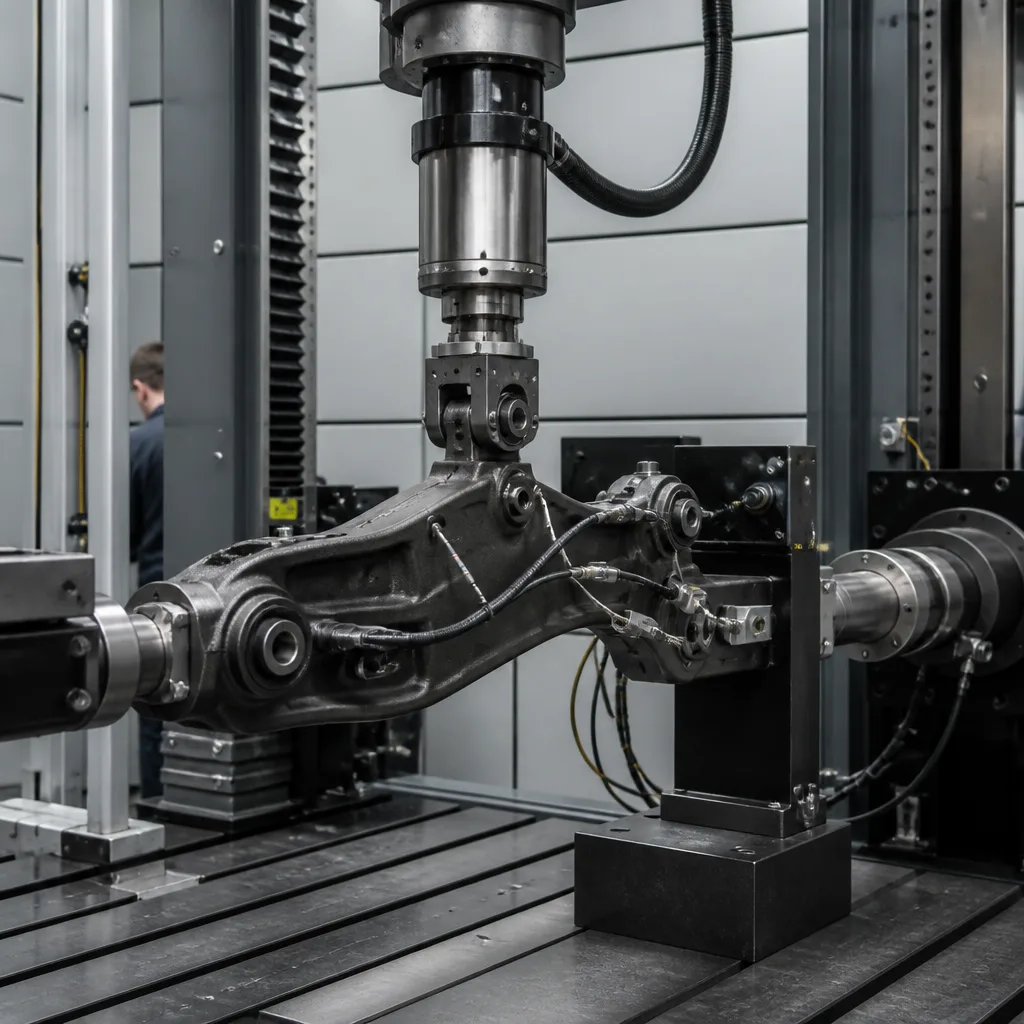
In short, the Scania TB1900 standard is a critical internal technical standard created for the qualification and verification of automotive components. While Scania defines a wide range of standards for general material specifications, the TB series focuses specifically on the performance testing and environmental durability of components used in heavy-duty vehicles.
The TB1900 standard primarily deals with the mechanical robustness of components. This standard defines the specific stress levels and test methodologies that parts must withstand to ensure long-term reliability in the demanding operating environments typical of trucks and buses.
This standard is frequently referenced in the following contexts:
Technical laboratories often refer to Section 6.2, which details mechanical loads in particular. This section provides rigorous “pass/fail” criteria for electronic, electrical, and mechatronic components. Tests performed according to this section typically include:
The TB1900 standard is often mentioned together with the TB1901 standard. Although these standards are related, they cover different areas of vehicle reliability.
For suppliers, compliance with the TB1900 standard is mandatory for any part integrated into a Scania vehicle chassis or engine.
Suppliers should generally use accredited third-party laboratories to perform Shaker tests that meet the TB1900 standard profiles.
In addition, detailed test reports must be submitted to Scania's engineering department as part of the production part approval process.
The Scania TB1900 standard is designed to comply with, and often exceed, international standards such as “ISO 16750-3 Road vehicles – Environmental conditions and tests for electrical and electronic equipment – Part 3: Mechanical loads”.
In short, the Scania TB1900 standard defines the requirements and verification methods for environmental stresses affecting electrical devices, ensuring components can withstand real-world operating conditions. This standard focuses on environmental durability testing of electrical and electronic systems, including:
This standard applies primarily to 24V commercial vehicle systems, typical of heavy-duty applications.
The TB1900 standard defines a broad set of environmental stress tests. These are generally grouped as follows:
These tests simulate road conditions, engine vibrations, and structural stress.
These tests ensure the components function properly in extreme environments.
These tests simulate long-term environmental degradation.
This reflects real vehicle operating conditions, not isolated laboratory scenarios.
The philosophy behind the TB1900 standard is this:
For example, components must not only survive but also remain functional during and after exposure to environmental stressors.
A component tested according to the Scania TB1900 standard must meet the following requirements:
Supplier approval is usually mandatory for Scania projects.
The TB1900 standard is part of a broader ecosystem of automotive verification standards:
The TB1900 standard complements these, focusing particularly on environmental robustness in heavy-duty Scania applications.
The TB1900 standard is considered important for the following reasons:
In conclusion, the Scania TB1900 standard is a critical environmental validation standard for electrical and electronic components in commercial vehicles. By combining mechanical, climatic, and chemical tests, it guarantees that the components meet the following requirements:
This standard plays a central role in maintaining the durability and performance standards expected of Scania vehicles.
For many years, our organization, with its competent and experienced staff, has been understanding the needs of its customers, providing the advanced testing services they require, and assisting them in the establishment, implementation, and improvement of management systems. Within this framework, we also provide testing services in accordance with the Scania TB1900 standard.
To get an appointment, to get more detailed information or to request an evaluation, you can ask us to fill in our form and reach you.

