

The “MAN M 3256-1 Vibration and shock tests for electrical, electronic and mechatronic components” standard, developed by the Volkswagen automotive company, applies to all electrical, electronic and mechatronic components used in MAN products and aims to prove their suitability throughout the entire vehicle lifespan. Electrical machines used to power vehicles and their attachments are excluded from this scope. In this case, evaluation can only be made through previous application measurements.
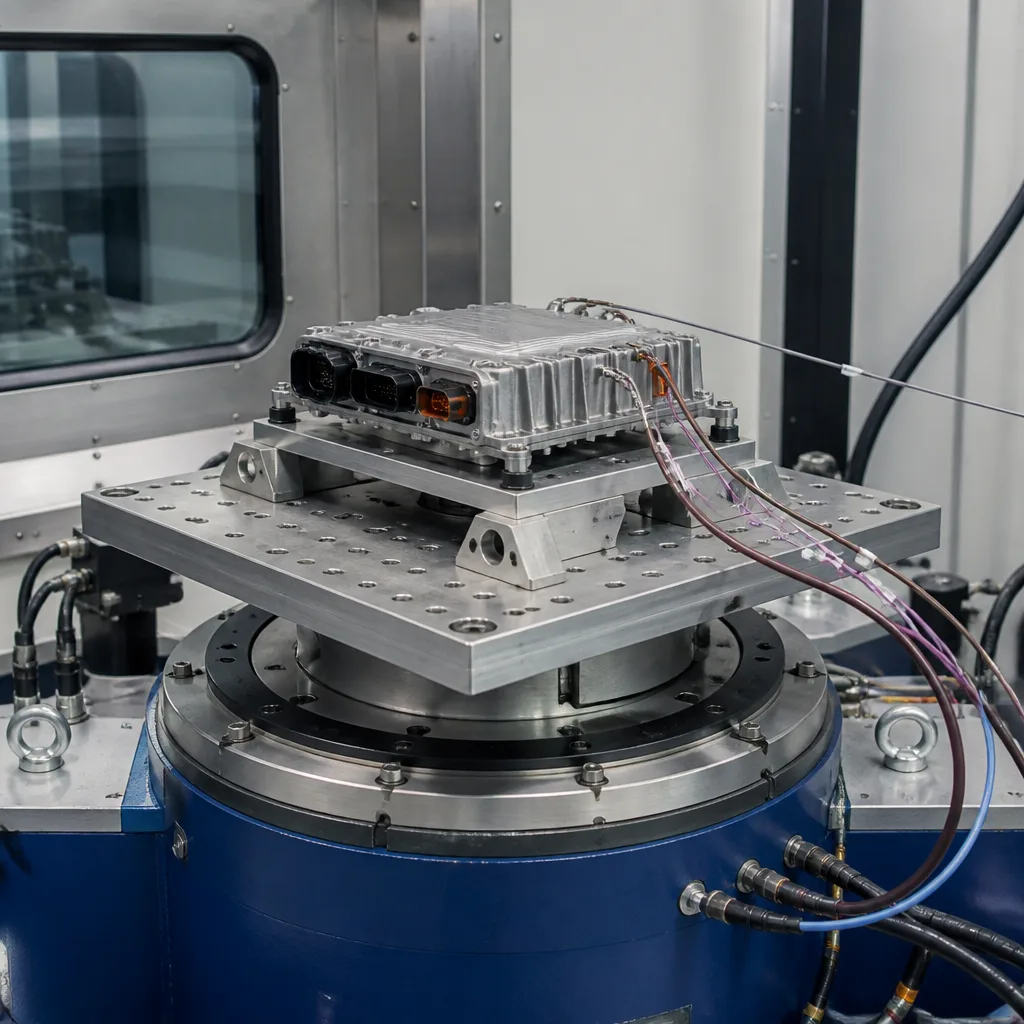
After consultation with the relevant technical department, if separate load specifications are not available, this standard can provide reference values for the design and testing of mechanical components.
The MAN M 3256-1 standard defines the test procedure for the following purposes:
The exact test procedure and scope, and any changes thereto, must be agreed upon and approved in advance with the relevant technical department. If difficulties in achieving standard values are anticipated due to the complexity of the test setup or the mass of the device being tested, appropriate countermeasures (such as testing sub-components) must be defined beforehand.
Test conditions are defined in this standard as follows:
This standard applies to:
The aim of this standard is to ensure that these components can withstand real-world mechanical stresses encountered during vehicle operation.
The MAN M 3256-1 standard defines test procedures to verify the following:
This ensures that the components maintain their functionality and structural integrity over time.
The goal is to verify that the components can withstand short-term, high-intensity loads without failure.
This standard generally includes the following:
The test setup should reflect actual mounting conditions, including mounting brackets and fastening systems, as this significantly affects vibration behavior.
The MAN M 3256-1 standard is not only a test standard, but also serves as a design guideline:
This standard is commonly used in conjunction with the following:
Together, these standards create a comprehensive verification framework for vehicle components.
Without a standard like MAN M 3256-1, modern vehicle electronics would fail far more frequently in real-world conditions. However, the demanding operating environment of commercial vehicles is well known. This standard is necessary for the following reasons:
Without the testing described here, components may pass basic laboratory tests but could fail prematurely in actual use.
This standard guarantees that they are designed and verified to withstand prolonged exposure to vibration.
This standard reduces these risks by ensuring robust durability before components reach the site.
This standard establishes a common benchmark that ensures consistent quality across all parts.
In conclusion, the MAN M 3256-1 standard plays a crucial role in the automotive industry by defining how electrical, electronic, and mechatronic components should be tested against mechanical stresses encountered in real driving conditions. By applying stringent vibration and shock requirements, it helps ensure that components remain functional, safe, and durable throughout the vehicle's lifespan.
For many years, our organization, with its competent and experienced staff, has been understanding the needs of its customers, providing the advanced testing services they require, and assisting them in the establishment, implementation, and improvement of management systems. Within this framework, we also provide testing services in accordance with the MAN M 3256-1 standard.
To get an appointment, to get more detailed information or to request an evaluation, you can ask us to fill in our form and reach you.

