VALTRA TLO 450 Technical Requirements for Plastic and Elastomer Parts
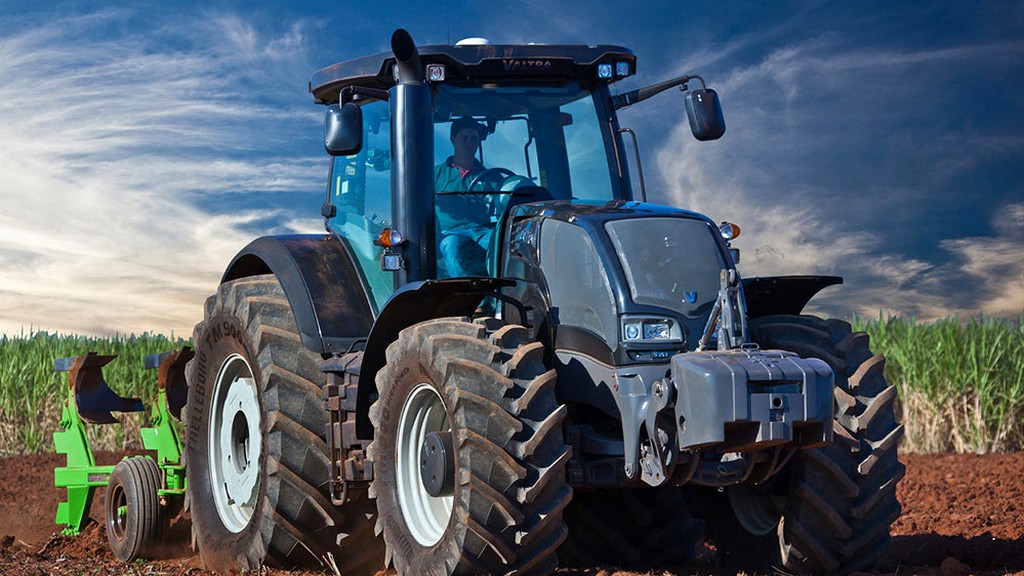
Valtra is a Finnish manufacturer of agricultural machinery. Its products include tractors, combines, sugar cane harvesters, self-propelled sprayers and seed drills. The standard “VALTRA TLO 450 Technical requirements for plastic and elastomer parts” developed by the organization describes the requirements that all mechanical parts of the cabin must meet, unless otherwise stated on the drawings.
In this standard, the environmental requirements are described as follows:
- Heat and humidity: The purpose of this standard is to simulate heat and humidity stresses caused by the environment. The conditions are:
- Minus 40 degrees plus/minus 1 degree temperature, without controlling relative humidity, 24 hours
- Change time: 1 hour
- Temperature of plus 80 degrees plus/minus 1 degree, relative humidity of 75 percent plus/minus 5 percent, 168 hours
- Change time: 1 hour
- Minus 40 degrees plus/minus 1 degree temperature, without controlling relative humidity, 48 hours
- Change time: 0,5 hour
- Temperature of plus 21 degrees plus/minus 1 degree, relative humidity of 50 percent plus/minus 5 percent, 24 hours
No curvature or dimensional changes are allowed to appear after testing. No cracks or other visible defects are allowed to appear.
- Optional test cases: There are additional tests that can be applied to parts as needed:
- Temperature shock test: This test is conducted according to the IEC 60068-2-14 standard. For details, refer to the ISO 15003 standard.
- Mechanical durability tests: Two-dimensional drawings may have additional requirements for mechanical durability, such as impact resistance testing, static load testing for pedals, and dynamic load testing.
- Corrosion resistance: Requirements are subject to AGCO GD0000101. Generally, neutral salt spray test is conducted in accordance with ISO 9227. For parts installed inside the cabin, neutral salt spray test is conducted in accordance with ISO 9227. Test duration is 48 hours. AGCO GD0000101 is subject to evaluation.
- Chemical resistance: This test shall be conducted in accordance with ISO 15003 using the following chemicals: diesel fuel, urea solution, ethanol (100 percent solution), methanol (50 percent water solution), antifreeze (50 percent ethylene glycol/50 percent water), hydraulic oil, engine oil, brake fluid, formic acid, cleaning foam spray, solvent detergent, nitrogen, phosphorus and potassium fertilizer (7,5 percent nitrogen, 7,5 percent phosphorus, 7,5 percent potassium).
- Weather resistance test: The test box simulates outdoor conditions (sunlight, heat, rain and humidity). It includes UV exposure testing for parts placed inside the cabinet. This test box is suitable for unpainted plastic and rubber parts. It is also possible to perform this test for painted parts. UV exposure testing for parts exposed to direct sunlight can be performed according to ISO 4892. Test details must be agreed upon individually.
The assessment of discoloration is carried out according to the ISO 105-A02 standard. The maximum discoloration on the gray scale is number 3. No cracks or other visible defects are allowed. The maximum change in mechanical strength allowed after the test is 30 percent compared to unexposed parts.
For parts exposed under glass, testing for parts inside the cabinet can also be carried out in accordance with ISO 105-B06 or ISO 4892-3 Method B. Test details must be agreed individually.
- Flammability test: This test is performed according to FMVSS 302 standard. The burning rate should be less than 100mm/min.
- Fogging test: This test is carried out according to SAE J1756 standard, photometric procedure, 90 degree bath temperature, 21 degree cooling temperature and 3 hours test time. The result should be at least 80 percent. Fogging test can also be carried out according to DIN 75201 Method B standard. The limit for condensate mass is less than 10 mg.
- Mechanical vibration test: The mechanical parts of the cabin are installed in the cabin and tested.
Among the numerous testing, measurement, analysis and evaluation studies that our organization has carried out for businesses in various sectors, it also provides testing services defined in the "NSF/ANSI 51 Food Equipment Materials" standard with its trained and expert staff and advanced technological equipment.