

The European standard “EN 117 Wood preservatives - Determination of toxicity values against Reticulitermes species (European termites) (laboratory method)” describes a method for determining the toxicity values of a wood preservative against Reticulitermes species of European termites.
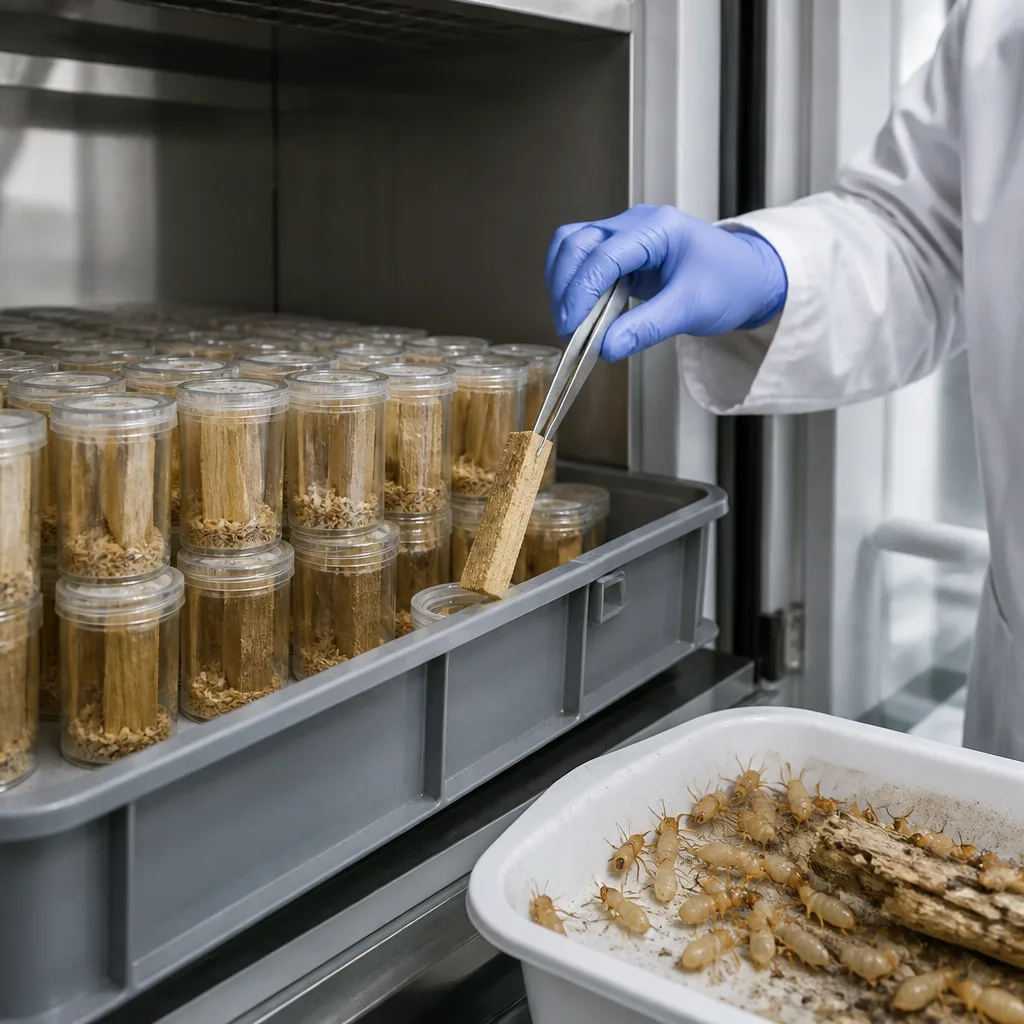
This method can be applied not only to different Reticulitermes species, but also to other species of the Rhinotermitidae family. If necessary, temperature and humidity conditions should be adapted to the specific requirements of the species in question.
The method described applies to the following:
This method can be used in conjunction with an aging procedure, such as those conforming to EN 73 or EN 84 standards.
Reticulitermes is a genus of termites in the family Heterotermitidae. They are found in most temperate regions of the world, including much of Asia, Western Europe, and all of North America.
The described test method is based on the following principles:
In short, EN 117 is a European standard that defines a laboratory method for determining the effectiveness of wood preservatives against Reticulitermes species, also known as European termites. This standard provides a consistent methodology for evaluating whether a wood preservative can protect wood from termite attack under controlled laboratory conditions. It is widely used across Europe by wood preservative manufacturers, testing laboratories, certification bodies, and regulatory authorities.
Termites are among the most destructive biological agents affecting wood. By consuming the cellulose in wood, they can rapidly weaken structural lumber, power poles, railway sleepers, fences, and other wooden products.
The main objectives of the EN 117 standard are as follows:
The described test method is applicable to the following:
This standard also specifies that testing can be combined with artificial aging procedures, such as those described in EN 73 or EN 84 standards, to assess protective performance against weathering or leakage.
In principle, this test evaluates whether termites damage wood treated with a preservative. Small wood samples are impregnated with various concentrations of the preservative and then exposed to colonies of live termites under carefully controlled environmental conditions. After the exposure time, the laboratory evaluates the following:
These measurements help determine the toxicity of the preservative to termites.
Typical materials used in the tests include:
Careful sample preparation ensures reproducible results across laboratories.
In general, this testing process follows these steps:
The following performance indicators are considered during the tests:
Taken together, this data shows how well the protector protects the wood against termite attack.
The EN 117 standard plays a significant role in the wood preservation industry because:
Without standardized tests, it is not easy to compare preservative performance between manufacturers or laboratories.
The EN 117 standard applies to many sectors, including:
Organizations can take advantage of the EN 117 standard as follows:
The EN 117 standard is frequently used in conjunction with other wood durability standards, including:
Together, these standards provide a comprehensive framework for evaluating the performance and durability of engineered lumber.
In conclusion, the EN 117 standard provides a consistent and scientifically validated testing method, enabling manufacturers and laboratories to evaluate preservative efficacy, objectively compare products, and demonstrate compliance with European performance requirements. This standard significantly contributes to the production of durable, reliable, and safe wood products for use in termite-exposed environments, while supporting quality assurance across the wood preservation industry.
For many years, our organization, with its competent and experienced staff, has been understanding the needs of its clients, providing the advanced testing services they require, and assisting them in the establishment, implementation, and improvement of management systems. Within this framework, we also provide testing services in accordance with the EN 117 standard.
To get an appointment, to get more detailed information or to request an evaluation, you can ask us to fill in our form and reach you.

